




Posts Industry steel exports 629 22 May 2026
Protectionism has always been one of the key challenges facing the Ukrainian steel industry over the past 20 years
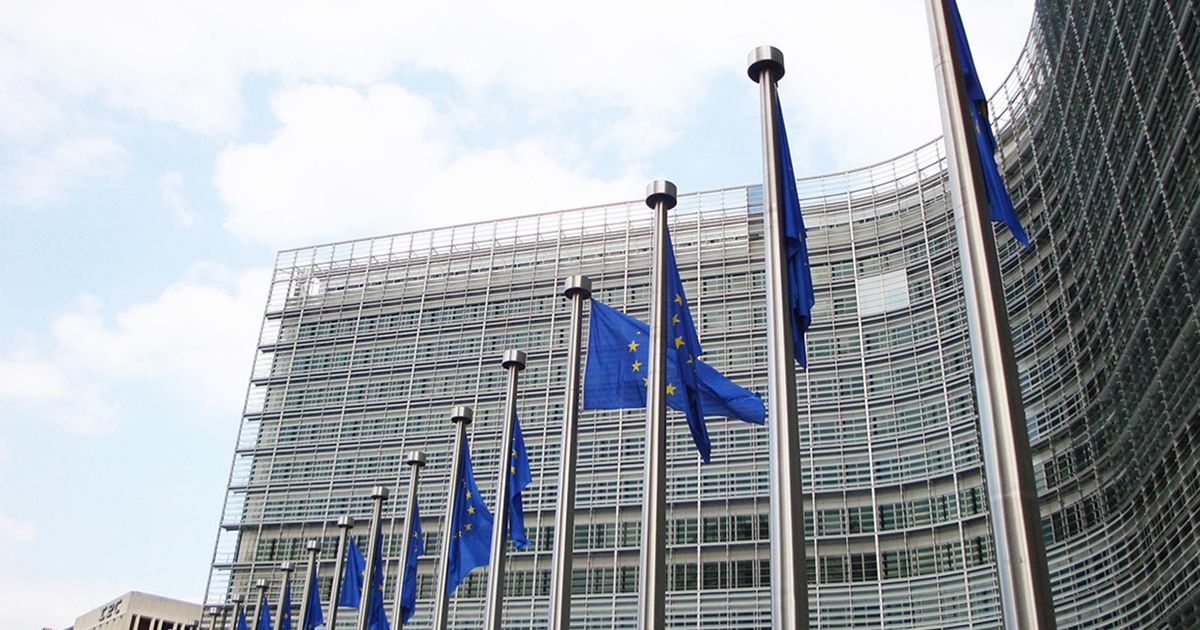
The Ukrainian steel industry is one of the few sectors that, despite the war, has maintained its production capacity and market position abroad. However, it now finds itself at the epicenter of global protectionism, and the threats on this front are no less serious than those on the front lines.
The introduction of CBAM, a sharp reduction in EU import quotas, pressure from cheap imports—primarily from Turkey—as well as the lack of effective protective tools in the domestic market form a complex of threats capable of halting steel exports and virtually destroying the industry.
Unresolved Issues
CBAM
In assessing the impact of CBAM on Ukraine, the European Commission made two fundamental errors:
- Using typical (default) emission values instead of actual ones.
- An underestimation of the impact of CBAM on the Ukrainian economy—only -0.01% by 2035 (the actual GDP decline could reach 2.1% by 2030).
Regarding the first issue, there is reason for optimism. According to Deputy Prime Minister Taras Kachka, a decision on trading based on actual emissions is expected to be reached within 1 to 1.5 months, even before the official start date of January 1, 2027. At the same time, there is currently no clear solution to the second issue, and the European Commission is refraining from sending any positive signals.
“There is a possibility of invoking the force majeure clause—legally justified given the war circumstances—but the European Commission has not yet adopted a corresponding decision,” emphasizes Taras Kachka.
According to industry experts, if Ukraine does not receive a deferral or exemption from the CBAM, it will completely lose the key European market—which accounted for up to 90% of its steel exports—within a few years.
“If Kyiv does not agree on a special, phased path to decarbonization with corresponding access to financing, the EU market will effectively be closed to Ukrainian products as early as 2030, despite the country’s candidate status and the existence of a free trade agreement. Therefore, this issue requires a solution at the political level,” noted Oleksandr Kalenkov, President of the Ukrmetallurgprom Association, during his speech at the conference “Trade Wars: The Art of Defense.”
New measures to protect the market
Starting July 1, new steel import quotas will take effect—duty-free import volumes will be capped at 18.3 million tons per year (a 47% decrease compared to the 2024 quotas). In addition, a 50% tariff (instead of the current 25%) will apply to imports exceeding the quota and to steel products not covered by the quotas.
A sharp 70% reduction in quotas for Ukraine—to 713,000 tons, compared to actual exports of 2.65 million tons in 2025—will violate Ukraine’s trade agreement with the EU, which does not provide for any tariff restrictions, and could result in Ukraine losing up to €1 billion in export revenue.
At the same time, the European Commission is negotiating with Ukraine and other countries to mitigate the extent of the aforementioned quota reduction and promises to “partially take into account Ukraine’s difficult situation.” Given these statements, Ukraine will likely receive a larger quota than announced (713,000 tons), though it will still be significantly lower than the volume of Ukrainian steel exports to the EU in 2023–2025.
“De jure, the EU has the right to apply this regulation, as it is a different instrument than the previous safeguard. However, given Ukraine’s three-year exemption from EU tariff quotas, any restrictions on Ukraine should not have been reinstated,” believes Oleksandr Kalenkov.
It is worth noting that the volume of Ukrainian steel exports to the EU is significantly lower than that of Russian shipments. Last year, exports of rolled steel products (flat and long products and pipes) from Ukraine to the EU grew by 24.6% year-on-year, reaching 2.65 million tons. At the same time, in 2025, the EU imported 5.1 million tons of iron and steel products from Russia (-4.8% year-on-year). Russia’s export revenue from these shipments amounted to €2.1 billion. The largest share of imports was accounted for by steel semi-finished products—3.7 million tons (18.3% year-on-year), or 73% of the total volume. Until recently, the European Commission had been accommodating Belgium, Italy, and the Czech Republic—where rolling mills owned by Russian companies are located—and had not imposed a ban on slab imports.
Import pressure
According to data from the Ukrmetallurgprom Association, in 2025, imports of rolled steel products rose by 31.2% year-over-year, and the share of imports in the structure of steel consumption increased by 2.5 percentage points to 40.1%. This is the highest figure since Ukraine’s independence.
Suppliers from Turkey and China are putting pressure on Ukrainian producers through dumping, as they manufacture their products from Russian slabs and pig iron purchased from Russia at a significant discount. According to Serhiy Povazhnyuk, deputy director of the state-owned enterprise “Ukrpromzovnishchexpertiza,” for example, in the production of hot-rolled coils, the cost of slabs accounts for 85% of the total production cost. Consequently, if Russian slabs are purchased at 20% below market price, the cost of the finished coil will decrease by 12–15%.
On the other hand, protection of the domestic market has significantly intensified recently; at the very least, several anti-dumping investigations have been launched simultaneously. In January, an investigation was initiated regarding imports of welded steel pipes from Turkey, and in March, regarding imports of Turkish steel bars and angles. In addition, anti-dumping measures were imposed in January on coated carbon steel flat products from Malaysia, through which Chinese products were effectively being imported, and measures on bars from Belarus and Moldova were extended for five years.
However, the overall situation for Ukrainian producers appears extremely challenging. The constant rise in domestic electricity and gas prices, along with other factors (expensive logistics, labor shortages, and war risks), are making Ukrainian steel products uncompetitive. At the same time, the aforementioned trade restrictions imposed by the EU are leading to the loss of sales markets and export revenues. These negative consequences are virtually impossible to offset with any measures to protect the domestic market.
Ban on imports of products made from Russian raw materials
The issue of imposing a ban on imports of steel products manufactured from Russian steel raw materials remains unresolved. Although “Ukrmetallurgprom” has submitted proposals to the Ministry of Economy regarding the introduction of such a ban, this initiative has not yet been implemented.
“Proving dumping or subsidization is a complex and exhausting process. A much more effective tool for market protection is measures based on the ‘country of origin’ principle (similar to the practice in the U.S. and the EU). This approach is more effective than tracking schemes to circumvent restrictions via third countries (China, Malaysia, Vietnam, etc.), where insignificant additives are added to the products or they are relabeled,” emphasized Oleksandr Kalenkov.
According to market experts, the lack of domestic market protection is one of the reasons why the EU is imposing restrictive measures against Ukraine. In fact, Ukraine risks becoming a “transit hub” for the re-export of products from third countries. That is why “Ukrmetallurgprom” plans to appeal to the Ministry of Economy again in the near future.
As industry experts note, within the framework of anti-dumping investigations, it is theoretically possible to take into account the use of Russian raw materials in the production of imported goods, provided there is sufficient evidence and methodological justification.
“At the same time, there is a significant institutional limitation: the ministry has neither sufficient resources nor the authority to independently monitor supply chains. Unlike the EU, where a separate department systematically tracks the use of raw materials in trade flows and has the ability to take preventive action, in Ukraine, the burden of proof rests entirely on the applicant—the domestic manufacturer of similar products,” said Serhiy Povazhnyuk during his speech at the conference “Trade Wars: The Art of Defense.”
The other side of the coin
The imposition of trade restrictions has not only beneficiaries but also victims, and these are not always just “unscrupulous exporters.” To some extent, consumers of imported products may also be affected.
Amid the anti-dumping investigation against Turkish wire rod, as well as a possible new investigation into wire rod from China, Stalkanat PJSC advocates for maintaining the ability to import raw materials for steel products manufacturing—especially given that Ukraine effectively has only one domestic wire rod producer and military risks persist.
“The goal of state policy should be to protect jobs and added value, not to protect the market in a simplistic sense (pitting domestic producers against importers),” noted Serhiy Lavrynenko, CEO of Stalkanat, during his speech at the conference “Trade Wars: The Art of Defense.”
According to him, if wire rod prices rise significantly, the losses of steel product distributors will far exceed the potential losses of the producer, as the producer’s problems are linked to external markets, not the domestic one.
In any case, Ukraine must harmonize its trade policy with that of the EU.
However, partial compromises and “cosmetic” simplifications of trade measures against Ukrainian producers in Europe do nothing to solve the problem of losing export markets and the further deterioration of the competitiveness of the Ukrainian steel industry. The combined impact of the CBAM, quota reductions in the European market, and increased import pressure could completely destroy the industry by as early as 2030.

-
OpinionsIndustrysteel consumption
13 July 2026
21 July 2026
16 July 2026
24 June 2026