




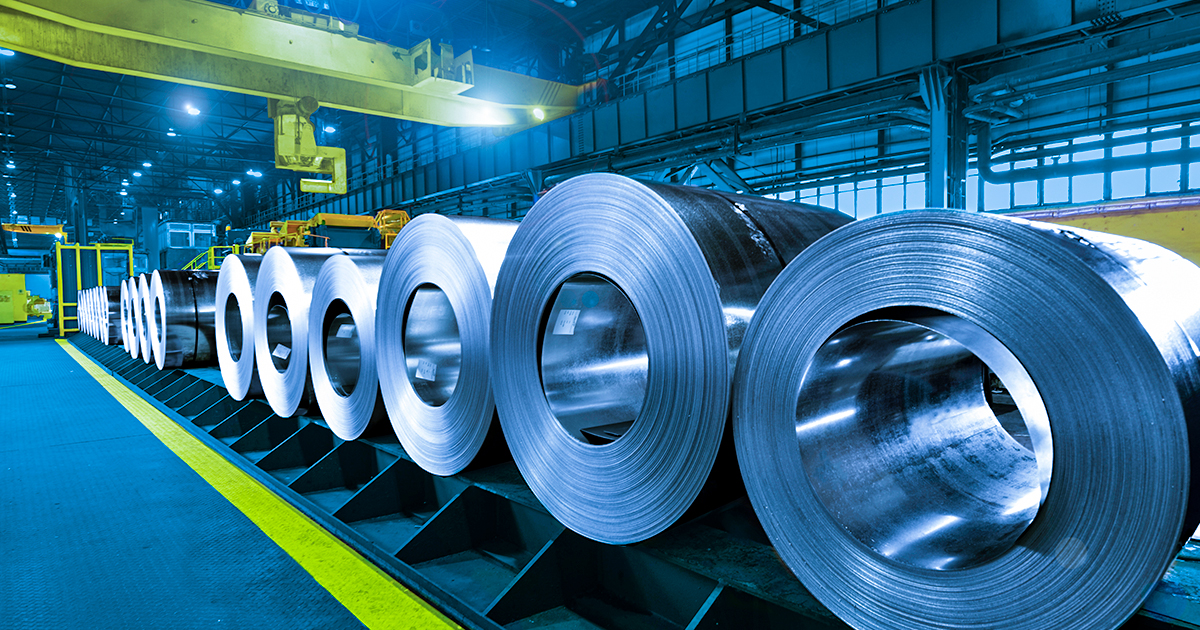
In the first five months of 2026 alone, 43,000 tons of Chinese wire rod were imported into the country
The domestic market is facing an unprecedented test of resilience. The combination of a full-scale war, a sharp rise in electricity prices, and serious disruptions in logistics chains—accompanied by increased transportation costs—has significantly undermined the competitiveness of domestic producers. The figures speak for themselves: the share of imports in the Ukrainian market has exceeded 40%.
The massive influx of cheap imports from China, Turkey, and other manufacturing hubs—global markets that are currently oversaturated—is actively driving down domestic prices and leading to a decline in steel production in Ukraine. According to GMK Center estimates, imports from these regions grew at double-digit rates last year:
- Imports of flat steel products increased by 10.7% year-on-year (y/y), largely due to shipments from Turkey (+19.4% y/y) and China (+55.4% y/y).
- Imports of long products rose by 58.6% year-on-year, with Turkey (+41.9% y/y) and China—which increased its shipments by +567.9% y/y — once again being the main suppliers.
This is not merely a battle for market share; it is a direct threat to Ukraine’s industrial resilience. For this reason, major domestic producers, such as ArcelorMittal Kryvyi Rih (AMKR), have warned that without government intervention, the sheer volume of these dumped goods alone threatens to bring rolled steel production lines to a complete halt. In the first five months of 2026 alone, 43,000 tons of Chinese wire rod entered the country—a volume equivalent to one and a half months of production at one of AMKR’s specialized shops.
In response, Ukraine is establishing a legal protective barrier in full compliance with its obligations to the World Trade Organization (WTO). The Interdepartmental Commission on International Trade (ICIT) and the Ministry of Economy are actively applying trade defense mechanisms to ensure fair conditions and maintain economic stability during wartime.
The following six recent significant protective measures illustrate this shift in regulatory strategy:
1. Rolled steel from China
Following an official complaint filed by ArcelorMittal Ukraine, it took the government 87 days to evaluate the evidence and officially launch an anti-dumping investigation into steel imports from China. Upon investigating the circumstances, the government found sufficient and credible evidence that China was exporting steel products to Ukraine exclusively at dumping prices. The Ministry of Economic Development and Trade noted that the volume of these dumped imports had increased significantly both in absolute terms and as a share of domestic consumption.
2. Seamless pipes from China
The Interagency Commission on International Trade has officially extended anti-dumping duties on hot-rolled seamless steel pipes from China for an additional five years, maintaining the final duty rate for most exporters at 51.52%, as announced on May 28, 2026.
3. Coated flat-rolled steel
An anti-dumping investigation has officially been launched into imports of coated carbon steel flat products originating from four key exporting countries: Turkey, Vietnam, South Korea, and India, following a 4.5-fold increase in absolute import volumes from 2022 to 2024.
4. Bars and angles from Turkey
Ukraine has launched an anti-dumping investigation into imports of Turkish steel bars and angles to protect domestic long-product manufacturers from artificially low prices. The Ministry of Economy is currently actively reviewing this important case (published: March 14, 2026).
5. Welded pipes from Turkey
An official anti-dumping investigation has been launched into non-galvanized welded steel pipes from Turkey due to a staggering 400% increase in imports, which is significantly undermining domestic production costs (as of March 6, 2026).
6. Steel fasteners from China
The government has extended the protective tariffs on Chinese steel fasteners while a comprehensive review of their duration is underway, in order to prevent a new wave of dumped products from entering the market (as reported on September 29, 2025).
Such regulatory safeguard measures are a crucial link in a chain reaction. Ukraine is far from alone in this struggle; it is joining a global movement of countries actively regulating trade flows to block the possibility of excess Chinese capacity flooding open markets with its products.
For Ukraine, protecting the domestic steel market through comprehensive economic analysis and targeted trade defense measures is not merely a trade policy tool. It is a necessary condition for preserving strategically important jobs, ensuring the stability of industrial production, and safeguarding the economic foundation of a state that continues to resist military aggression.

-

OpinionsIndustrysteel consumption
13 July 2026
24 June 2026
18 June 2026
15 June 2026