




Posts State ArcelorMittal Kryvyi Rih 1628 12 September 2025
The business requires UZ to optimize its operations, predictability and predictability of tariff setting
Ukrainian business has faced great difficulties and losses since the beginning of the war. However, an additional problem is the growing appetite of state-owned monopolies, which are raising their own tariffs without even trying to optimize their operations and find internal efficiency reserves. Amid this, Ukrainian business needs adequate tariffs, as well as predictability and predictability of tariff setting, including in the field of rail freight transportation.
This was discussed during the online discussion «Railroad Transportation Tariffs in 2025-2026: Where is the Balance Between Customers’ Capabilities and the Carrier’s Needs». GMK Center presents the main points made by the discussion participants.
The tariff issue
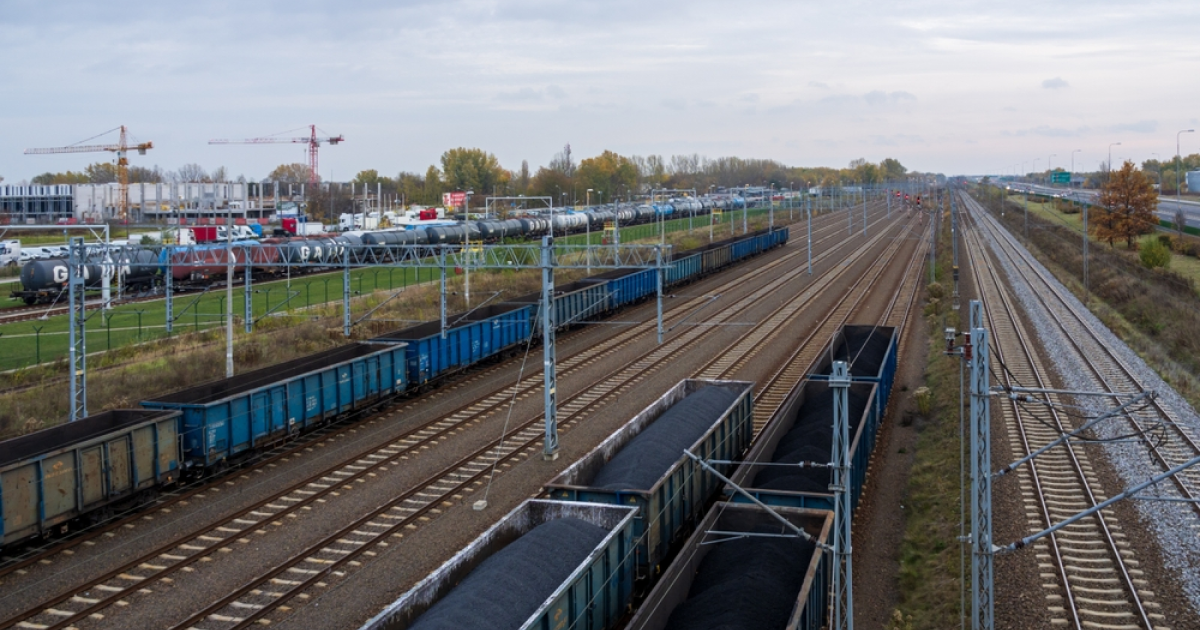
Since 2021, Ukrainian Railways (UZ) has been consistently raising freight tariffs using various methods: direct increases, indexation or unification of tariff classes. The last significant increase took place in June 2022. Then tariffs for the transportation of coal, ore, and limestone increased by 140%. Grain transportation went up by 96% and steel –by 70%.
In August-September last year, UZ again tried to raise prices by proposing to unify tariff classes. This would have increased the cost of transportation of building materials by 52%, ore and coal by 7%, and the return of empty cars by 67%. However, at the time, the business community was united against this idea, and it was not implemented. Nevertheless, UZ is likely to try to return to the idea of unification.
Currently, Ukrainian Railways is trying to raise tariffs by indexing them by 37%. As before, this is motivated by the need to ensure profitable operations and a sharp increase in costs. According to estimates, if the 37% increase were to come into effect on May 1, UZ would receive an additional UAH 17.5 billion by the end of the year.
While in 2022, the business treated the tariff increase with a certain understanding of the situation, as after the outbreak of a full-scale war, UZ had a sharp decline in freight traffic and performed crucial social and defense functions, now the business categorically rejects any attempts to impose an additional financial burden on it.
«The 37% increase in Ukrainian Railways tariffs is extremely painful for ArcelorMittal Kryvyi Rih. According to our estimates, this will result in losses of $26.5 million or UAH 1.1 billion per year, and the total transportation costs will increase to $129 million per year,» said Oleksandr Bilyansky, Deputy CEO for Supply Chain at ArcelorMittal Kryvyi Rih.
The key problem
The main problem is cross-subsidization, where freight revenues cover passenger transportation losses. In 2024, UZ’s profit from freight transportation amounted to UAH 20.4 billion, while the loss from passenger transportation increased to UAH 18.1 billion.
«We believe that current freight transportation tariffs are a quasi-tax. Freight transportation is highly profitable, but its revenues are used to finance passenger transportation in the amount of UAH 23-24 billion per year. This a priori contradicts the principle of economic justification of tariffs,» explained Oleksandr Kalenkov, President of Ukrmetprom.
Without receiving compensation from the state, Ukrainian Railways is constantly increasing tariff pressure on cargo owners. This practice has been going on for a long time, but now, due to the war, Ukrainian business is at the point where increased costs lead to the closure of production facilities and accumulation of losses. In May of this year, the government provided UAH 4.3 billion to UZ to support its current operations. However, this was not a compensation for losses from passenger transportation, but rather an aid to maintain the viability of the company, which did not even have the funds to pay salaries. Nevertheless, this situation can be considered an important and positive precedent.
At the same time, the absence of changes in tariff setting will only worsen the situation for Ukrainian Railways and cargo owners. «If we leave the current model, where Ukrainian Railways makes money on freight transportation and allocates all funds to finance unprofitable passenger transportation, the company will find itself in a vicious circle. Without the ability to invest, UZ will not be able to finance capital investments, which will lead to a drop in its efficiency,» said Ruslan Ilyichev, CEO of the Federation of Employers of Ukraine (FEU).
Business suggestions
Ukrainian business believes that Ukrainian Railways should look for internal reserves to increase efficiency and constantly work to optimize internal processes. Business needs economically justified tariffs based on real and transparent costs. It is also important that decisions to increase tariffs are made after proper discussion with the business.
According to Oleksandr Bilyansky, business expects three key things from Ukrainian Railways:
- Predictability. The need for stability in actions, especially in terms of tariff policy.
- Predictability. A clear plan and forecast that can be adhered to are needed.
- Implementation of plans. It is desirable that plans are implemented, not changed every year.
The FEU proposes to conclude a memorandum between the government and Ukrainian Railways at least for the duration of the war and a certain period after its end. The document should guarantee systematic state financial support for UZ in various forms, for example, through the purchase of equipment at the expense of budget funds. For its part, business could commit to certain volumes of cargo transportation.
«The conclusion of such a memorandum and the provision of stable financial support by the state will show Ukrainian Railways, its customers, creditors and partners that it has reliable financing. This will allow us to balance revenues and expenses, relieve the constant tension associated with the risk of tariff increases for export industries, restructure credit obligations and confidently plan priority investments,» said Ruslan Ilyichov.
To solve the problem of fair tariff setting, it is necessary to carry out a long-overdue reform of UZ, dividing it into separate companies by business line. However, this requires an appropriate legal framework.
«Closing the financial holes of Ukrainian Railways with one-time injections will not solve the problem, as passenger transportation remains unprofitable. Without the adoption of the new Law on Railway Transport, the Law on Public Service Transportation, the Law on the Regulator (on tariffs) and the Law on Investigation of Transport Accidents, we will constantly return to the same problem,» said Yulia Sirko, MP, First Deputy Chairman of the Parliamentary Committee on Transport and Infrastructure.
For his part, Oleksandr Kalenkov suggested that the government should turn to its European partners for targeted funding for losses from passenger transportation as social expenditures. However, this idea also has “nuances”: international partners will not provide targeted funding without a transparent program approved by law that clearly defines what the funds will be spent on.
What to expect
The state has begun to get more involved in financing Ukrainian Railways, which is a significant step forward. In addition to the allocation of UAH 4.3 billion in financial assistance, the state budget is used to purchase passenger railcars. However, the state budget’s funding options remain extremely limited, and it is unlikely that UZ will be fully compensated for its losses from passenger transportation in the current environment.
«This issue is extremely complex and there is no simple solution. In terms of global practice, the state usually covers the costs of passenger transportation – this is a normal practice. However, given the budgetary constraints caused by the war, the Ministry of Finance cannot fully cover these costs,» said Andriy Teliupa, Deputy Minister of Economy, Environment and Agriculture.
Even the reform of Ukrainian Railways is a complicated issue: it may be «out of time» due to the war and is politically sensitive. According to Yulia Sirko, important laws are being adopted very slowly. In addition, the problem of inactive stations, which is politically important for MPs, requires a comprehensive concept that will include the development of roads and alternative modes of transportation.

-
OpinionsStatesteel consumption
13 July 2026
30 June 2026
25 May 2026

02 March 2026