




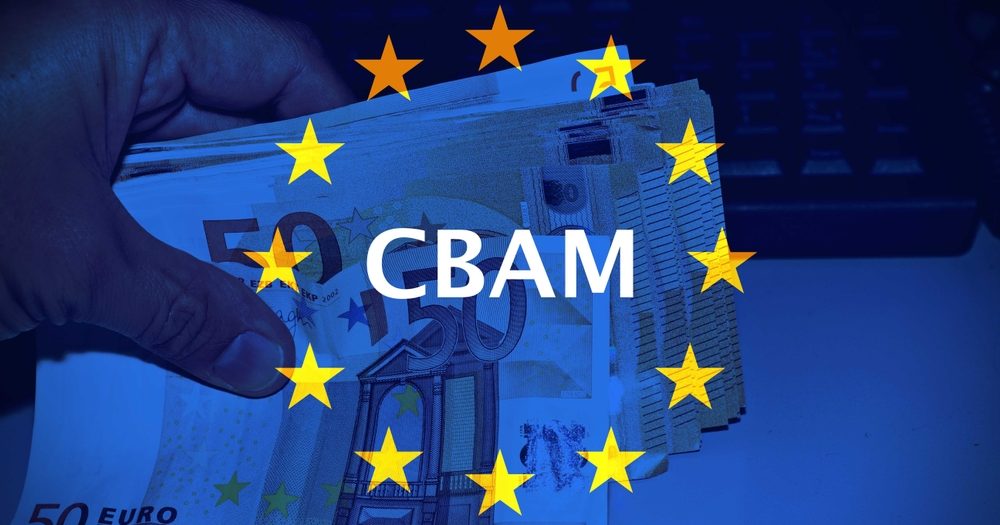
The main challenges lie in working with the European Commission, while the European Parliament supports Ukraine's position
The entire past year was marked by constant reminders from major Ukrainian businesses to Ukrainian officials about the approaching year 2026—the deadline for implementing the CBAM. Deadlines kept shifting until the very last moment, when it finally became clear: Ukraine would receive no relief from the mechanism—neither in the form of a delayed implementation date nor an exemption from its scope.
Now is not the time to ask whether Ukrainian officials failed to clearly convey to the European Commission the full depth of the CBAM problem for Ukraine, or whether European bureaucrats simply did not want to address this issue. Now is the time to demonstrate to the European Commission the full depth of the CBAM problem for Ukraine and its consequences—consequences in which the Europeans themselves will certainly have no interest.
Errors in assessing the impact of CBAM on Ukraine
Ukraine has repeatedly appealed to the European Commission to exempt Ukrainian products from CBAM on the grounds of force majeure, citing the destruction of energy and industrial infrastructure, logistical constraints, and significant economic losses resulting from the full-scale war. In accordance with the procedure, the European Commission prepared a special assessment report on the potential consequences of applying the CBAM to Ukraine and submitted it to the European Parliament for consideration. However, based on the results of the analysis, the European Parliament did not support granting Ukraine a temporary exemption from the mechanism.
The European Commission made two major errors in its assessments of the CBAM’s impact on Ukraine:
- Inaccurate assessment of changes in the competitiveness of Ukrainian products following the introduction of the CBAM—use of default emission values instead of actual ones.
The default CO₂ emission figures, both for Ukraine and for other countries, bear no resemblance to reality. These figures significantly exceed the actual figures. Therefore, comparing the default figures for steel from Ukraine with those for India and China creates a false impression that Ukrainian steel is in a much better position than its competitors.
“The European Commission has acknowledged the error: in previous models, default values were used instead of actual figures,” notes Taras Kachka, Deputy Prime Minister for European and Euro-Atlantic Integration.
- The impact of the CBAM on the Ukrainian economy is underestimated—at just -0.01% by 2035.
Choosing an incorrect basis for comparison results in an inaccurate assessment of the economic impact. Consequently, this leads to an incorrect decision regarding Ukraine. At the same time, a study by the GMK Center shows that the actual GDP decline could reach -2.1% by 2030 due solely to a reduction in exports of metallurgical products.
The cost of miscalculations
These miscalculations are not merely technical errors; they have enormous implications for an economy at war. As a result, some buyers have refused to cooperate with Ukrainian exporters of metallurgical products.
In the first quarter alone, Ukrainian steelmakers lost over 1.1 million tons of export orders for steel products from the EU. Due to the near-total loss of the European market resulting from additional CBAM payments, ArcelorMittal Kryvyi Rih has already reduced its production capacity—a foundry and mechanical plant, as well as a blooming mill—and cut 3,400 jobs at these facilities.
According to GMK Center’s calculations, the financial (tariff) burden on the industry will rise from 12% in 2026 to 26% in 2030. By 2030, exports of long products and square billets will cease entirely; exports of pig iron will drop by 75%, and flat products by 30%, which could lead to the shutdown of three blast furnaces at two major plants. Total losses in steel exports will reach $1.75 billion, and total CBAM payments in 2026–2030 will amount to €1.2 billion, equivalent to two years of capital investment in the steel industry.
Interim measures
Ukraine is working to mitigate the impact of the CBAM on domestic exports. Ukrainian officials have agreed that DG TAXUD will expedite the verification process for Ukraine’s emissions and propose practical solutions for businesses. Additionally, the discussion will be elevated to the political level for further resolution.
Another possible measure mentioned by Taras Kachka is the ability to trade based on actual emissions starting today: “We are currently fighting to ensure that Ukrainian products can be traded based on actual emissions without waiting until January 1, 2027. This isn’t a silver bullet, but at least it removes uncertainty and allows us to trade normally with our customers. We expect this issue to be resolved within a month or a month and a half.”
However, these half-measures in no way solve the problem of losing export markets and the future impact of CBAM on Ukraine, which could completely destroy the Ukrainian steel industry in just a few years—despite “cosmetic” compromises such as simplifying the emissions verification process and so on.
The European Parliament raised the issue of CBAM for Ukraine
Despite everything, Ukraine continues negotiations with the EU regarding a possible exemption of its steel industry from CBAM. Although the request to postpone the measure based on the force majeure clause was denied in December, the possibility of applying this provision remains.
Support for Ukraine’s position has emerged in the European Parliament. Specifically, at a meeting of the European Parliament’s Committee on the Environment, Public Health, and Food Safety (ENVI) on May 5, MEPs openly raised the issue of a special approach to Ukraine in the context of CBAM for the first time.
The rapporteur on CBAM, Mohammed Shagim (Progressive Alliance of Socialists and Democrats), stated that the current force majeure provisions need to be revised—in his view, it is difficult to imagine circumstances that would qualify as force majeure if martial law in Ukraine is not considered as such. According to him, Ukraine is clearly unable to decarbonize at the necessary pace or ensure independent verification of emissions data under wartime conditions. Shagim proposed developing a separate resolution for Ukraine with shadow rapporteurs.
His position was supported by Peter Liese, a member of the European People’s Party, who addressed the European Commission directly, asking why it did not deem it necessary to grant Ukraine any derogation or special treatment. Liese called it “truly a special case,” making it clear that the Commission’s silence was unacceptable.
At the same time, the European Commission, represented by Maria Elena Scoppio, Director for Indirect Taxation and Tax Administration at DG TAXUD, effectively evaded the question and did not express any position on a possible special regime, the interpretation of force majeure, or a separate approach to Ukraine within the framework of the CBAM.
Perhaps, with the support of MEPs, Ukraine will be able to secure a transition period for the implementation of CBAM or an exemption from its application.
“Due to the full-scale invasion, Ukraine is not ready for an immediate transition to ‘green’ standards and needs a few years’ deferral. We call on the European Commission to postpone the application of CBAM to Ukrainian exporters for at least three years. This will allow manufacturers, exhausted by the war, to accumulate resources for modernization,” concludes Mauro Longobardo, CEO of ArcelorMittal Kryvyi Rih.

-

OpinionsIndustrymacroeconomics
28 May 2026
02 June 2026
22 May 2026
21 April 2026