




Interviews decarbonization 714 04 May 2026
SteelWatch’s Executive Director on the progress and challenges in the global steel industry’s green transition
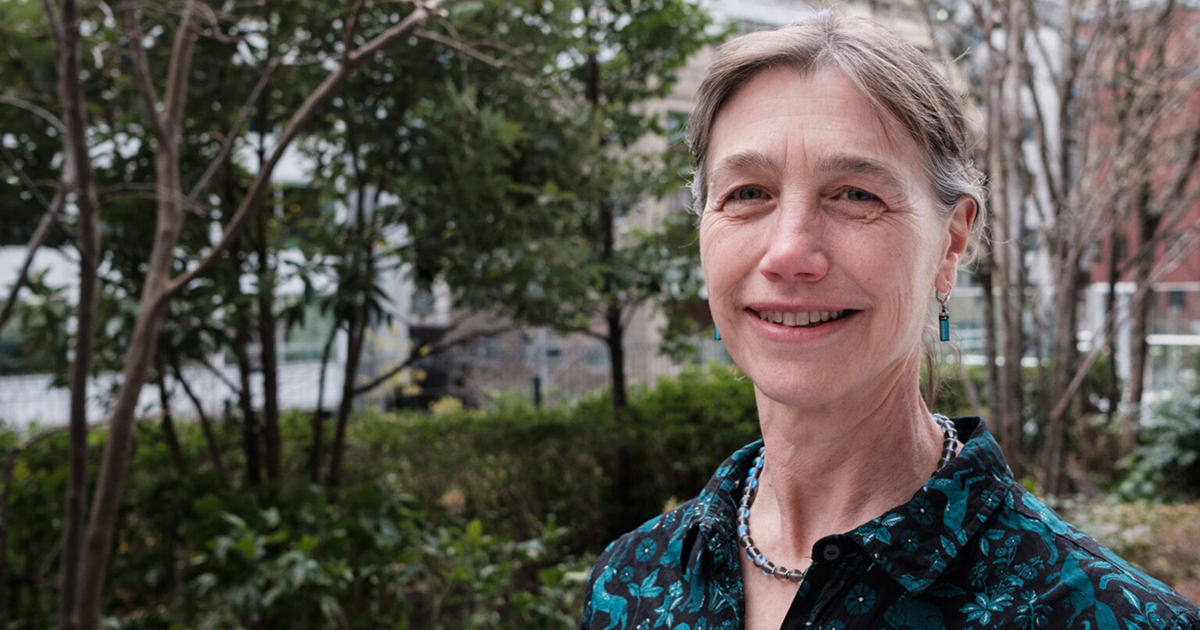
SteelWatch, an international nonprofit organization promoting the decarbonization of the steel industry, recently released the first corporate scorecard for this process. The assessment covered 18 leading steel companies operating in 29 countries. In an interview with GMK Center, Caroline Ashley, Executive Director of SteelWatch, discussed whether there are already leaders in the transformation process, why phasing out blast furnaces is difficult but important, and the outlook for 2026.
Fragmented data
How consistently do major steel producers address decarbonization in their annual reports? The ratings for goals and transparency are low for nearly all 18 companies on the list.
– Transparency and comparability of data reporting are generally low in the steel sector. That presented challenges in creating this Scorecard which is based on public data. We do see some progress: decarbonisation has become a core part of most companies’ annual reporting suite. The number of metrics reported has increased since 2022. But still information is incomplete, scattered, and it is reported in different ways.
Common gaps in reporting include the use of coking coal and scrap. Many companies now report Scope 1 emissions well, but information on Scope 3 remains unclear.
In addition, it is difficult to track actual investments. Investments in blast furnace retrofits may be hidden in a footnote to the income statement. Regarding capital investments in decarbonization, high-profile announcements exceed actual final investment decisions.
A geography of uncertainty
European companies are leading the way in decarbonization (the top three are SSAB, thyssenkrupp, and ArcelorMittal), while East Asian manufacturers are at the bottom of the list. In your opinion, what explains this gap?
– We would not call companies with scores of over 40 out of 100 as true “leaders” – there are no winners yet in the decarbonisation race. But SSAB is emerging from an underperforming pack as it has put more elements of structural transition in place. Most Scorecard indicators assess performance at the end of financial year 2024, or across the 4 years leading to that. In this period, the policy environment was most positive in the EU, setting a clear direction.
The only two of our assessed companies to have climate targets verified by the Science Based Targets Initiative are in Europe, and the strongest scores for blast furnace retirement plans or absence of new investment are in European-headquartered companies.
In contrast, many of the East Asian companies included remain structurally wedded to ongoing and expanding coal production, and in some jurisdictions, have limited public data transparency. The combination of both elements hindered their scores in this Scorecard.
But geography is not the determinant of scores. There is divergence between European-headquartered companies, between Japanese companies, or between Chinese companies. Company leadership and decision-making matters.
The U.S. steel industry is already considered virtually green thanks to mini-mills and the use of electric arc furnaces (EAFs). However, Cleveland Cliffs and U.S. Steel rank significantly lower than their European counterparts. Do they have the potential to accelerate decarbonization, and does current U.S. environmental policy support this?
– Cleveland Cliffs and U.S. steel both scored low on phasing out coal. Both have recent or announced blast furnace relining and have barely progressed in transitioning their legacy blast furnace assets. The Scorecard does not give extra points for use of scrap, as this should be already reflected in emissions intensity scores. It does not give points for announcements in green ironmaking that are not yet at final investment decision. So the U.S. Steel plan for a DRI plant at Big River Steel, which is still vague in terms of timeline, does not count.
Furthermore, we view U.S. Steel as a company at a crossroads. The new owner, Nippon Steel, committed to investing $11 billion as part of the acquisition agreement, of which only a small portion has been allocated so far, primarily for the retrofit of Blast Furnace No. 14 at the Gary Works facility. However, there is significant potential for the production of green iron and steel.
Innovative projects
Does SteelWatch track the progress of new projects positioned as innovative, such as Stegra (formerly H2 Green Steel), Meranti Green Steel, and others? How viable do you consider them to be?
– Yes. In particular, we recently added Stegra to our recently launched Transformation Tracker tool, which covers 22 leading steel producers. We welcome the recent news that the company has completed its latest round of financing, demonstrating confidence in its green steel model, which will have implications far beyond Sweden.
SteelWatch is increasingly focusing on developments in various regions, particularly in MENA and China.
Meranti’s plans in Oman appear intended to reach a fairly high share of green hydrogen and to have government backing, so we will watch that with interest.
In China, BaoSteel does not have green DRI yet, but has a 1 million tonne operational DRI plant and the nearby proposed Yangjiang–Zhanjiang hydrogen pipeline could enable commercial scale green H2-DRI production in the near future. Pioneers break new ground, and move us all up the learning curve, normalising change for others that will follow.
The blast furnace dilemma
Steel production in blast furnaces is currently the most cost-effective method, which is why they continue to be built around the world. Why, in your opinion, would anyone want to abandon them and lose their competitive edge?
– A blast furnace produces two to three times as much carbon dioxide as iron. It is actually a CO2 furnace with a side of iron. Each tonne of crude steel from BF-BOF generates on average 2.33 tonnes of CO2, or 3.05 tonnes when you include methane from the coal. Blast furnaces simply do not have a place in the net zero economy of the future.
We do not expect anyone to ‘abandon’ them overnight. That is a cheap jibe that companies use when they don’t like what we say. We know the transition takes time, takes planning, and must be done in a just way that protects workers and communities. That is precisely why we demand retirement dates and transition plans for every blast furnace now.
Competitiveness if not fixed. It is created. It comes from innovation, changing demand, changing policy, and structural shifts in industry. The fossil fuel economy has been and still is vastly subsidised – that has been a choice. It does not have to be that way. Companies should plan now how to make their business competitive in the green economy of the future and how to use their mighty lobbying power to create the conditions in which they can thrive without harming society and burning the planet.
What incentives could persuade companies to abandon blast furnace production so that they see the economic viability of this transition?
– There are the obvious tangible factors that shift investment decisions: carbon pricing, green hydrogen cost and availability, public finance, and the premium that buyers will pay for truly decarbonised steel. So policymakers and steel buyers that put public responsibility first will help drive transition. A robust emissions trading scheme in Europe with carbon border adjustment on any steel imports is essential.
But there are also other less tangible factors that will encourage change: decent leadership in steel companies that looks beyond the limits of today’s spreadsheet, invests in future-fit competitive business models for the renewables-driven economy, and embraces accountability for its societal impact. When businesses and politicians accept the need to transport green iron from regions with the greatest green hydrogen potential, that will cut costs for other less competitive regions. And most importantly, public disgust at using coal is extending from the power sector to steelmaking, turning the tide of what is deemed acceptable.
In your opinion, which regions have the potential to become DRI suppliers for companies that lack the capacity or financial resources for in-house production?
– The industrial economy of the future will be shaped by the availability of renewable energy sources—just as coal deposits initially shaped the industrial revolution of the past. SteelWatch clearly states: low-emission steel must be produced using green hydrogen (until other technologies, such as direct iron electrolysis, have been proven). Thus, regions with high potential for green hydrogen production and access to local or easily imported iron ore include Northern Scandinavia, Australia, Canada, Brazil, and Oman.
Namibia was the first to begin supplying green iron, albeit in small quantities, and South Africa may eventually join it. Currently, Oman has the strongest propensity for deploying green hydrogen in the MENA region, but other countries in the region also have the potential to transition to it from fossil gas.
Europe’s choice
Will pressure from industry and governments to revise or reform the EU ETS affect the decarbonization process?
– The EU Emissions Trading System is a central element of climate change mitigation efforts. If the process of phasing out free allowances is diluted, it could slow progress.
European steel companies interested in investing in their future competitiveness must demand firm policies so they can implement their plans, rather than wasting time on softening them. The CBAM is a mirror image of the ETS, and we are seeing how its implementation has intensified discussions on decarbonization in countries around the world—to a much greater extent than one might assume, given the actual data on current imports.
The carbon intensity of European steelmakers has remained unchanged over the past decade. Why does Europe claim to be a leader in decarbonization when it is the new steel-producing countries that are investing in modern equipment capable of producing truly green steel?
– Claims of leadership in the field of eco-friendly steel are largely irrelevant. What matters are real investments and actions to develop new supply chains. Some companies are stepping up their efforts, while others are sitting on their hands, waiting for someone else to lead the way in various regions of the world.
European companies will have to figure out how to secure sustainable iron. It can be produced within the EU, but new supply chains will be needed for some imports. That’s why we don’t view decarbonization merely as an equipment issue, but as making upfront commitments in supply chains and reshaping business strategies.
The inevitable transformation
According to the organization’s research, the global steel industry’s transition to low-carbon production made virtually no progress last year due to tariffs, price pressures, and uncertainty surrounding policy incentives—a situation that differed little from that of 2024. What might 2026 look like?
In 2025, we concluded that quantitative indicators of the transition, such as emissions intensity, had not changed. Yet the industry was showing the first signs of shifts in various regions, with movement among both “disruptors” (innovators) and several major players. We expect these scattered signals to continue until they coalesce into profound structural changes in the industry.
In 2026, geopolitical uncertainty is even greater. Investment decisions may be delayed longer. Nevertheless, fundamental transformation remains inevitable. Citizens are increasingly realizing that economic turmoil will persist until we move away from fossil-fuel-based production. The war in Iran, like the war in Ukraine, cannot be viewed as a difficult period in a fossil-fuel-based economy. It must be understood as the end of that economy.

-

13 July 2026
17 June 2026

08 June 2026
15 April 2026