




Infographics iron ore 654 17 April 2026
Falling prices, rising energy costs and CBAM reshape production and export dynamics
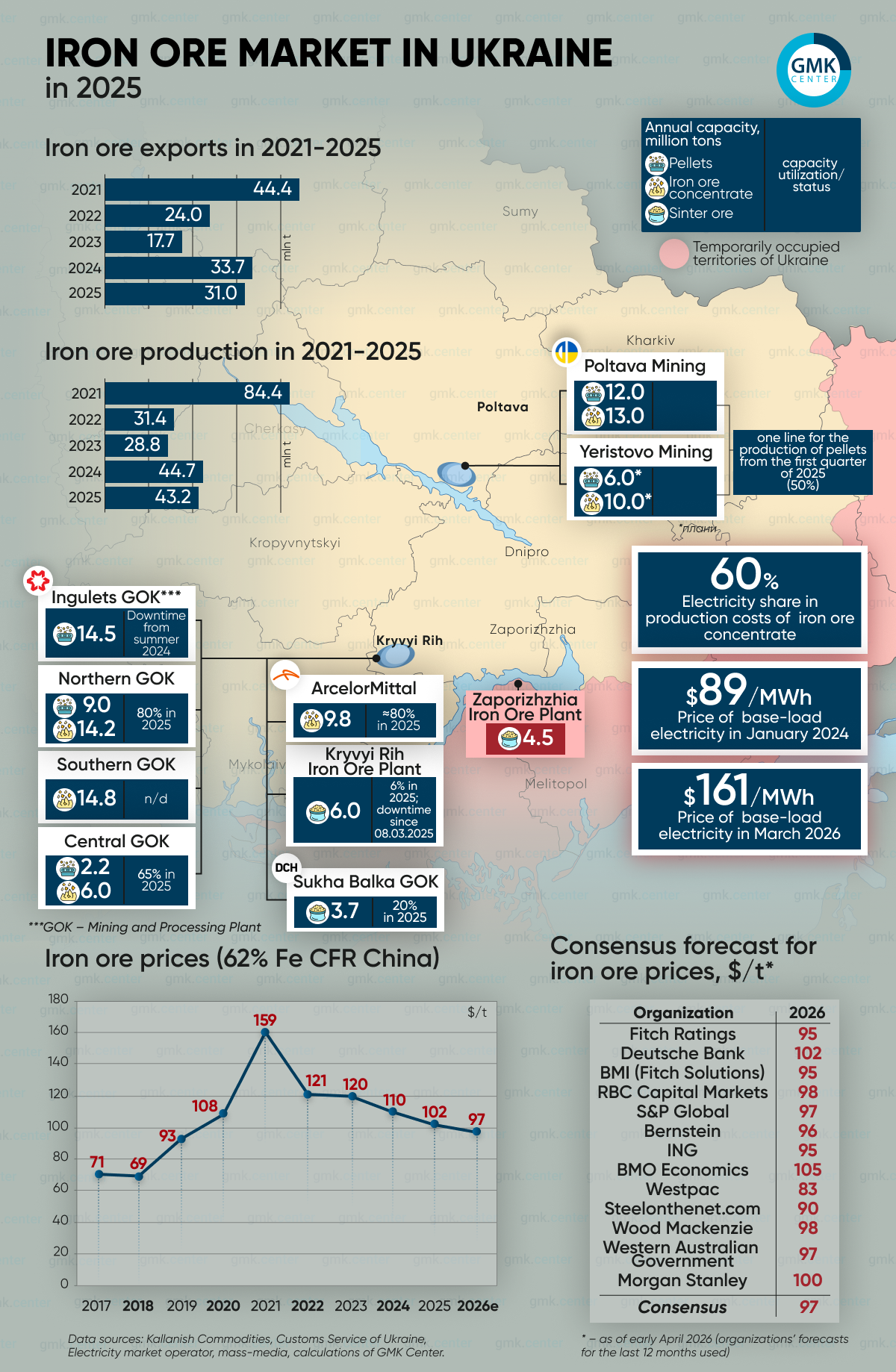
The Ukrainian iron ore market in 2025 experienced a decline in both production and export volumes. Production decreased by 3.4%, while exports fell by 3.3%. The negative trend intensified in 1Q 2026, with iron ore exports dropping by 33.9% year-on-year.
The sector continues to face substantial structural challenges. One of the key pressures is the ongoing decline in global iron ore prices, which has persisted since 2021. In 2025, the average iron ore price stood at $102/t, while market expectations for 2026 suggest a further decrease to around $97/t. This negative price trend, combined with rising fuel and electricity costs, has significantly reduced the profitability of iron ore producers and limited their ability to accumulate financial resources needed for modernization investments.
Electricity remains a critical cost component, accounting for up to 60% of the production cost of iron ore concentrate. As a result, the sector is highly sensitive to tariff changes. The increase in base-load electricity prices on the day-ahead market from approximately $89/MWh in January 2024 to over $160/MWh in March 2026 has significantly undermined the cost competitiveness of Ukrainian producers compared to major global suppliers such as Brazil and Australia.
Another important factor is the contraction of domestic demand. The decline in crude steel production in Ukraine by 2.2% has reduced internal consumption of iron ore. At the same time, the introduction of the EU’s CBAM has added a new layer of uncertainty. In 2026, CBAM is already affecting supply chains, and Ukrainian steel producers are losing competition because of high default emission values set in CBAM regulation. This indirectly puts additional pressure on iron ore production.
As previously reported by GMK Center, Ferrexpo, an iron ore producer with assets in Ukraine listed on the London Stock Exchange, reported a 72% year-on-year decline in total output in the first quarter of 2026, down to 592,750 tonnes. Pellet production decreased by 52% year-on-year to 523,000 tonnes. The company attributed this decline to Russian attacks on Ukraine’s energy infrastructure, which disrupted electricity supply and forced a temporary suspension of operations until the end of February.
-

02 July 2026

06 July 2026

01 July 2026
22 June 2026