




Infographics industrial production 496 08 March 2026
The defense industry, pharmaceuticals, steel sector, food industry, and construction materials manufacturing showed positive dynamics
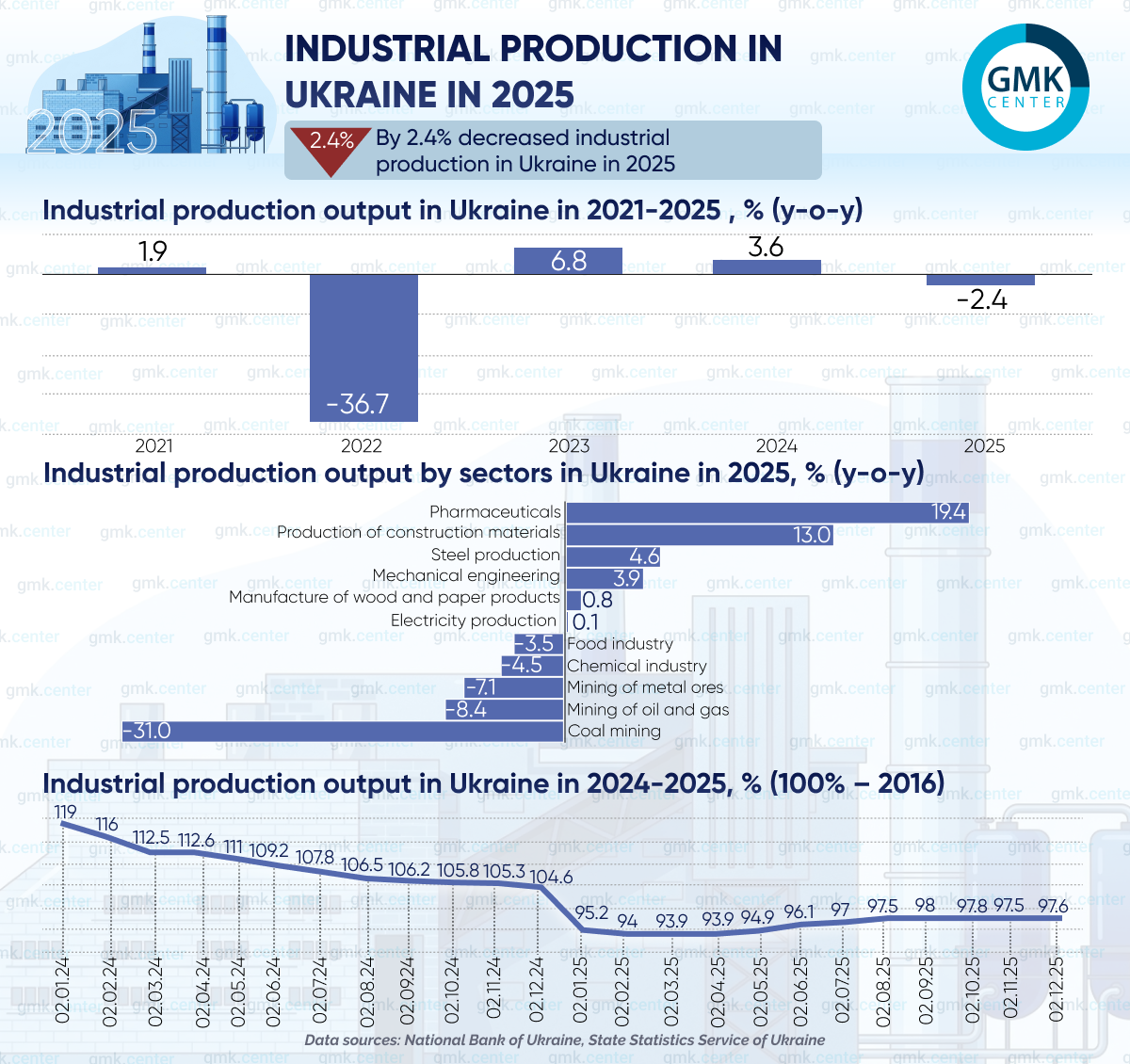
For the first time since 2023, Ukrainian industry showed negative growth. At the end of 2025, industrial production declined by 2.4% year-on-year, compared to growth of 3.6% year-on-year in 2024. The slowdown was caused by a combination of factors:
- high cost of electricity and gas;
- interruptions in energy supply due to shelling of energy infrastructure;
- attacks on oil and gas production facilities;
- increased production costs and reduced competitiveness;
- labor shortage.
The highest growth rates in 2025 were demonstrated by segments related to the production of UAVs: electronic components and boards, electronic and optical products. The total volume of weapons and military equipment produced reached UAH 180 billion, compared to UAH 122 billion in 2024.
Positive dynamics were also observed in pharmaceuticals, finished steel products, steel industry, and a number of segments of the food industry and construction materials production.
The aggregate industrial production index turned negative due to a sharp decline in the extractive industry: coal production fell by 31%, oil and gas by 8.4%, and steel ores by 7.1%. The reasons for the decline vary in each segment:
- coal – loss of the Pokrovskoye mine management;
- oil and gas – attacks on production and transportation facilities;
- steel ores – high electricity tariffs and non-reimbursement of VAT to a number of companies.
Industrial production sales in 2025 grew by 7% y/y – to $97.5 billion, but this is still 26% below the pre-war level of 2021 ($131.5 billion excluding dollar inflation).
In 2026, if current factors remain unchanged and there are no new growth drivers, there will be no grounds for a significant improvement in the situation. The key risk remains the vulnerability of critical infrastructure to large-scale systematic shelling. Additional constraints include:
- Rising energy costs. Due to events in the Persian Gulf, the price of all types of energy resources in Ukraine may increase, primarily gas and petroleum products.
- Impact of CBAM. Ukraine has not received a temporary exemption from the EU’s Carbon Border Adjustment Mechanism (CBAM), which will negatively affect exports from the iron and steel sector, cement, and a number of other industries.
- Restrictions on maritime logistics. Due to electricity shortages and damage to port infrastructure, physical volumes of maritime exports in December 2025–January 2026 have already fallen by 25–35%.
-

Opinions Industry steel consumption
13 July 2026

06 July 2026

01 July 2026
22 June 2026