




Posts Global Market industrial policy 1076 18 February 2026
Proposals regarding the European component, which will be announced shortly, are already controversial
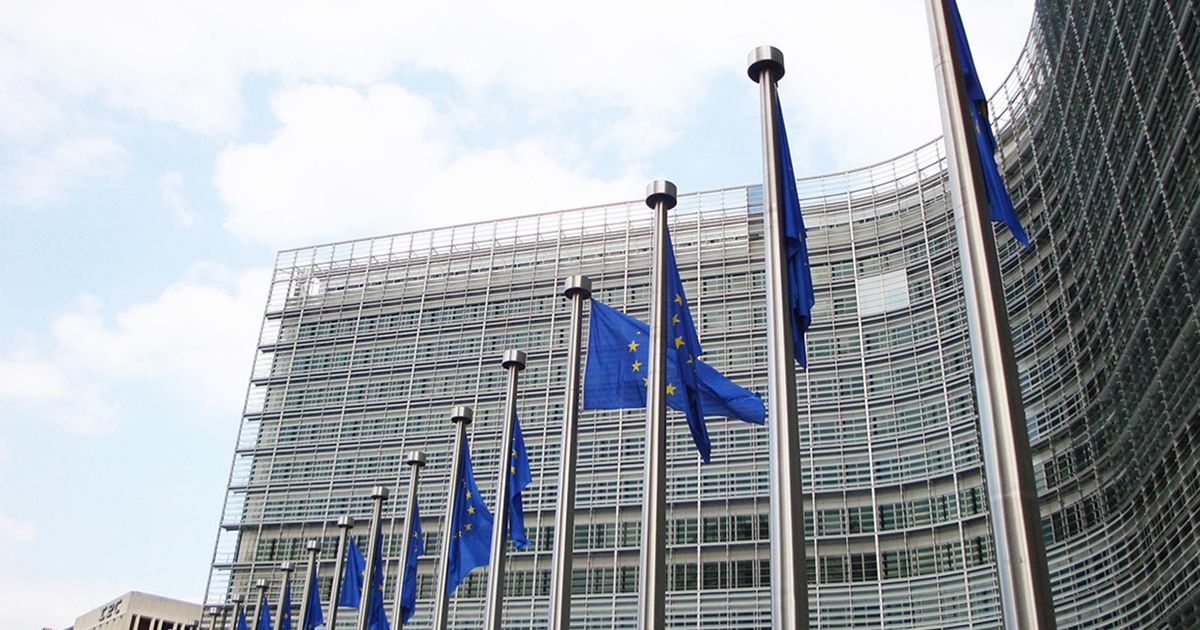
In February this year, the European Commission is expected to propose the Industrial Accelerator Act (IAA). The proposal will include provisions on introducing European content requirements for industry («Made in Europe») in public procurement and strengthening local partnerships. The plan for European preferences became controversial even before its official presentation.
European preferences
In early February, in a newspaper article signed by more than a thousand CEOs and other business leaders, European Commissioner for Industrial Strategy Stéphane Séjourné emphasized that the region must protect its own industries with a «Made in Europe» strategy. He called for «European preferences» in the single market to counter increased competition from China and the US.
The European Commissioner pointed out that other major economies already apply national preferences to protect strategic assets. According to his proposal, companies that receive public procurement, state aid, or other financial support will have to produce a significant part of their products within the EU, and the same logic should apply to foreign direct investment.
The Industrial Accelerator Act itself is expected to focus on three main areas:
- creating leading markets for decarbonized industrial products, strengthening demand for such products manufactured in the EU through the introduction of a set of common criteria,
- streamlining bureaucracy and simplifying procedures for obtaining permits for strategic industrial and infrastructure projects,
- introducing low-carbon labeling, which will initially cover steel and later cement.
Different perspectives
Prior to the informal summit of EU leaders on February 12, member states, particularly the bloc’s largest economies, approached the issue of «made in Europe» with differing positions. France insisted on strict criteria (restrictions for countries in the European Economic Area) to stimulate and revive production, especially in sectors such as clean technology, steel, automotive, and chemical industries.
Germany, in turn, promoted a more liberal approach – «Made with Europe» – which would allow the participation of third countries (those that have a free trade agreement with the EU or “like-minded” countries). Berlin also sought to limit the time frame and apply European preferences to a specific list of products. Poland, Hungary, Belgium, and Italy advocated a targeted approach limited to certain sectors.
A group of Northern European and Baltic countries (Finland, Sweden, Estonia, Latvia, and Lithuania), joined by the Netherlands, in a joint informal document published a few days after Sejourne’s article, expressed the view that European preference risks undermining the EU’s simplification efforts and adding another layer of regulation for European companies. In their view, the initiative should be guided by three principles: limitation, proportionality, and a clear understanding of the consequences.
The position of industries on European preferences also varied. On the eve of the meeting on February 12, several industry representatives told Euronews that increasing pressure on manufacturers to relocate production to Europe would disrupt existing supply chains and force them to build new ones. For example, the automotive industry was critical of approaches to local content due to the nature of its supply chains and the risk of a backlash from other countries. Similar concerns were expressed by the aviation sector.
The European Chemical Industry Council has stated that the «Made in Europe» criteria will only work if effective criteria are introduced to stimulate all value chains, not just the production of end products in the EU. Steelmakers generally support the strengthening of domestic production, as does the clean technology industry, albeit with some reservations.
Foreign investors, particularly Asian ones, were concerned that European plans could impose certain conditions on them, such as technology transfer, joint ventures, and obligations to hire local workers.
During an informal summit of EU leaders, EC President Ursula von der Leyen called European preferences a necessary tool that would help strengthen Europe’s own manufacturing base, but said that it was a «fine line» and that there was no one-size-fits-all solution. That is why each proposal must be backed by a thorough economic analysis and comply with the EU’s international commitments.
According to European Council President Antonio Costa, the discussions demonstrated «broad agreement» on the need for a proportionate and targeted European preference principle for selected strategic sectors.
French President Emmanuel Macron ultimately acknowledged that European companies should only receive advantages in certain critical sectors that are particularly vulnerable. The March summit of EU leaders will determine exactly which sectors these will be.
Revised position
Ultimately, according to media reports citing the latest leak of the IIA draft, changes to «Made in Europe» indicate that the rules have been relaxed. Fastmarkets notes that the new proposal allows selected third countries (those that meet the bloc’s security and sustainability objectives) to be treated as EU producers in public procurement of strategic industrial goods, including steel.
The revised text retains the definition of «EU origin,» which covers production in the bloc and the European Economic Area, but adds a mechanism allowing the European Commission to designate specific third countries as equivalent. The EC will also be able to revoke this status in the event of serious violations.
In addition, restrictions are envisaged on foreign direct investment from countries that control more than 40% of global production in critical sectors (batteries, electric vehicles, renewable energy technologies). In the previous draft, the control and approval requirement for investments exceeding €100 million would apply to all trading partners that do not have a free trade agreement with the EU.
Judging by the leaked draft, the new version should reassure Europe’s partners to some extent. In particular, British Finance Minister Rachel Reeves previously called on her European colleagues to extend the concept to other countries with similar interests, citing her own country, Norway, and Canada as examples. The Japan Business Council in Europe (JBCE) made a similar appeal. Turkey, an important trading partner of the European Union, also informally expressed its concerns to Brussels.
At the same time, the revised provisions outline barriers for China, which has already prompted a reaction from the country’s business community. According to a statement by the Chinese Chamber of Commerce in the EU (CCCEU), quoted by Politico, the latest version of the Industrial Accelerator Law is likely to undermine the investment confidence of leading Chinese companies. They noted that, in addition to political signals, there are certain practical aspects, in particular the feasibility of mandatory local partnership requirements, which in many cases may be commercially or technologically disadvantageous. It should be noted that according to the latest CCCEU-Roland Berger report, published last November, by the end of 2024, nearly 3,000 enterprises with Chinese investments were operating in all 27 EU member states.
The IIA also provides opportunities to stimulate demand for green steel through public procurement, the automotive sector, and voluntary certification programs.
The European Commission will classify steel according to the emissions generated during its production. In addition, governments will be required to ensure that 25% of metal products used in public procurement and subsidy programs are low-carbon.
The «Made in Europe» provision aims to increase the share of industry in gross value added to 20% by 2035.
The Industrial Accelerator Act and the Made in Europe plan are part of the bloc’s broader efforts to boost the region’s competitiveness and protect its market in the face of fierce global competition, particularly from the United States and China. These efforts also include accelerating the formation of a single market, simplifying rules for business, attracting investment, and reducing energy prices. In addition, arguments for revising certain instruments are becoming increasingly vocal in the EU, in particular criticism of the ETS and the Green Deal from both individual countries and the metallurgical industry. Ultimately, the EC’s proposals, which will be announced in February, and the March summit should provide answers to the question of how ready the region is to support its industry, given international trade commitments and associated risks. However, it is unlikely that these proposals will escape criticism.

-

15 June 2026
16 June 2026
10 June 2026
27 May 2026