




Infographics decarbonization 961 08 January 2026
Major companies are developing different solutions – from electrification of mining fleet to new steelmaking technologies
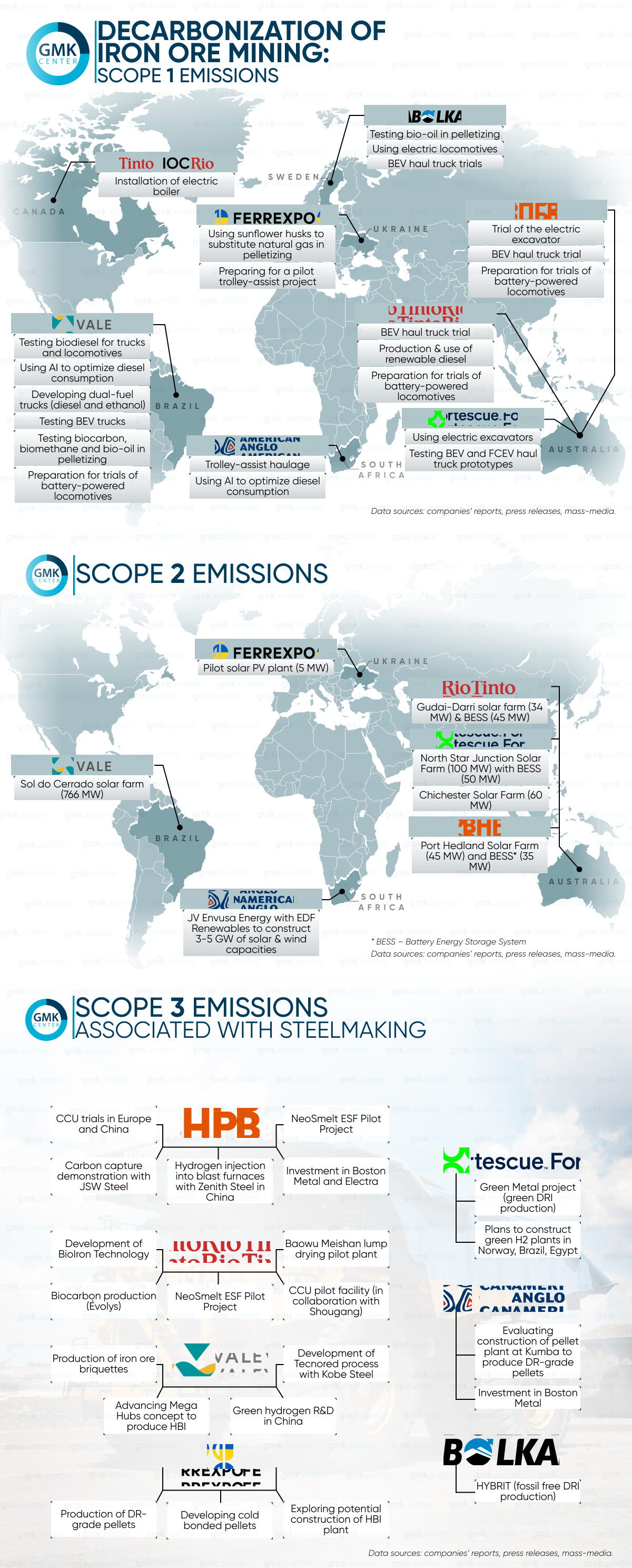
Major iron ore producers are actively pursuing decarbonization across their operations (Scope 1 and 2) and value chains (Scope 3). This is evidenced by analysis of 2024 sustainability reports of companies.
Iron ore companies focus on diesel displacement in mining (via battery-electric or hydrogen fuel-cell haul trucks), renewable energy integration (solar, wind, hydro, battery storage) for electricity supplies, and green value-chain initiatives like production of direct-reduced iron (DRI) using hydrogen, carbon capture pilots, biofuel usage.
BHP has initiated trials of the electric Liebherr R9400 excavator and is preparing for the Caterpillar Early Learner battery-electric haul truck program. It also plans to begin trials of battery-electric locomotives in FY2026, aiming to assess the operational changes required for large-scale deployment of electrified equipment.
To support steelmaking decarbonization (Scope 3 emission reduction), BHP is investing $171 million in partnerships and ventures focused on emission intensity reduction and iron ore quality enhancement. It is piloting carbon capture and use (CCU) projects in China and Europe, with key trial results expected by FY2026. BHP also co-develops the NeoSmelt ESF pilot with BlueScope, Mitsui, Rio Tinto, and Woodside Energy, aiming to produce molten iron for BOF without blast furnaces.
Fortescue has deployed several electric excavators and is testing battery-electric and hydrogen-powered haul truck prototypes. Its plan to electrify most mining equipment (including drills and locomotives) could double company’s energy demand by 2030. To meet this, the company is investing in renewable energy through its Fortescue Future Industries (FFI) division. The company has already built North Star Junction Solar Farm (100 MW) and Chichester Solar Farm (60 MW).
Fortescue also constructed what it claims is Australia’s largest electrolyser and liquid hydrogen plant at its Christmas Creek mine. The company has also ordered 10 mobile hydrogen refuelers and is testing hydrogen-powered drill rigs. Fortescue is developing the Christmas Creek Green Metal Project which intends to use hydrogen produced locally together with an electric smelting furnace to produce high purity green metal.
Rio Tinto is collaborating with BHP to pilot battery-electric haul trucks and is also trialing renewable diesel as an interim decarbonization solution. At its Iron Ore Company of Canada (IOC) operation, Rio Tinto plans to commission an electric boiler this year to replace fossil fuels used in heating processes.
To reduce Scope 3 emissions, Rio Tinto established Évolys, a joint venture producing biocarbon from biomass as a steelmaking alternative to coal. It is also advancing the BioIron process, developed with the University of Nottingham and Metso, which uses raw biomass and microwave energy to convert Pilbara ores into metallic iron.
Vale has partnered with Caterpillar to trial large battery-electric haul trucks and charging systems, while also collaborating with Komatsu and Cummins to retrofit trucks for bioethanol-diesel use. With Wabtec, Vale is working on integrating FLXdrive battery-electric locomotives and developing dual-fuel conversion kits.For its pellet plants, Vale is evaluating alternative fuels such as biocarbon, biomethane, and bio-oil.
Vale has developed iron ore briquettes that can cut CO2 emissions in blast furnaces by 10%. These briquettes, produced at lower temperatures than traditional pellets, help reduce fossil fuel consumption during sintering and enable smoother integration into various production processes as Vale cooperates with Midrex Technologies Inc. to explore the use of these briquettes in direct reduction plants, aiming to validate performance in hydrogen-based DRI processes.
In parallel, Vale is advancing the development of Mega Hubs in partnerships with steel companies designed to produce lower-emission steel using direct reduction iron (DRI) in electric arc furnaces.
Anglo American is preparing for the deployment of fossil-free mining infrastructure by working with Original Equipment Manufacturers and conducting internal studies. The company operates trolley-assist haulage at Sishen mine in South Africa. Also Anglo-American has integrated remote operation center with AI to optimize truck dispatch, reducing idle time and thus diesel burn. Anglo American partnered with EDF Renewables to form Envusa Energy to build a 3-5 GW renewable energy capacity in South Africa by 2030.
LKAB has successfully conducted tests and development work to replace fossil fuels with bio-oil in its pellet production. Longer term, electrification of pellet heating is planned. LKAB’s underground iron mines (Kiruna, Malmberget) already use electric locomotives and hoists. Ongoing trials with Epiroc and Sandvik aim to introduce battery-electric trucks and loaders for ramp haulage.
Ferrexpo continues to use sunflower husks to substitute natural gas in the pelletizing process, actively researching other biofuel opportunities to further reduce emissions in its production operations. The major long-term strategy for reducing Scope 1 emissions related to diesel consumption in mining is the «Green Mine Initiative». The research provided under its scope concluded that the most preferrable choice is usage of electric-diesel trucks with trolley assistants where feasible. Another proposed solution is replacing the existing diesel and diesel-electric locomotives with battery-electric ones.
-

15 June 2026
22 June 2026
18 June 2026
17 June 2026