




Posts Global Market trade war 1522 04 February 2026
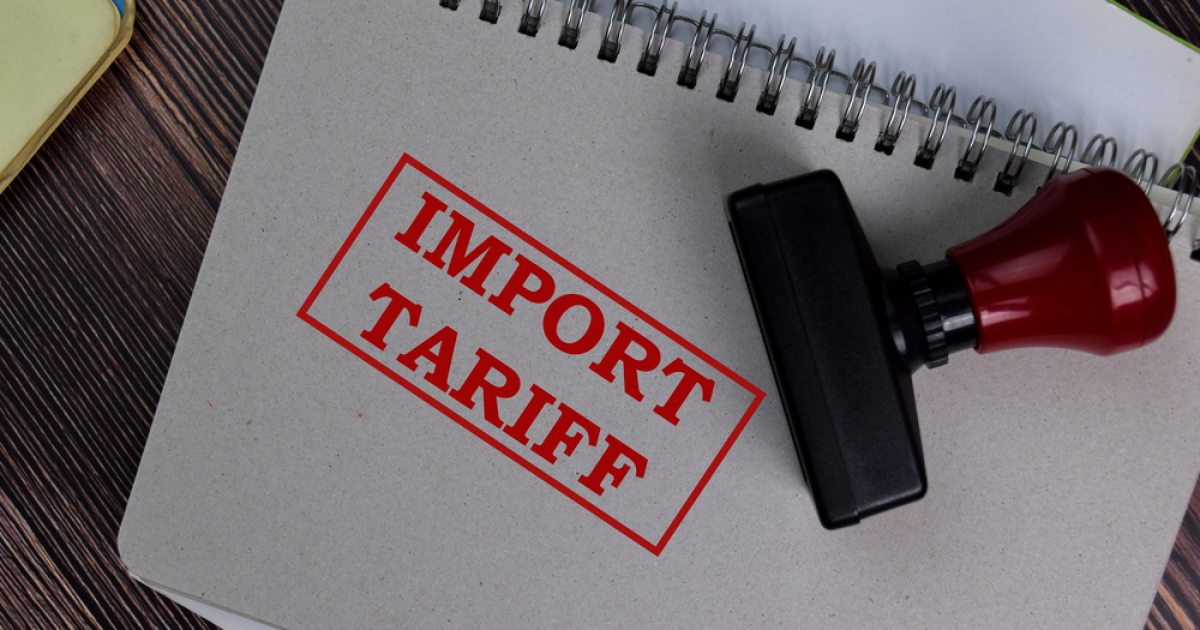
The US president continues to use tariffs as an argument in economic and political disputes
The beginning of 2026 showed that the US is not abandoning tariffs as a tool of trade and political pressure. In January alone, Donald Trump used such threats several times, in particular against a number of European countries and Canada. Against this backdrop, the United States’ major trading partners had to come up with “defense strategies” and promote new opportunities.
“Punishment” for South Korea
On January 27, Trump announced an increase in tariffs on goods from South Korea from 15% to 25%. The new tariffs apply to automobiles, lumber, pharmaceutical products, and “all other” mutual trade items. The US president justified his decision by citing the other side’s delay in ratifying the relevant agreement concluded last year.
The US and South Korea reached an agreement at the end of July 2025 that provided for a 15% tariff on all South Korean imports. The agreement also included South Korea’s investment commitment to invest $350 billion in the United States in exchange for lower rates. The trade agreement was submitted to the South Korean National Assembly in November last year, according to local media reports, and was due to be approved in February.
South Korean officials were forced to urgently engage with their American counterparts on this issue. On January 31, Industry Minister Kim Jong-kwan said that, in his opinion, “unnecessary misunderstandings” had been resolved during talks with US Trade Representative Howard Luttick in Washington. He noted that the special bill was expected to be processed quickly and explained the reasons for the delay to the American side.
China as a provocateur
Donald Trump also continues to criticize his closest trading partners. On January 24, he threatened to impose a 100% tariff on imports from Canada if the country signed a trade agreement with China, sharply changing the position he had voiced a week earlier when he said that if an agreement with China could be reached, Carney (the Canadian prime minister) should do so.
On January 16, China and Canada reached an agreement that provides for a mutual reduction in tariffs on certain goods. China reduced tariffs on Canadian agricultural products, while Canada, in turn, will allow the import of 49,000 Chinese electric vehicles at a reduced tariff rate.
After Trump’s threats, Mark Carney said that the country does not intend to conclude a free trade agreement with China. He recalled that the USMCA (or CUSMA) provides for an obligation not to conclude such agreements with non-market economies without prior notification of others — the US and Mexico. Chinese officials, in turn, explained that the agreements reached were not directed against any third party.
However, relations with Canada continued to deteriorate. At the end of January this year, Trump announced that Washington had revoked the certification of all aircraft manufactured in Canada and threatened to impose 50% tariffs on them until Canada certified American Gulfstream business jets. However, CNN writes that it is unclear whether the US president has legal authority to do so, as the decision previously rested with aviation safety experts from the Federal Aviation Administration.
Trump also called the UK’s business dealings with China a “very dangerous” move. The comments came at the end of January, after British Prime Minister Keir Starmer met with Chinese leader Xi Jinping and made progress in securing greater access for British companies to Chinese markets.
It should be noted that the January visits of the British and Canadian prime ministers to China were the first such trips in eight years.
The Greenland issue
On January 17, the US president threatened to impose an additional 10% tariff on imports from the UK, Denmark, Finland, France, Germany, the Netherlands, Norway, and Sweden, and to increase it to 25% from June 1 due to their position on Greenland. The next day, European talks on the matter were quickly organized. The bloc considered far-reaching countermeasures, including tariffs worth €93 billion in response to Trump’s statements. The latter step could be implemented very quickly, as it involves the reactivation of measures that the European Union suspended after reaching a trade agreement with the United States in July 2025.
However, on January 21, Trump backed down, abandoning the idea of imposing these tariffs and explaining his decision by saying that a “framework for a future agreement on Greenland and, in fact, the entire Arctic region” had been reached after a meeting with NATO Secretary General Mark Rutte in Davos.
Earlier that day, the European Parliament officially suspended the ratification process for the trade agreement with the US in protest against the US president’s threats. However, Bernd Lange, chairman of the trade committee, noted that this would not affect the bloc’s promise to purchase $750 billion worth of energy, as the issue was not related to the tariff agreement.
At the end of January, German Chancellor Friedrich Merz warned the Trump administration not to question the trade agreement between the parties. According to him, the American side should be interested in ensuring that the agreements are not undermined by “daily announcements,” and the EU is not ready to agree to a deterioration of what has already been achieved.
The acceleration effect
Trump’s relentless tariff threats became a factor that accelerated Europe’s conclusion of trade agreements that had been in preparation for decades. In particular, on January 17, 2026, Brussels signed a partnership agreement and a provisional trade agreement with the South American Mercosur (Brazil, Argentina, Paraguay, Uruguay) – negotiations had been ongoing for a quarter of a century. As noted, this step should lead to an increase in annual European exports to the countries of this economic union by approximately 39%.
On January 27, after almost two decades, the European Union and India concluded negotiations on a free trade agreement (FTA) – EC President Ursula von der Leyen called it “the mother of all agreements.” It is expected to double exports of goods from the EU to India by 2032 by eliminating or reducing tariffs on 96.6% of European goods entering the Indian market. The European Union, in turn, will eliminate or reduce tariffs on 99.5% of goods imported from India over a period of seven years, according to the country’s Ministry of Trade and Industry.
However, although the lengthy negotiations have been completed, it will take time to formalize the agreements in both cases. As for Mercosur, on January 21, the European Parliament voted to challenge the agreement in the bloc’s Supreme Court, which could delay it for two years and even potentially derail it.
The US has also achieved success in negotiations with India. On February 2, Donald Trump announced that he would lower tariffs on Indian goods in exchange for a promise to stop buying Russian oil, among other things. As the US president wrote, in a conversation with him, Prime Minister Narendra Modi agreed to replace crude oil imports from Russia with supplies from Venezuela and the United States. He also said that the tariff on Indian goods would be reduced to 18% from 50% — a rate that included an additional 25% imposed in August last year. Trump called it a “trade deal” in a post on Truth Social.
Trump’s trade policy, which is largely based on a “carrot and stick” approach, has led to a sharp increase in US government revenues. Last year, the US collected $287 billion in customs duties, tariffs, and taxes, almost three times more than in 2024. Approximately one-third of this amount was collected in the fourth quarter alone. However, The New York Times notes that most economists believe that a significant portion of the tariff burden is borne by US businesses and consumers.
In the last months of the year, the Trump administration also managed to reduce the trade deficit, which was one of its stated “tariff” goals. At the same time, jobs continued to decline last year in the manufacturing sector, which should have benefited from import duties, and industrial production in the country grew by only 1% year-on-year at the end of last year.
At the same time, according to ODI Global’s analysis, the US tariff regime, combined with reduced development aid from the US and the EU, poses a threat to the global economy, exposing low- and middle-income countries to the risk of economic instability, primarily due to a decline in export revenues. Large economies are seeking new partnerships to reduce their dependence on the United States.

-

OpinionsGlobal Marketsteel consumption
13 July 2026

14 July 2026
16 June 2026
10 June 2026