




Posts Global Market ArcelorMittal 2220 15 October 2025
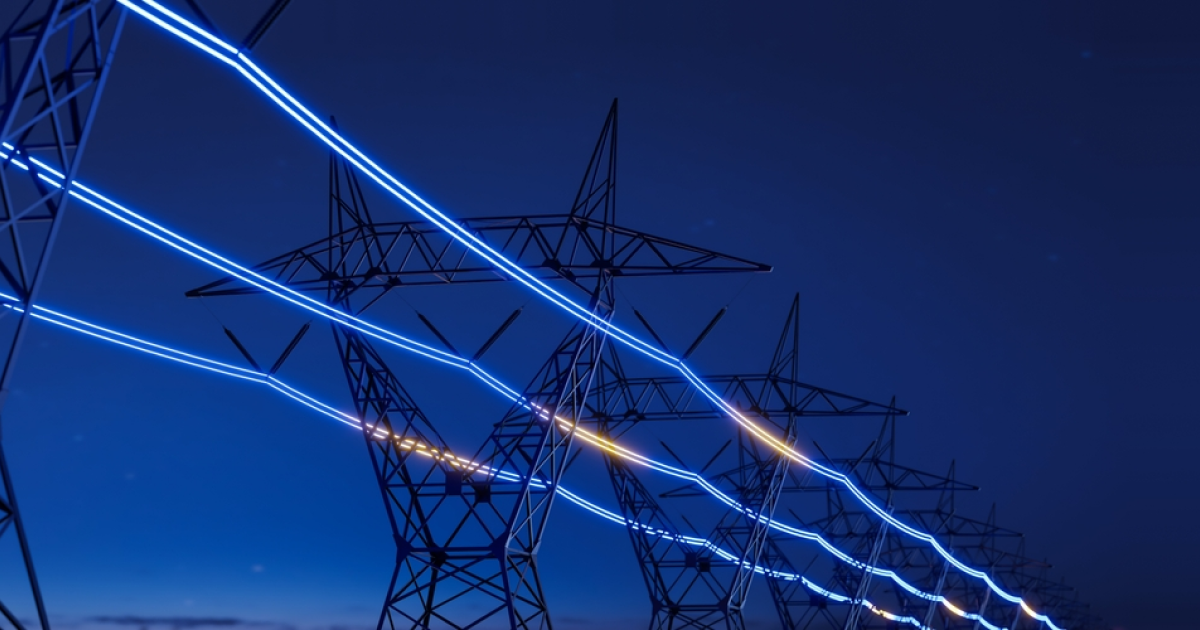
Electricity costs for industrial consumers in the EU are twice as high as in the US and 50% higher than in China
The European steel industry is experiencing a systemic crisis caused by high electricity costs. This has led to massive shutdowns of production facilities, the abandonment of billion-dollar decarbonization projects, and the loss of tens of thousands of jobs. The key reason is the inability of European governments to ensure competitive electricity prices for the metallurgical industry.
Reasons for high electricity prices in the EU
Electricity prices for European industrial consumers rose sharply after the start of the war in Ukraine, but remain high today for a number of internal European reasons:
- High share of expensive energy sources. Europe is actively moving away from coal and gas in favor of renewable energy sources (RES). Since wind and solar generation are characterized by instability, gas stations are needed as a backup, and significant investments in network infrastructure are required, the costs of which are passed on to the end consumer.
- Dependence on gas imports. Following the reduction in Russian gas supplies, the EU is purchasing liquefied natural gas (LNG), mainly from the US and Qatar, which is more expensive than pipeline gas. In addition, Europe competes for LNG with Asian countries, which leads to sharp price increases during periods of high demand (winter, supply disruptions).
- Marginal pricing model. The price is determined by the most expensive power plant needed to meet demand. Even with the growth of the share of RES, expensive gas “pulls up” the price for all market participants.
- Taxes and excise duties. In the EU, a significant part of the cost of electricity is accounted for by taxes, excise duties, and mandatory payments for the development of renewable energy sources, network modernization, and climate policy support.
- Environmental regulations and policy. Generating companies pay for CO₂ emissions. The price of quotas in 2023–2024 fluctuated between €60 and €90 per ton of CO₂, which directly increases the cost of electricity from coal and gas power plants. In addition, Germany is short-sightedly refusing to restart its nuclear power plants, which would allow it to lower electricity prices.
As a result, industry in the EU pays significantly more for electricity than in other countries. According to the IEA, by the end of 2024, average electricity prices for energy-intensive industrial consumers in the bloc were about twice as high as in the US and 50% higher than in China.
«Competition with companies that have significantly lower energy prices means that our European companies do not have a level playing field. This threatens our economic growth and prosperity, which affects jobs and local communities,» emphasizes Dan Jørgensen, European Commissioner for Energy.
This inevitably affects the cost of steel production. Electricity costs account for an average of 7-12% of the cost of steel production in the EU. However, there are differences depending on the smelting technology used:
- electric arc furnace (EAF) production – up to 20-25% of the cost;
- blast furnace (BF-BOF) process – 5-7%.
European requirements
Since the beginning of this year, metallurgical companies and associations from Germany, France, Great Britain, the Czech Republic, Poland, Italy, and other countries, including the European association EUROFER, have been demanding a solution to the problem of high electricity prices through increased state support. High energy costs significantly reduce the competitiveness of European metallurgists against the backdrop of ineffective protection against cheap imports and low demand for metal products.
For example, electricity transmission costs in Germany have risen by 130% since 2023, adding €300 million in annual costs to the industry. A similar situation is observed in other EU countries: in Spain, the abolition of an 80% discount on electricity charges has added €40 million in annual costs to steel companies, and in the UK, the industry pays significantly more for electricity than its European competitors.
The EUROFER association says that the competitiveness of European steel is declining due to expensive electricity and trade pressure.
«It is unlikely that the EU economy will accelerate in the second half of 2025, as the economic outlook remains highly uncertain and unstable growth is driven by a number of unfavorable factors. These include energy prices, uncertainty caused by the war in Ukraine and the Middle East, the introduction of US tariffs and related trade disruptions,» the association said in its September report.
National industry associations are calling for more active government intervention. Germany’s WV Stahl is calling for long-term government support to reduce electricity transmission costs and ensure competitiveness. Although the German government has allocated a subsidy of €6.5 billion for 2026 to compensate for the increase in transmission tariffs, which will reduce companies’ costs by about half, a one-year period is extremely insufficient.
«We call for a reduction in network costs beyond 2026. Annual decisions create uncertainty, which is detrimental to investment. Today, companies need long-term predictability to remain competitive and achieve climate goals,» said Kerstin Maria Rippel, CEO of WV Stahl.
For its part, the Spanish association Unesid calls for support for the country’s steel industry through a more ambitious European industrial policy, predictable energy prices, a fairer regulatory framework, and effective protection of the European market.
Antonio Gozzi, president of the Italian steel producers’ association Federacciai, noted the unfavorable European context regarding energy costs for companies investing in the green transition and called for a change in European industrial policy.
Steel companies are also putting forward their demands for lower energy costs and/or compensation for electricity costs. ArcelorMittal Poland, for example, has stated that it is prepared to switch to electric arc furnaces only if competitive electricity prices are guaranteed.
Austria’s voestalpine is demanding the restoration of the electricity cost compensation mechanism, which has been in place in most EU countries for over a decade.
«For companies such as voestalpine, electricity price compensation is an important factor in competitiveness and investment, enabling us to continue to maintain 23,600 jobs in Austria. We want to be sure that politicians will provide a reliable basis for our competitiveness in the future,» emphasizes CEO Herbert Eibenstainer.
Czech producers are calling on the government and the EU to maintain the competitiveness of the metallurgical industry, which is under pressure from high energy prices and increased imports from third countries.
“This energy-intensive sector needs to be placed under state protection. Climate targets need to be adjusted and assistance provided in the transition to green technologies,” said Roman Durčo, chairman of the KOVO trade union.
Steel companies and associations insist that without an immediate solution to the problem of energy costs, reduction of bureaucracy, effective protection against unfair imports, and an ambitious European industrial policy, the EU’s strategic autonomy in key sectors will be threatened.
In addition, under current conditions, steel producers are unable to cover the costs of transitioning to low-carbon technologies on their own. According to a study by GMK Center, it is the price of electricity that determines the competitiveness of “green” steel.
The scale of the crisis in the European metallurgical industry is evidenced by the fact that an emergency summit on steel was convened on October 1. At this event, industry representatives demanded urgent measures to address unfair trade practices and high energy prices, as the EU steel industry is on the verge of collapse.
«The European Union must act now and decisively before a significant part of the EU steel industry and its value chains are wiped out. Today, more than ever, we need new effective EU measures on steel trade, competitive energy prices, and EU partial participation provisions to ensure the viability and transformation of the European steel industry,» emphasized Henrik Adam, President of EUROFER.
No more threats
Due to rising energy costs, European steel companies are forced to cut production and abandon their decarbonization plans. Such large-scale steps began as early as 2024. In particular, at the end of last year, the German concern ThyssenKrupp announced a 40% reduction in existing jobs, i.e., 11,000 employees, in its steel division.
In 2025, German steel producer Salzgitter decided to postpone the implementation of its large-scale “green” Salcos project, aimed at reducing CO₂ emissions in steelmaking through the use of hydrogen, for three years.
«The economic environment is not ready. We are still waiting for the regulatory changes that politicians have long promised but have not yet delivered,» said Salzgitter CEO Gunnar Groebler.
As reported by Reuters, ArcelorMittal has canceled investments in green steel projects in Germany due to excessively high and unstable electricity prices. For the same reason, the company has refused a €1.3 billion government subsidy.
Additional reasons for abandoning investment plans and reducing production include high gas and green hydrogen prices, weak demand for metal products, and a significant influx of cheap imports.
Against the backdrop of ArcelorMittal’s problems in Europe, governments are beginning to consider measures to preserve national metallurgical assets. In Poland, trade unions are demanding a single tariff of €60/MWh for all energy-intensive industries in the EU and have announced their intention to intensify protests due to the lack of real support for the industry from the government. It is worth noting that it is precisely the lack of support from national governments that is partly responsible for ArcelorMittal’s plans to cut back in various countries.
Conclusions for Ukraine
The crisis in the European metallurgical industry, caused by high electricity prices, demonstrates the critical dependence of industrial competitiveness on the cost of energy. On the one hand, in the context of the war, Ukraine found itself in a catastrophic situation, with some of the highest electricity prices in Europe.
In September of this year, the weighted average purchase and sale price of electricity on the DAM in Ukraine, according to the Market Operator, was 4521.85 UAH/MWh, or €93.3/MWh (at the average monthly exchange rate of the hryvnia to the euro).
The Ukrainian steel industry is in an even more vulnerable position than European producers. High electricity tariffs in the context of war, destroyed generation facilities, and the need for post-war reconstruction threaten the future of an industry that has traditionally been the backbone of the economy.
Without a systematic solution to the problem of high energy costs, Ukrainian metallurgy risks repeating the fate of its European counterpart—massive production stoppages and loss of position in the global market. Therefore, Ukraine should consider supporting its own energy-intensive industry by introducing compensation and regulatory mechanisms.
«We need to look closely at these examples and realize that we do not live in a bubble. European governments are acting very consistently to protect their metallurgical industries during this difficult period of price volatility, providing assistance in particular through tariffs. I want us to understand that supporting electricity tariffs is an entirely European model,» said Oleg Krykavsky, Director of Government Relations at ArcelorMittal Kryvyi Rih.

-

02 July 2026
16 June 2026
10 June 2026
27 May 2026