




Posts State post-war reconstruction 1954 21 July 2025
Ukrainian iron and steel companies presented investment projects worth $1.43 billion, social and humanitarian initiatives at the event
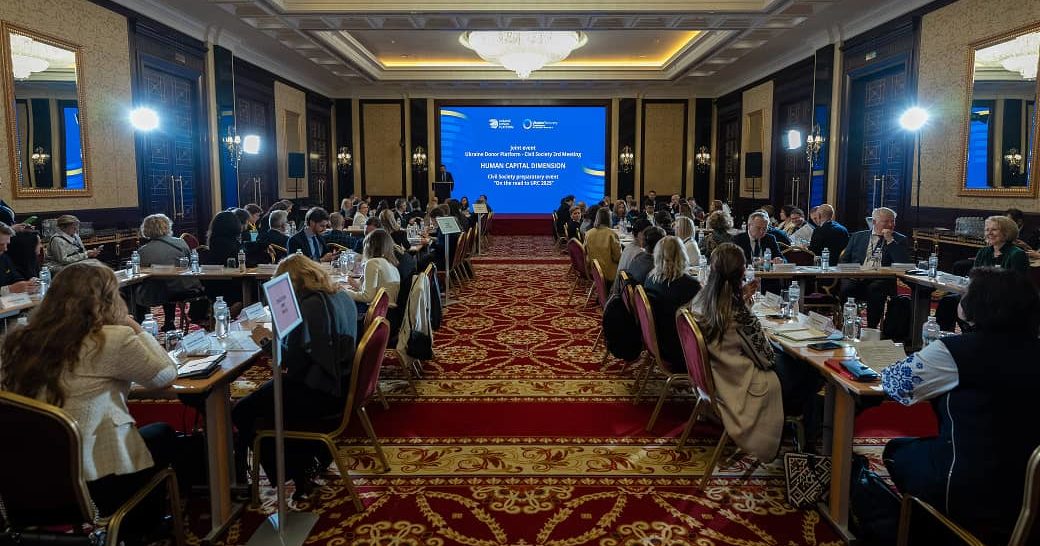
On July 10–11, 2025, Rome hosted the fourth Ukraine Recovery Conference (URC-2025). It was attended by over 6,000 participants from 70 countries. The conference resulted in the signing of approximately 200 agreements and memoranda worth €11 billion. This figure was announced by then-Deputy Prime Minister Yulia Svyrydenko, but the then-head of government, Denys Shmyhal, cited €13 billion. It is not very important which of these figures is correct, as these are all still plans and intentions.
GMK Center examined the results of the conference and the agreements that were concluded that are important for the development of industry and the most important sectors of the Ukrainian economy.
Industry
Industrial issues in one context or another were one of the key topics at the conference. Among the agreements signed, the following are noteworthy as they will contribute to the development of various sectors of Ukrainian industry:
- €2.3 billion from the European Commission as part of the investment component of the Ukraine Facility program, of which €1.8 billion is in loan guarantees and €580 million is in grants. These funds will be directed towards the restoration of the housing, medical, and energy sectors, as well as support for small and medium-sized businesses (SMEs);
- €500 million from the European Commission as part of the new European Flagship Fund for the reconstruction of Ukraine. The initial capital will amount to €220 million, and €500 million is the planned amount of funds to be accumulated by 2026. The fund provides grants, guarantees, and capital investments for the implementation of new business projects in Ukraine;
- $188 million from Japan for the green modernization of Ukrainian industry;
- $161.5 million from Italy for grants for reconstruction, business support, and the agro-industrial complex;
- €134 million from the EIB for the reconstruction of transport infrastructure;
- €5 billion over 10 years from Switzerland for reconstruction in various sectors of the economy.
Special attention was paid to defense projects at the conference, with discussions on the creation of joint ventures, localization of production, and technology. Ukraine will receive a €2.3 billion loan from the United Kingdom to strengthen its air defense, as well as agreements between defense industry enterprises on joint production and cooperation. It was also agreed that Ukraine and the EU would invest €50 million each in the BraveTech EU joint defense innovation grant fund.
A separate emphasis during URC-2025 was placed on the industrial sector. Industrial topics appeared at the conference for the first time, both in discussion panels and in the exhibition area and signed agreements.
«NovaSklo signed an agreement with leaders in the glass industry to build a float glass production plant. The Bila Tserkva Industrial Park agreed to build a plant with the Italian company Gualapack. And the Ministry of Economy signed an agreement with the United Nations Industrial Development Organization (UNIDO) on a project to transfer technology and create joint ventures with Japanese companies worth $188 million,» wrote Yulia Svyrydenko, then Deputy Prime Minister, about the results of URC-2025.
It is also important that during URC-2025, the Ministry of Economy presented a concept for an industrial strategy for 2026-2030. It is aimed at developing a competitive, innovative, and export-oriented industry, strengthening integration into the EU market and production networks, etc. Within its framework, it is planned to redesign support instruments in accordance with priorities, implement Smart Specialisation Strategies in line with EU standards, etc. The priority sectors are identified as mechanical engineering, infrastructure and construction, IT and digital industries, defense and dual-use technology, steel industry(in particular, green), energy, and agro-processing. The strategy is scheduled to be finalized by the end of this year.
At the conference, Ukraine estimated the cost of post-war reconstruction at $1 trillion over 14 years. It is planned that $540 billion will be allocated to the “Ukraine Fund,” which will be filled with confiscated Russian assets and a tax on raw material exports. Another $460 billion will go to a fund for attracting European business investment.
Energy
Ukraine is to receive the following funds for the development and restoration of various energy segments:
- €200 million from the EIB to support and develop Ukrainian hydropower. Part of the funds will be used to restore three hydroelectric power plants that were damaged by rocket attacks. The rest will be used for emergency repairs if new damage occurs.
- €200 million from Norway to restore heat and water supply to the population;
- €160 million from the EBRD for Ukrnafta to implement energy projects;
- €100 million from the EIB for SME projects in renewable energy, energy efficiency, and clean innovative technologies (through Ukreximbank);
- €52 million – from the Netherlands for the reconstruction of energy infrastructure and water supply systems as part of a €300 million package to support recovery.
Iron and steel industry
Since the inception of the URC, Ukrainian iron and steel companies have been partners and active participants in this event. This year, the largest companies in the industry presented their investment, humanitarian, and social projects.
At the conference, Metinvest presented a five-year project to produce DR pellets for green metallurgy at the Northern Mining for $1.12 billion. The project involves the construction of new iron ore enrichment facilities and the modernisation of facilities for the production of 8 million tonnes of DR pellets per year. The company is seeking $850 million in financing.
Metinvest also presented another project at Northern Mining – the construction of a complex for thickening iron ore enrichment waste. It will reduce the volume of sludge pumped to the tailings pond during the ore enrichment process by 30%. The three-year project, with a total cost of $189 million, requires $130 million in financing.
Interpipe, in turn, presented an investment program to modernize its railway division for $120 million by 2032. The main projects are the construction of a new heat treatment line, the expansion of wheel and axle finishing capacities, and the modernization of workshop infrastructure.
In addition, Metinvest presented two very important solutions for the present and post-war reconstruction:
- Citadel modular shelters. These are steel cylindrical structures of various types that are installed in the ground to a depth of up to 5 meters. Inside, there are places for sitting or resting, ventilation, an autonomous power supply system, and a bathroom. They were presented in partnership with the Recovery Agency.
- Projects for the reconstruction of four cities. As part of the Steel Dream initiative, four unique concepts for the reconstruction of neighborhoods in Bakhmut, Mariupol, Trostyanets, and Hlukhiv have been developed. A separate presentation was given on the general concept of Steel Dream, which is an idea for rebuilding infrastructure based on steel structures. Metinvest specialists have already developed more than 200 model projects for residential and social infrastructure.
Ferrexpo presented its achievements at URC-2025, confirming its status as one of the leaders in climate transformation. For the third time in a row, Ferrexpo was the only Ukrainian company to be included in the prestigious Europe’s Climate Leaders ranking by the Financial Times and Statista. This high distinction was achieved not only thanks to its emissions reduction policy, but also through real technological solutions – the electrification of quarry equipment, the transition to trolley-assist systems, and the use of battery-powered locomotives.
The company also highlighted its social initiatives. Yaroslava Blonska, acting CMO of Ferrexpo, spoke at a panel discussion on women’s leadership. For Ferrexpo, gender equality is a real driver of innovation and competitiveness. In particular, the internal FemUnity initiative has become a platform for the support, development, and career growth of women at all levels of the company.
Consequences of URC-2025
The conference became an important platform for international support for Ukraine, mobilization of resources, and creation of a structural foundation for post-war recovery. Steps aimed at modernizing industry and the iron and steel complex are particularly important, although there were relatively few agreements directly related to green investments. Allocating funds for the development of industrial projects and infrastructure reconstruction will have a positive impact on technological renewal and demand for steel products.
The situation with investments is different. The cost of environmental modernization of Ukrainian metallurgy is estimated at approximately $11 billion. Ukrainian companies will not be able to finance such costs on their own, and access to Western capital markets is currently limited due to the war. Some improvement in the financing of industrial projects is possible in the process of post-war recovery and acceleration of European integration, as it provides for candidate countries to gain access to EU structural funds.
In any case, improved conditions for industrial modernization and business in general are only possible after the active phase of hostilities has ended and stable security guarantees have been obtained, as well as a reliable investment insurance mechanism is in place.
A fly in the ointment
International conferences are an important platform for presenting actions and intentions, mobilizing finances, support, and political attention, attracting private business, and forming coalitions and partnerships. But in the Ukrainian reality, where talks about post-war reconstruction began back in 2022, various representative events have already become synonymous with managerial helplessness and misplaced optimism. A fierce war continues with no end in sight, the situation in the country is becoming more complicated every month, and at foreign and Ukrainian conferences, government officials talk about far-reaching projects and attracting billions in investments.
Various conferences on recovery are mostly communication and presentation events, at which not only direct agreements are concluded, but also declarations of intent — memoranda. In the Ukrainian context, memoranda do not often result in the practical implementation of projects. Moreover, conferences on recovery in 2022-2024 have mostly ended in discussions rather than the actual launch of projects.

-
OpinionsStatesteel consumption
13 July 2026
30 June 2026
25 May 2026

02 March 2026