




Opinions Companies ArcelorMittal Kryvyi Rih 751 01 August 2025

If this business shuts down, there’s little else to replace it – especially in metals and mining
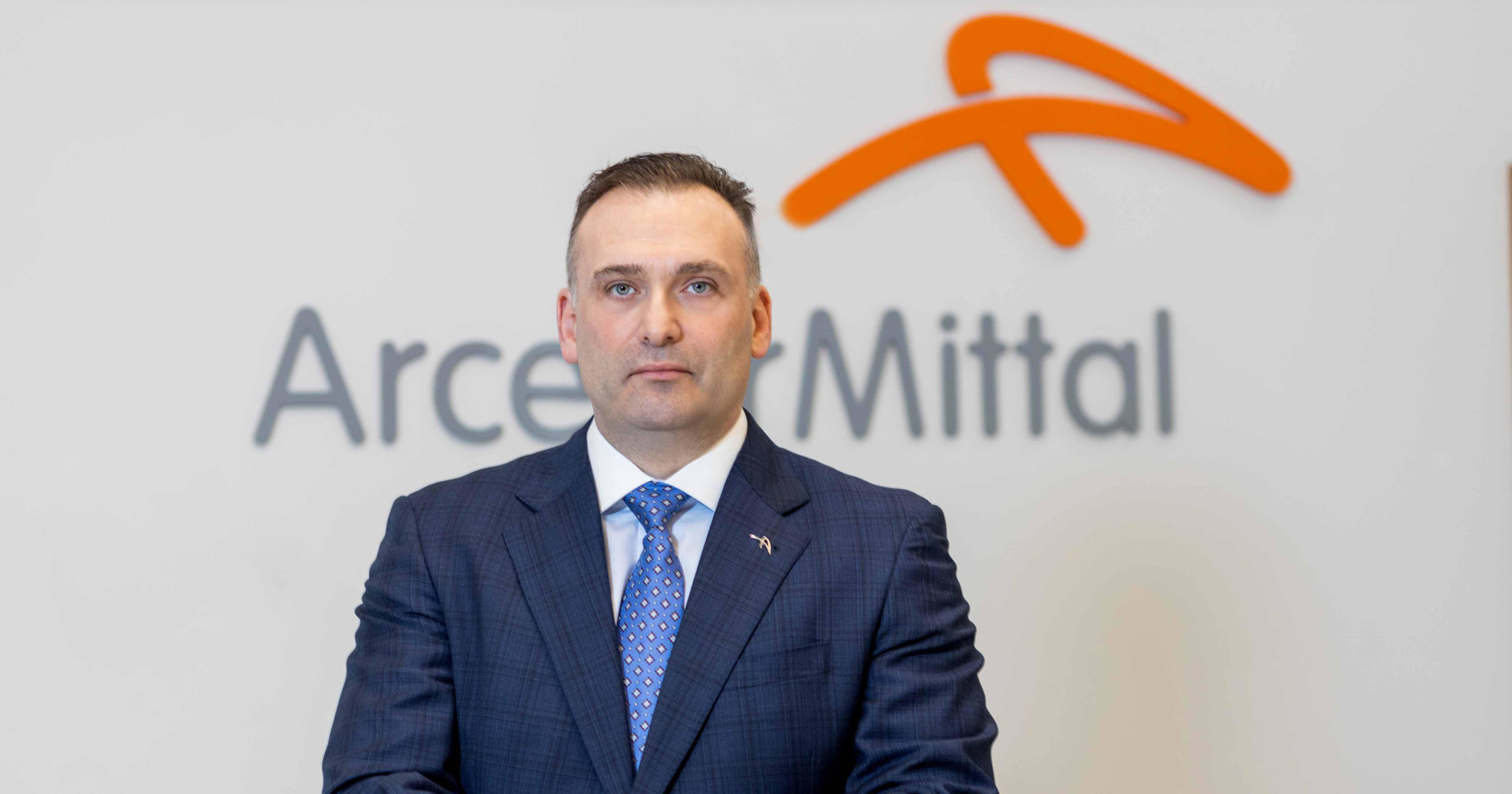
Unfortunately, we are a very energy-intensive company. Under current conditions, we consume approximately 250 MWh, and that’s not even at full production capacity. Before the war electricity used accounted for 7% of our price of products. That share has now risen to 20%.
Analyzing electricity prices, particularly in months that should be the cheapest – between March and June, after winter and before summer – we observed that Ukraine had the highest electricity prices among all European countries. This was reported multiple times. For example, in May, electricity prices reached 94 EUR/MWh, which was five times higher than in France during a period that should be the most affordable. In June, even though Europe experienced unusually hot weather, Ukrainian electricity prices were still twice as high as those in France.
The rising cost of electricity also includes the delivery component. One of the reasons why Ukraine’s electricity prices are higher than in the rest of Europe is increased transmission costs. The cost of transporting electricity to our facilities has grown significantly over the past year.
As a result, net loss of our enterprise was UAH 3.8 billion in just five months of 2025. We produce commodities – rebars and wire rods – for the construction sector, which ties us to global market pricing. We cannot pass on increased energy costs to our customers because our product prices are determined by the global market, and our scale doesn’t allow us to rely on the domestic market. We must export our products.
However, when we export, we compete directly with producers in countries where electricity is significantly cheaper. Before the war, we exported mainly to the Middle East, Asia, and Africa. Currently, this is no longer feasible, and the European market has become our primary export destination.
We benefited from EU integration through duty waivers and the removal of quotas, making our exports to Europe tariff-free. But electricity prices in neighboring EU countries are still lower than in Ukraine.
When we add high electricity costs to our logistics costs to reach these markets, we’re no longer competitive – our total costs often exceed that of our European rivals. The market itself has been depressed for the past two to three years, partly due to the war. The construction sector hasn’t recovered, many projects are on hold, and commodity prices remain low. In some cases, our production costs exceed market prices, leading to continued losses.
Despite this, we must keep the plant running, which requires minimum investments. To maintain operations at the lowest viable level, we still need to invest around $150 million per year. But due to high energy costs, profitability is unattainable.
Over the past three years, our parent group had to inject nearly $1 billion into our operations just to maintain financial stability. That’s a staggering sum. Now we are exploring potential solutions with the government, because we’ve exhausted internal optimization efforts. There’s nothing more we can cut – our scale does not allow it.
To be profitable, we need to produce at least 3 million tons of steel per year. But even at that level, over 1.5 million tons are currently unprofitable. These volumes are generating losses, so expansion is not even on the table. Some experts mention the idea of switching to green energy or investing in electric arc furnaces. Frankly, that’s not the current conversation. Today the conversation is about survival.
We need to find a fair and competitive electricity price that allows us to continue operating and supporting the city of Kryvyi Rih. Our company’s salaries, land taxes, and other payments together with the jobs that we give to our partners and contractors make up 50% of the city’s budget, according to our calculations. If we can’t survive, the local economy will collapse.
We’re not even aiming for big profits – we just want to break even. As part of the publicly listed company on the New York Stock Exchange and Euronext, we’ve lost 90% of our equity value over the last three years. The parent group has continued to support us, but they are starting to ask hard questions about the business’s viability.
Is it sustainable to produce basic commodities in Ukraine under these energy conditions? At current electricity prices, the answer is no. It is not only unsustainable in Ukraine – it wouldn’t be sustainable even in Europe. Companies in Europe are already shutting down under similar price pressures.
We need a real solution tailored to our circumstances. If this business shuts down, there’s little else to replace it – especially in metals and mining. Other companies and service providers in the region also depend on us.
Before the war, we had a $450-500 million five-year CapEx plan in place (in 2021). That would have significantly boosted the local economy. Even now, we still plan to invest in green energy as part of our post-war development. This is an obligation for EU integration. We may receive temporary waivers under the Carbon Border Adjustment Mechanism (CBAM), but eventually, we will need to comply with EU environmental standards.
This will require an estimated $1 billion in investment – just to build electric arc furnaces and the infrastructure needed to support them. But today, we are far from that point. Before we can invest in green steel, we must survive during the war and return to profitability.
If we cannot generate even modest profit now, we won’t be able to accumulate the funds needed for future strategic investments. That’s why solving the energy cost issue is critical. We’re not asking for subsidies to increase shareholder dividends – our shareholders are already losing. We just want to avoid collapse.
As mentioned earlier, some potential solutions have already been proposed. We don’t have a hundred options to choose from. This is not about inventing a new strategy – it’s about making a decision.
Ukraine’s iron & steel industry has historically been a major contributor to GDP. And it should continue to be one – because the country currently does not have enough other industries to replace it at the same economic scale. The industry is also labor-intensive. In 2021, we employed 27,000 people. Now, we employ slightly below 20,000, but we’ve retained our workforce because we don’t want to lose them – and we believe we will recover.
We are confident that if the right decisions are made, we can return to previous volumes and financial results.

-
OpinionsCompaniessteel consumption
13 July 2026
08 June 2026
19 February 2026
16 January 2026