




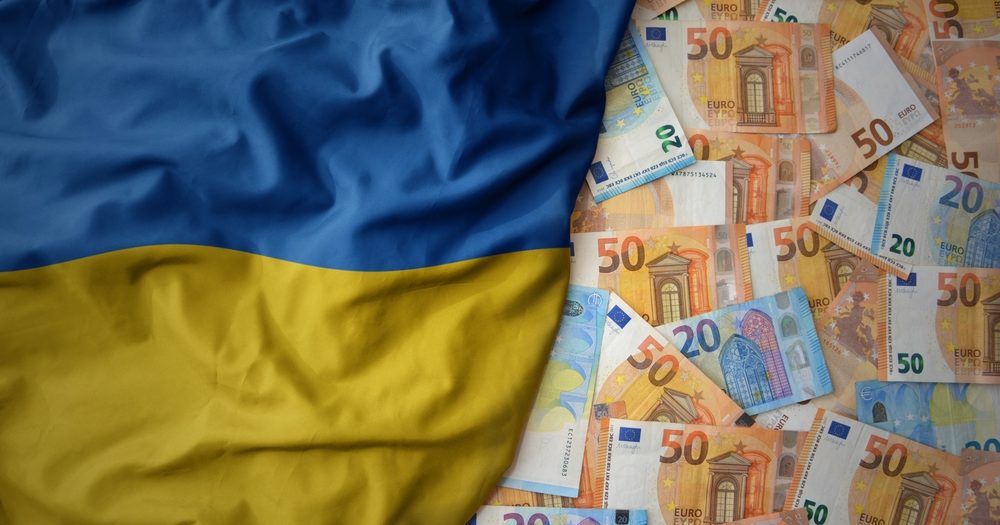
Opinions State Ukraine’s economy 1563 19 September 2025
Ukraine’s economy is “hitting the ceiling”: why growth is slowing down after recovery

Among the reasons are a shortage of personnel, high energy prices, and a decline in private investment
Ukraine’s economy slowed from 5.5% growth in 2023 to 0.9% in the first quarter of 2024. There are several reasons for this, ranging from a shortage of personnel to critically low private investment. The main challenge is how to ensure sustainable growth in the context of a protracted war, when the labor market remains tight and the transition from a military to a civilian economy could lead to a loss of momentum.
Natalia Kolesnichenko, senior economist at the Center for Economic Strategy, spoke about this during the online event: “Has the Ukrainian economy hit the ceiling?” GMK Center presents the main points of her speech.
Current economic growth dynamics
After a sharp decline in 2022, Ukraine’s economy began to recover, growing by 5.5% in 2023 and 2.9% in 2024. However, the first quarter of this year showed disappointing results, with GDP growth of only 0.9% year-on-year. Accordingly, all government and non-governmental analysts have significantly lowered their forecasts for both this year and next.
This year, non-governmental analysts estimate that GDP growth will average 2.3%. The main reason for the slow growth is the ongoing war, new destruction, and losses.
Significant fluctuations in GDP dynamics, especially on a quarterly basis, are caused by agriculture, and this is not the first year. First of all, crop production, which is highly dependent on the weather.
Other situational and temporary factors, as evidenced by State Statistics Service data for the first half of the year, include
- the effect of the sea corridor, which affects freight transportation
- the shutdown of the Pokrovska mine, which affected the extractive industry.
Trade, passenger transportation, and other activities are hovering around zero. Construction is showing slightly positive results, but this is to a certain extent related to the construction of fortifications, as evidenced by the high volume of trades and orders through the Prozorro system coming from military units.
Factors holding back the economy
What is holding back the economy more – demand-side factors or supply-side factors? In fact, both.
The increase in supply is limited by the fact that the existing production capacities of enterprises are already being used at almost the same level as before the full-scale invasion in 2021. For example, as of the beginning of the third quarter, industrial enterprises are using about 65% of their production capacity, which is the level observed at the beginning of 2021.
It is clear that this level has been reached due to significant losses of assets and capacity in the occupied territories during the war.
According to enterprises’ estimates, demand has also practically returned to pre-war levels, and this applies to both domestic demand and export orders. In general, a significant proportion of industrial enterprises assess their demand as normal.
Business assessments are more specific. According to NBU surveys, respondents note the following among the most important factors restraining business activity:
- Staff shortages – for the second year in a row, this ranks first, indicating a tight labor market.
- Price factors, in particular the high cost of energy, although their impact has softened somewhat in recent quarters.
The share of those who assess demand as weak is currently even lower than it was in 2021. The same applies to the share of those who complain about limited access to bank financing or a lack of working capital. All this indicates that the economy is currently close to its potential level, as assessed by the National Bank.
A noticeable decline in private investment is one of the main reasons for the slowdown in growth. Investment in Ukraine has always been quite limited. Gross fixed capital formation in 2015-2019 was approximately 16% of GDP, which is a very insignificant figure.
Investment declined significantly during the pandemic and, of course, cannot recover quickly during the war due to high security risks. Although, according to State Statistics Service data, the share of gross fixed capital formation in GDP has increased significantly, this is mainly due to budget investments in security and defense, possibly in the development of defense industries.
The flow of private investment by type of activity remains quite narrow. At the same time, according to international experience, in rapidly growing countries, the share of investment in GDP is 25-35% and has remained at this level for decades. This makes it possible to accelerate economic growth.
Long-term challenges
The labor market will remain tight for a very long time. The return of migrants is being delayed because the war continues. Even after the end of active hostilities, the return of military personnel to the labor market may be slow, as Ukraine has a fairly large army. The very process of adapting to civilian life may require additional psychological training and other measures to help military personnel adjust to civilian life, which can be really difficult.
It may take a long time to retrain and reskill personnel to overcome existing gaps and imbalances in the labor market.
Recovery would be accelerated by compensation and reparations from the Russian Federation, as well as rapid accession to the EU. However, this is still a matter of debate.
Conclusions
The constraints on economic development that we are currently seeing and which we may encounter this year are fluid. This “ceiling” is not rigid — it is what we understand as potential GDP, and the Ministry of Economy expects it to continue growing.
The military-industrial complex currently plays a significant role in the economy. However, this raises additional questions: if we transition from a military economy to a civilian economy, this momentum may be lost. Accordingly, the halt of military production, the halt of budget financing, and the reduced role of the budget in the economy may somewhat slow down growth in the future.
Measures affecting people can be taken right now, without waiting for the post-war period. Given the shortage of personnel and the limited labor force due to migration and mobilization, as well as the possible slow return of military personnel to civilian life, this really requires significant measures to expand the labor force and potential GDP.
The question of how to live and grow during wartime remains important. Progress in reforms and EU accession can be a stimulus even during active military operations.

-
OpinionsStatesteel consumption
13 July 2026

23 March 2026
19 December 2025
21 November 2025