




Opinions State state support 323 23 March 2026

In 2026, the National Development Agency — the equivalent of a development bank — was established under the Entrepreneurship Development Fund
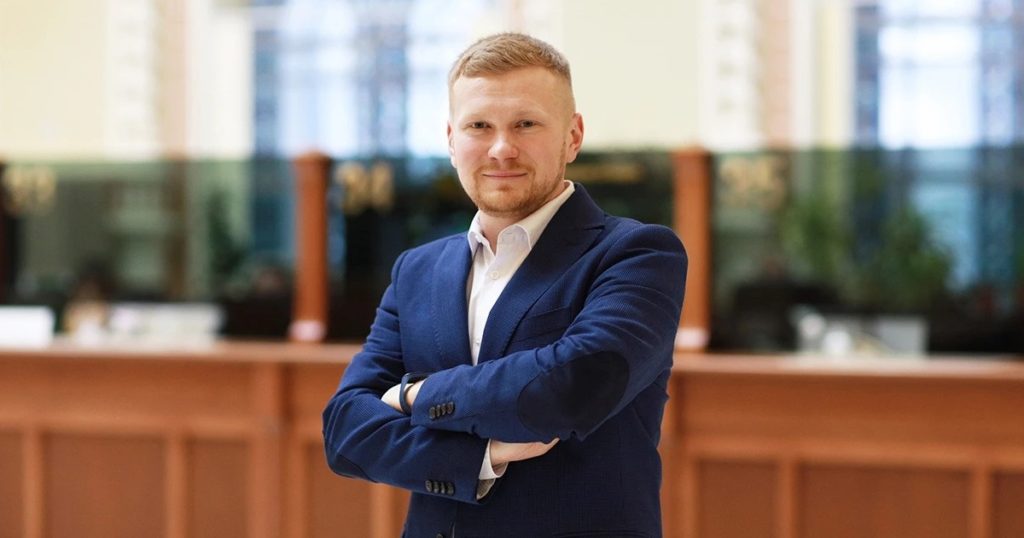
The Ministry of Economy takes a comprehensive approach to the issue of lending — taking into account both supply and demand. This approach is dictated by the specifics of the current situation: under martial law and a full-scale war, the commercial market is unable to meet all business needs on its own. Andriy Teliupa, Advisor to the Minister of Economy of Ukraine, spoke about this during the online event “How to Increase Lending to Businesses?”, organized by the Center for Economic Strategy. GMK Center presents the key points of his speech.
State support for lending
One of the priority tasks is to reduce interest rates for the most critical sectors of the economy. This primarily concerns enterprises in frontline regions, entities in the defense-industrial complex, and the energy sector, where banks are often unwilling to lend due to heightened risks.
Following consultations with the banking sector, insufficient guarantees have been identified as the key issue. The government plans to significantly step up its efforts in this area to ensure broader access to credit for businesses.
An important tool for stimulating lending is risk mitigation (derisking), primarily through the development of the war risk insurance market. A compensation program consisting of two components was introduced at the start of the new year.
The first component is direct compensation for frontline regions through the Export-Credit Agency (quasi-insurance) with a limit of UAH 30 million. The government has already decided to increase these limits in response to requests from businesses.
The second component is compensation for the cost of insurance policies. The state reimburses the difference between the market insurance premium and the cap of 1% of the property’s value. In other words, businesses insure their property at a rate of no more than 1%.
At the request of entrepreneurs, the deadline for submitting compensation applications has been shortened: instead of waiting for the annual insurance contract to expire, applications can be submitted after just 131 days.
Currently, 72 applications have been received under the program. Following the increase in the compensation limit for insurance policies to 3 million UAH, demand is expected to rise.
Cooperation with banks and support for SMEs
The government is counting on banks to serve as the primary providers of access to war risk insurance programs for the small and medium-sized enterprise (SME) sector. Insurance coverage should extend not only to large manufacturing facilities but also to small businesses (coffee shops, small enterprises, etc.).
Combining insurance products with bank credit instruments should make lending cheaper and more accessible. This will expand the range of credit resources available to businesses.
International support
At the same time, the Ministry is actively seeking support from international partners. In particular, two initiatives are being implemented under a program with the European Bank for Reconstruction and Development (EBRD):
- loan guarantees;
- transport and cargo risk mitigation.
Demand for these instruments is significant: €110 million has already been disbursed under the program, and the EBRD is making additional funding available. This is gradually expanding banks’ capabilities and improving lending conditions for businesses.
The problem of loan demand: borrower quality
A separate systemic issue is the insufficient quality of loan demand. Banks note that a significant portion of businesses submit projects that do not meet the criteria for bank financing (so-called “non-bankable projects”). Meanwhile, banks compete with one another for high-quality borrowers.
The reason is structural: a significant portion of Ukrainian businesses lack properly prepared financial statements, a transparent ownership structure, and a sufficient balance sheet base — all of which are necessary to obtain a loan, especially project financing based on future cash flow (without collateral).
The Ministry of Economy is working systematically with businesses to establish transparent corporate structures. Entrepreneurs are shown the benefits of leaving the shadow economy: access to credit instruments, government support programs, and international opportunities.
The strategic goal is to balance supply and demand so that businesses have stable access to credit, and banks have high-quality borrowers with minimal risks for all parties.
National development agency
In early 2026, the National Development Agency (NDA) was established on the basis of the Entrepreneurship Development Fund — the country’s equivalent of a development bank. Unlike traditional development institutions, which focus on large-scale infrastructure projects, the NDA has a clear mandate: to support small and medium-sized businesses.
To fulfill its mandate, the NDA is systematically increasing its access to international financing. Among its key partners is KfW (the German Development Bank), which has allocated €140 million to support the NDI for the coming year. Concurrently, the Ministry of Economy, in collaboration with the Ministry of Finance, is developing a mechanism for the gradual recapitalization of the institution.
An important step was the National Bank’s decision to include NUR guarantees in the list of instruments that banks can use as collateral. This significantly expands the institution’s capacity to support businesses.
A key priority for the NUR is supporting the energy sector. Programs for small and medium-sized energy projects are currently being implemented, as well as the “Energodim” program for homeowners’ associations and private households.
At the same time, the current limits of the “5-7-9%” program (250 million UAH per project) are insufficient to finance large power plants. In this regard, a separate government program to support large energy projects is being developed.
One of the key tasks for the National Development Agency over the next two years is to undergo the EU Pillar Assessment. Successful completion will enable the NDA, on par with other recognized development institutions (such as BGK—the Polish Development Bank), to receive direct funding from international organizations.
-
OpinionsStatesteel consumption
13 July 2026

19 December 2025
21 November 2025

18 November 2025