




News Global Market steel export 941 31 March 2026
Ukraine is forced to reduce its exports to this market and is losing out on foreign exchange earnings
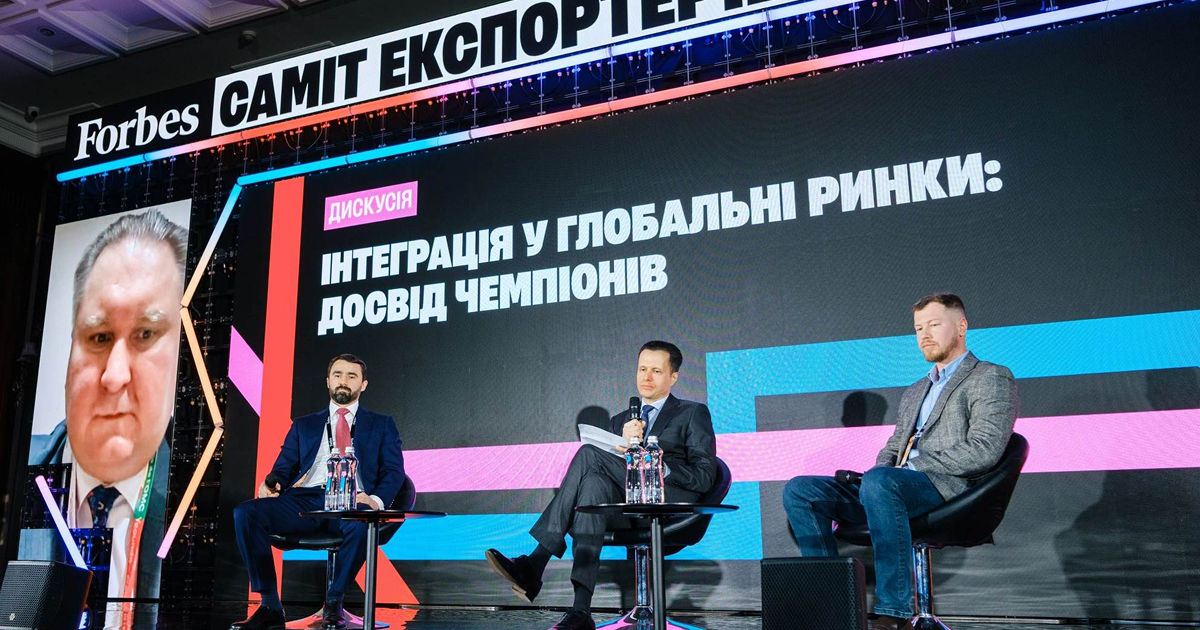
Modernized Ukrainian enterprises are already able to compete with European ones in terms of costs, but there are a number of obstacles to exporting steel products to the EU, in particular the European Carbon Border Adjustment Mechanism (CBAM). This was stated by Olexander Vodoviz, Head of the Office of the CEO of the Metinvest Group, at the Forbes Ukraine Exporters Summit.
“Under the guise of the green agenda, a tax has been introduced that in reality has little to do with environmental protection. It is a tool for protecting the European market and stimulating European exports. As a result, we are being forced to reduce supplies because we cannot compete there. While other countries protect their markets, Ukraine is losing foreign-currency export revenues. That raises a question for the Ukrainian government: what are our joint actions, our calculations and our overall plan?” noted the head of the CEO’s office at Metinvest.
Due to the city-forming role of European steel companies, which provide jobs in the region, competition in the EU market is also limited by political factors.
“European policymakers are doing everything they can to prevent us from competing with their own major regional employers,” explained Oleksandr Vodoviz.
In addition, Russia continues to supply steel to Europe, selling semi-finished products at dumping prices.
At the same time, Taras Kachka, Ukraine’s Deputy Prime Minister for European and Euro-Atlantic Integration, described the steel industry as a tough market involving a great deal of politics, tariffs, and other complexities, much like sectors such as wood and agricultural products.
He noted that since 2022, the European Union has lifted many restrictions on Ukrainian steel products, and no anti-dumping measures have been applied.
“We are currently engaged in a delicate but constructive dialogue on preserving favourable conditions for Ukrainian steel exports to the EU. At the same time, the European steel industry has been developing through decarbonisation for almost 20 years, with fewer producers and state subsidies for those that remain. In Ukraine, by contrast, support for decarbonisation has effectively been zero,” noted Taras Kachka.
The lack of state support for decarbonization also affects production costs, which have traditionally been a key competitive factor for Ukrainian steelmakers in the European market.
“Before the war, we were among the cost leaders thanks to the modernisation of our plants. During the war, however, costs have risen sharply because of expensive electricity, tariffs and constant shelling. At the same time, European steelmakers receive substantial subsidies for decarbonisation: EUR0.8-1.0 billion, on average. We have no such support because decarbonisation is not seen as an economic priority,” noted Oleksandr Vodoviz.
Among the factors helping Metinvest compete in the EU is the group’s presence in Bulgaria, Italy, the United Kingdom, Romania, and Poland. Today, Italy is one of the company’s main markets, thanks to its local plants and a team that has a deep understanding of the situation in Ukraine.
Despite the fact that the group’s business has halved since 2022 due to the loss and suspension of operations at enterprises in the Donetsk region, the company remains one of Ukraine’s largest private exporters. The main markets for steel are Europe, as well as the Middle East and North Africa; for ore, it is China. Oleksandr Vodoviz noted that the European market is the most profitable yet highly competitive, with everyone seeking to enter it; Metinvest also aims to expand its presence there.
It should be noted that the European Union currently expects Ukraine to implement European legislation; however, this could pose serious challenges for certain industries, particularly steel sector, which may be threatened by strict regulatory requirements, noted the head of the CEO’s office at Metinvest.
-

15 June 2026
17 June 2026
17 June 2026

17 June 2026