




News Industry steel production 2121 22 December 2025
Main risks associated with the European market in connection with the introduction of CBAM
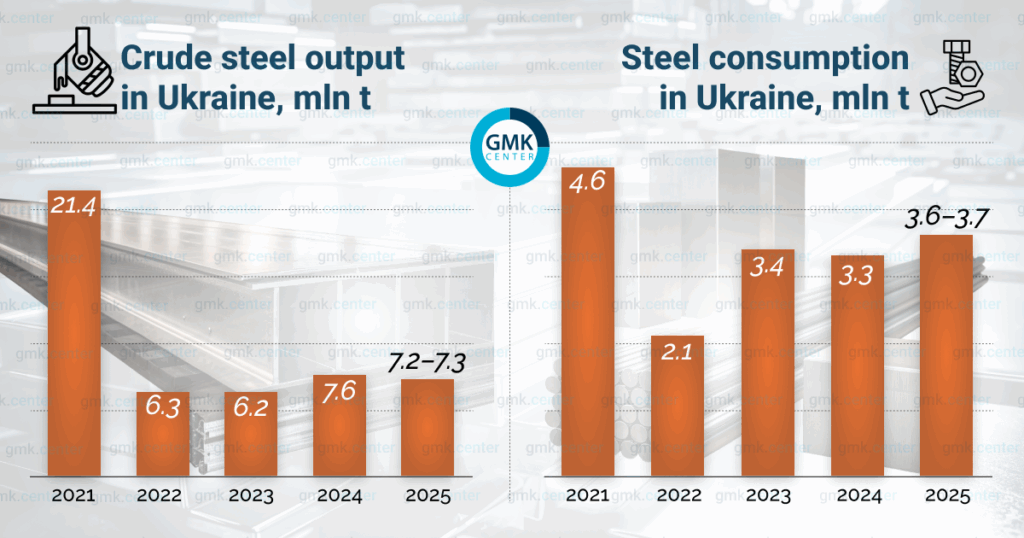
GMK Center predicts that next year, steel production in Ukraine may remain at the 2025 level – around 7.2 million tons (base scenario). At the same time, Ukrainian steel companies have almost reached the limit of possible production growth.
This is stated in the article “GMK Center forecasts for 2026: steel,” which will be published on the GMK Center website on December 23.
The optimistic scenario envisages a return to 7.6 million tons, while the pessimistic scenario envisages a drop to 6.3–6.6 million tons in the event of a blockade of maritime logistics and restrictions on the European market.
The main risks are associated with the European market, which accounts for 81% of finished product exports. The introduction of the CBAM carbon regulation mechanism is already creating technical barriers to imports, and from July, a strengthened tariff quota system will come into force, which could reduce imports to the EU by 40–50%.
“If Ukraine does not receive a temporary exemption from CBAM, it will be extremely painful for the industry. We may lose exports of long products and billets to the EU, which will lead to the shutdown of two or three blast furnaces out of seven in operation,” the article says.
Alternative markets remain inaccessible due to aggressive Chinese exports and high energy and logistics costs. The main hope is for the domestic market, which could grow by 5-10% thanks to defense projects or recovery after the end of the war.
It should be recalled that Ukrainian steel enterprises increased their production of rolled steel products by 3.9% in January-November 2025 compared to the same period in 2024, to 5.97 million tons. Pig iron smelting during this period increased by 10.2% y/y – to 7.19 million tons, while steel smelting decreased by 3.1% y/y to 6.81 million tons.
Earlier, GMK Center published its forecast for iron ore for 2026. It showed that global ore prices could fall by 7% next year, and exports from Ukraine by 5%, excluding military risks.
-

Opinions Industry steel consumption
13 July 2026

25 July 2026

23 July 2026
22 July 2026