




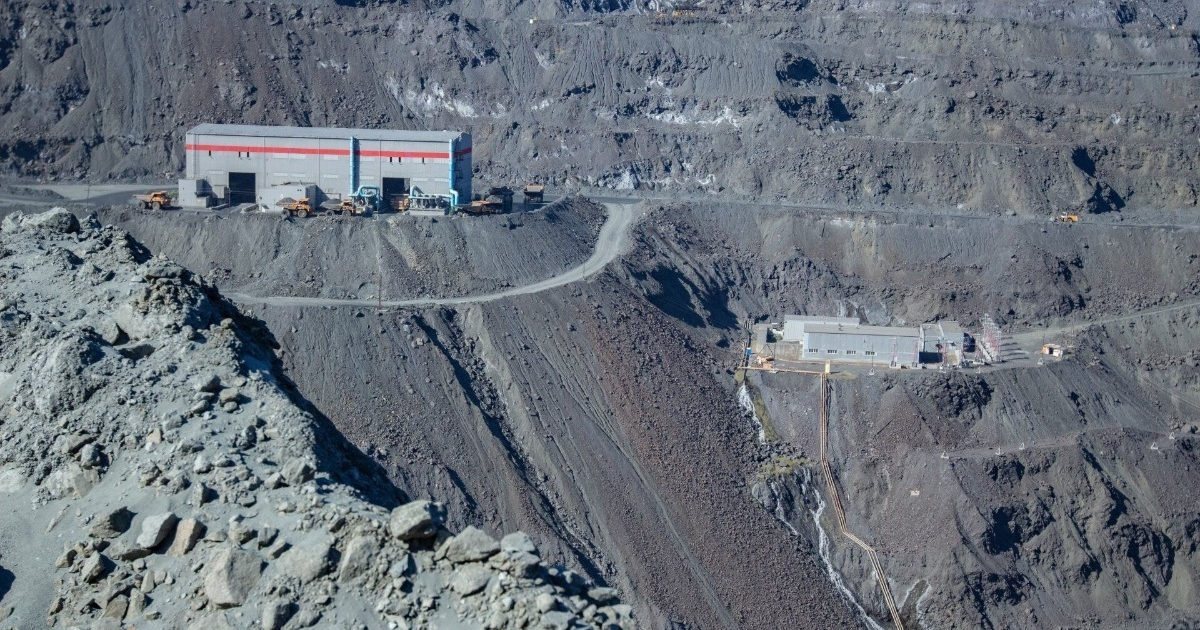
Northern and Central Minigs are operating steadily, while Ingulets Mining's recovery depends on the market and electricity tariffs
Metinvest Group is gradually resuming operations at its mining and processing plants, although the situation remains difficult due to high electricity tariffs and global market conditions. This was stated by the company’s Chief Operating Officer (COO) Olexander Myronenko in an interview with Interfax-Ukraine.
According to him, the Northern Mining and Processing Plant has almost reached its pre-war levels. Two quarries are in operation, the processing plant is fully loaded, and both pelletizing machines – LURGI 552A and LURGI 552B – are operating alternately depending on production needs.
The Central Mining and Processing Plant has not yet reached its pre-war production level: work has been suspended at two quarries. At the same time, the enrichment plant is operating at almost 80% capacity thanks to ore coming from other quarries.
The most difficult situation is at the Ingulets Mining and Processing Plant, which is currently idle.
“There is a small amount of ore mining and production for technological purposes – up to 40,000 tons per month. This is a kind of maintenance mode,” explained Myronenko.
Further prospects depend directly on the market. According to the top manager, due to high electricity tariffs, Ingulets Mining’s concentrate is now uncompetitive even on the Chinese market.
“Two factors are needed here: affordable electricity prices and higher prices for iron ore products so that we can launch this enterprise,” he stressed.
The company already has a plan to restore Ingulets Mining, but its implementation requires a stable situation in both domestic and foreign markets.
Thus, the group is focusing on maintaining and gradually increasing the utilization of existing capacities, awaiting favorable market conditions for the full launch of the Ingulets plant.
In the first half of 2025, Metinvest reduced its iron ore concentrate production by 13% compared to the same period in 2024, to 7.72 million tons. Thus, commercial output decreased by 8% year-on-year to 7.53 million tonnes, of which 4.24 million tonnes (-16% year-on-year) accounted for concentrate and 3.29 million tonnes (+3% year-on-year) accounted for pellets.
-

Opinions Industry steel consumption
13 July 2026
27 July 2026

24 July 2026
23 July 2026