




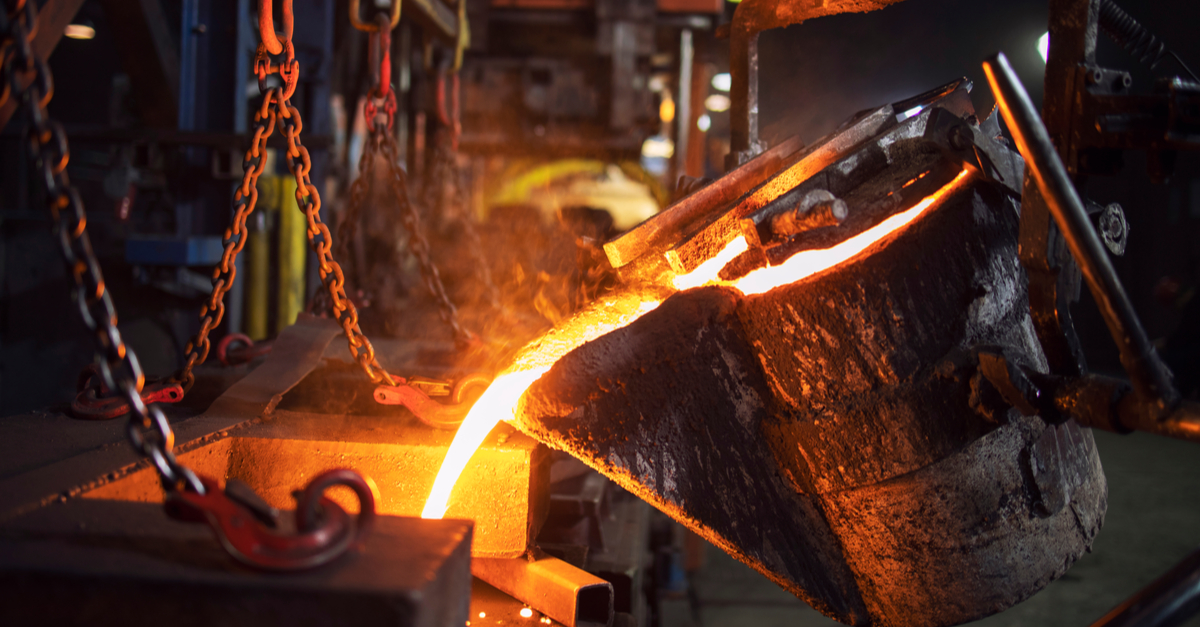
The new plan, in particular, aims to restore the balance between supply and demand
China has proposed a stricter plan for steel capacity exchange aimed at reducing capacity and restoring the balance between supply and demand, according to Reuters.
The country suspended its previous steel capacity replacement program in August 2024 because it was unable to curb their growth, which hit the industry’s profitability. The original exchange plan required steel mills to remove at least the same amount of old existing steel capacity when adding new capacity to curb excess supply.
Now, according to a draft resolution published by China’s Ministry of Industry and Information Technology last week, there is a proposal to ban the addition of new steelmaking capacity in key regions, its transfer from non-key regions to key regions, and transfers between key regions.
The key regions are Beijing-Tianjin-Hebei and surrounding areas, the Yangtze River Delta, and the Fengwei Plain.
Provinces and cities with clear targets for total steelmaking capacity are not allowed to agree to the transfer of capacity from other regions.
For every ton of new capacity built, at least 1.5 tons of old capacity must be eliminated.
In addition, the ministry said it would encourage steelmakers to expand production in electric arc furnaces, promote hydrogen metallurgy, and modernize existing plants with low-carbon technologies.
As GMK Center reported earlier, in the summer, Chinese government agencies announced a plan to stabilize the steel industry for 2025-2026, which provides for a reduction in production and tighter control over enterprises in the industry. According to market estimates, steel production in 2025 will be less than 980 million tons, which is at least 25 million tons lower than in 2024 (1.005 billion tons).
-

15 June 2026
16 June 2026
16 June 2026
14 June 2026