




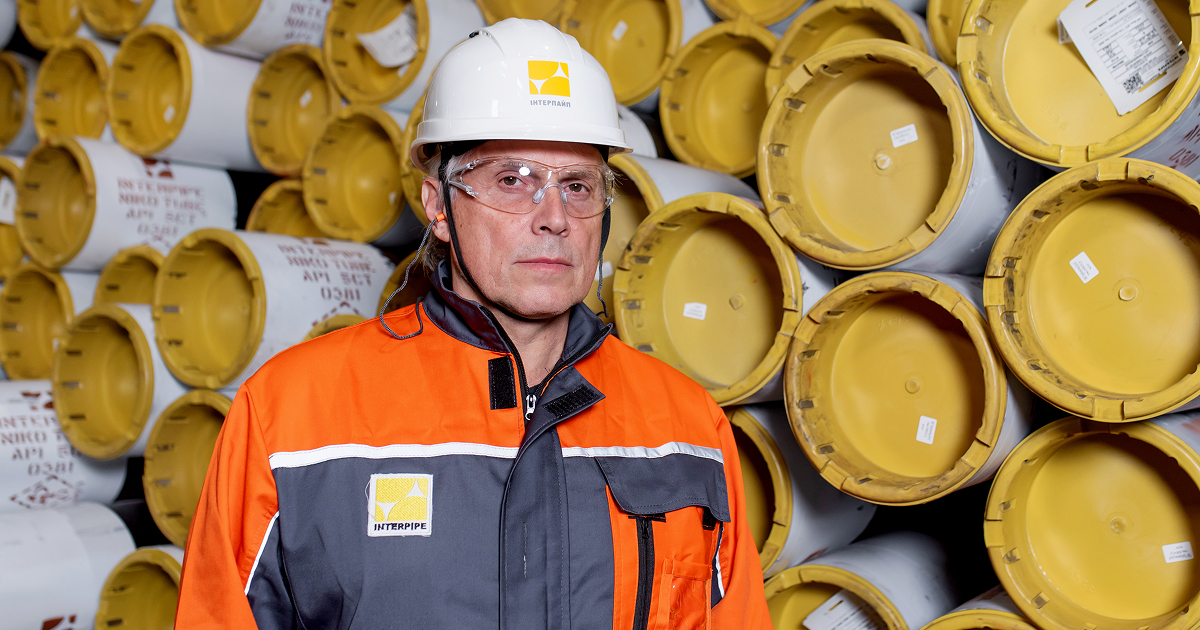
Interpipe CEO calls on the state to follow the US and EU in trade policy
Ukraine needs to establish protective mechanisms in its domestic market to protect an industry that will be crucial for the country’s future. This was stated by Interpipe CEO Luca Zanotti in an interview with Forbes.
“How should Ukraine act? It should also establish protective mechanisms, build what Americans call a ‘garden wall’ to protect an industry that will be crucial for the country’s future. The last country to protect its industry will be the first to lose it,” he emphasized in the interview.
According to Zanotti, the main challenge for the global steel industry is overproduction in China. In just eight months of 2025, the country exported more than 75 million tons of steel — almost as much as the annual consumption of the United States. This creates an oversupply and puts pressure on prices, forcing other countries to look for ways to protect their own producers. Back in 2018, the US recognized steel as a matter of national security and introduced a 25% tariff, and now the European Union is also resorting to restrictions.
For Interpipe, which sells 75% of its products abroad, these processes create additional risks. Although the company remains profitable even during the war, global trade wars could significantly reduce its competitiveness.
Zanotti is convinced that the government should not only seek preferential terms in the US and the EU, but also support domestic industry — from compensating for high energy costs to stimulating production modernization.
As reported by GMK Center, Interpipe is actively expanding its presence in export markets. The company has entered the drilling equipment supply segment in Europe, supplied pipes for the construction of an offshore wind farm in France, and specialized micropiles for the reconstruction of a bridge in Slovakia. The company also develops wheels for railways in the Middle East and Asia and supplies products for energy and construction projects in Switzerland and Romania. Diversification of its portfolio allows the company to strengthen its position in high-tech industries and reduce its dependence on traditional markets.
-

Opinions Industry steel consumption
13 July 2026
13 July 2026
10 July 2026
10 July 2026