





News State industrial policy 582 20 July 2026
The industry is hoping that support schemes will continue, that issues with bookings will be resolved, and that preparations for winter will be made
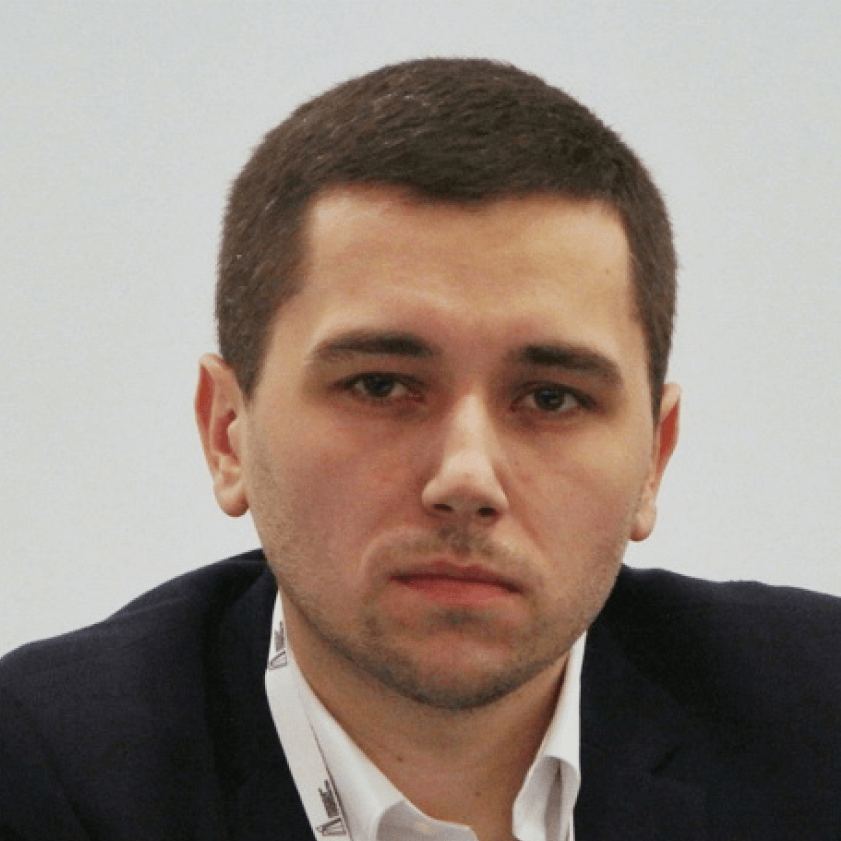
The key urgent challenges for the new government regarding Ukrainian industry are the situation with reservations, preparations for winter, and the continuation of existing support programmes under the ‘Made in Ukraine’ initiative. This view was expressed by Ruslan Illichov, Director-General of the Federation of Employers of Ukraine (FEU), in comments to Interfax-Ukraine.
According to him, one of the key problems is the situation regarding pre-orders, where verification must be completed by 1 September, and this is the number one issue for businesses.
Ilyichov added that industrial enterprises have no problems meeting the wage criterion, as they are large enough; however, it is not yet entirely clear how the coordination centre, which is planned to be set up for verification purposes, will operate. As the FEU’s Director General reported, the business community is likely to ask the government to extend the deadline by one month.
Ruslan Illichov identified preparations for winter – in particular, the expected electricity shortage and its cost – as the second key challenge for the new government. Price is one of the main concerns raised by the industrial sector. In his view, the Svyrydenko government introduced several worthwhile innovations, in particular the so-called ‘long-term contracts’, which will enable businesses to forecast their electricity costs.
Ilyichov also emphasised the need to maintain existing industrial support programmes within the framework of the All-Ukrainian ‘Made in Ukraine’ platform.
He also identified military risks, a more effective insurance system and support for devastated companies, as well as simplified access to financial resources, as priority issues.
According to Illichov, 71 per cent of all capital investment last year came from companies’ own funds, and this figure is 20 per cent higher than in 2024. Less than 1 per cent came from foreign capital.
“In other words, Ukrainian business is the country’s main investor; our companies are continuing to build and develop production, and they too need investment incentives and clearer, simpler access to financial resources,” said the CEO of the Federation of Ukrainian Industries.
He noted that there are support schemes in industrial parks which are performing well, but most companies depend on state investment incentives.
Ruslan Illichov cited among the priorities for business the adoption of the draft laws on ‘capex’ (partial compensation of capital investments through taxes) drafted by Dmytro Kysilevskyi, which have been passed at first reading. This also includes 100 per cent depreciation of fixed assets upon their commissioning.
Furthermore, the CEO of the Federation of Ukrainian Entrepreneurs believes that a change in the National Bank’s policy is necessary, as he feels the regulator is currently holding back lending to the real sector.
Among other things, Ruslan Illichov also highlighted the losses incurred by domestic businesses due to the introduction, from 1 July, of EU quotas on metal products and the requirement to pay for SVAM certificates from 2027 onwards, as well as possible delays in resolving outstanding issues arising from the reorganisation of ministries.
It should be recalled that, by the end of 2025, capital investment by Ukrainian iron and steel companies had risen for the first time since the start of the full-scale war, increasing by 17.5 per cent to $579 million. Companies invested in energy independence, maintaining production capacity and even acquiring overseas assets. However, the start of 2026 has brought new challenges: the introduction of the CBAM and trade restrictions are jeopardising further development.
-
Opinions Industry steel consumption
13 July 2026
14 July 2026

10 July 2026
09 July 2026