




News Companies експорт брухту 3021 16 September 2025
Ukraine loses around $800-900 in foreign currency revenue for every ton of scrap exported
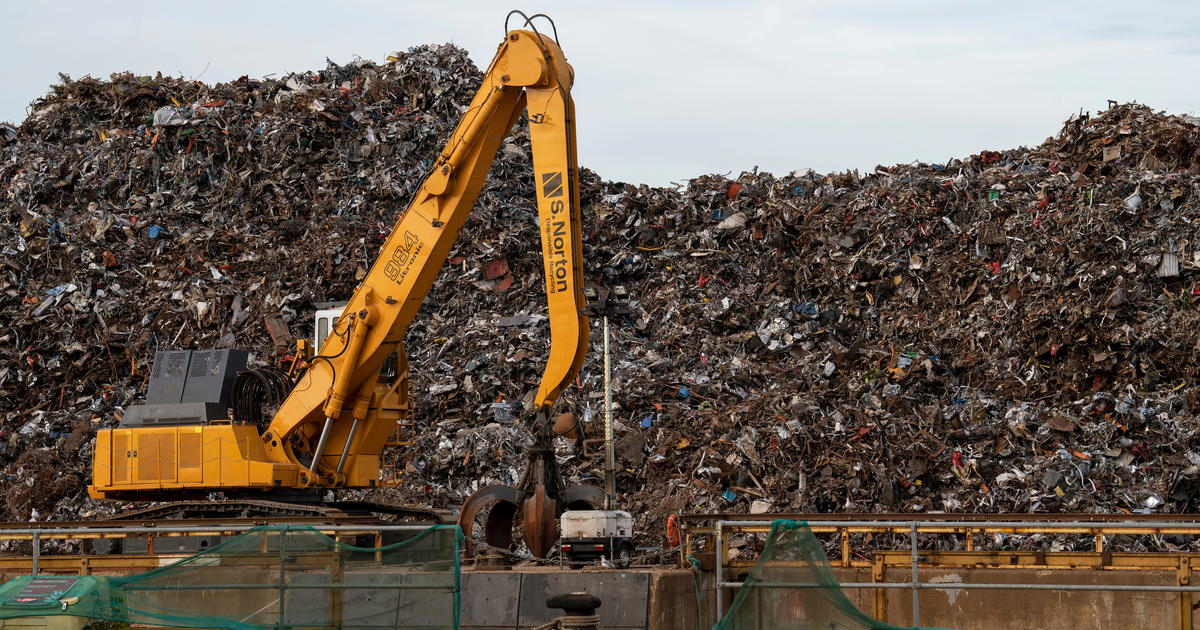
Uncontrolled exports of ferrous metal scrap are one of the biggest problems facing the Ukrainian steel industry. This was stated by Metinvest Group’s Chief Operating Officer Olexander Myronenko at the Forbes Ukraine Industrialists Forum. According to him, while exports amounted to only 4,000 tons per month at the beginning of the war, they have now grown to 50,000 tons.
«This is a serious threat, as with every tonne of exported scrap, Ukraine loses approximately US$800–900 in foreign currency revenue. These funds could stay in the economy if the scrap were processed at Ukrainian enterprises and sold on the domestic market or exported as finished products, creating new opportunities for the development of national producers,» Myronenko emphasized.
This trend weakens not only industry but also the country’s financial stability, as processing scrap within the country creates added value, tax revenues, and jobs.
It should be noted that during January-July 2025, Ukraine exported 248.34 thousand tons of ferrous metal scrap, which is 66.4% more than in the same period of 2024. Poland received 208.04 thousand tons of raw materials, Greece – 16.44 thousand tons, Bulgaria – 3.97 thousand tons, and Germany – 3.23 thousand tons.
In recent years, Poland has effectively become a transit point for Ukrainian scrap, which is then sent on to Turkey to avoid the €180/ton export duty. Data shows that in 2024, Polish scrap exports to Turkey more than doubled to 529 thousand tons compared to 228 thousand tons a year earlier, and since 2022, volumes have increased almost threefold. At the same time, imports of raw materials from Ukraine have risen sharply: from 15,600 tons in 2022 to 159,000 tons in 2023 and 251,000 tons in 2024. This trend indicates the likely re-export of Ukrainian scrap through Poland to Turkish steel plants.
According to a study by GMK Center, in the long term, scrap will gradually lose its status as an export commodity due to global trade barriers. Scrap is increasingly seen as a strategic resource for green metallurgy and decarbonization, so countries are seeking to retain raw materials for their own needs. It is impossible to produce it quickly in the required quantities, so an affordable price on the domestic market is becoming a key condition for the competitiveness of national steel producers.
Under these conditions, it is more expedient to export finished steel produced from scrap rather than the scrap itself, as steel enterprises are among the largest taxpayers in Ukraine.
-

Opinions Industry macroeconomics
28 May 2026
04 June 2026

03 June 2026
03 June 2026