




News Industry Ukraine’s iron and steel industry 798 02 February 2026
The association warns of the risk of mining's shutdown due to staffing crisis, energy costs, and mobilization
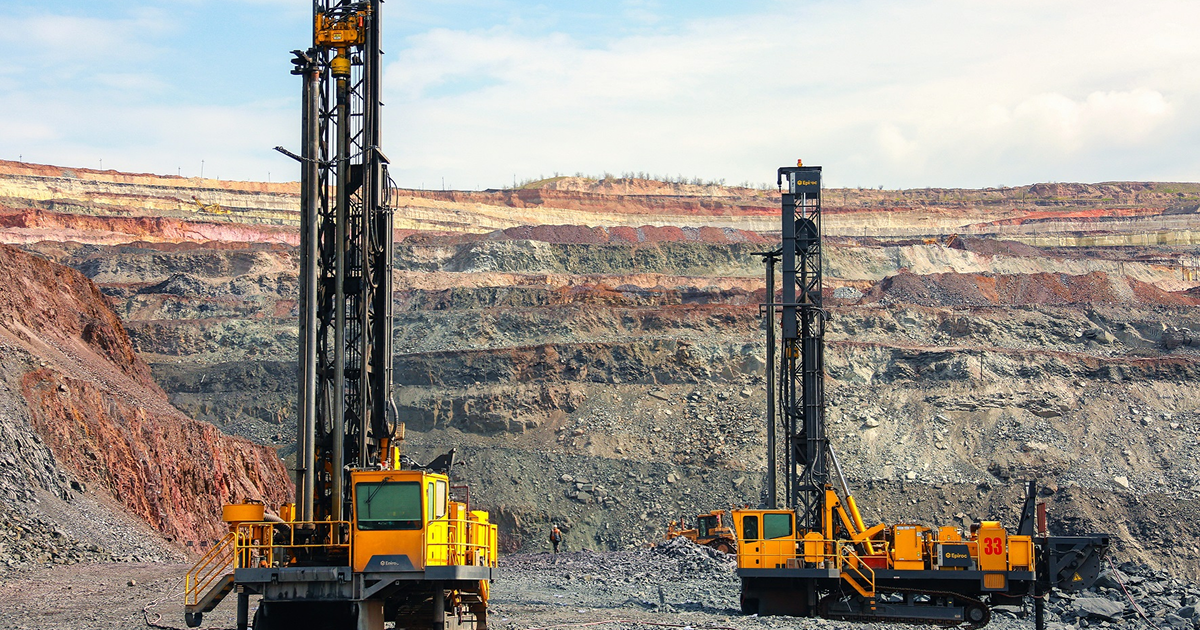
The National Association of Extractive Industries of Ukraine (NAEIU) has appealed to the Ministry of Economy, Environment, and Agriculture to automatically extend the critical status of mining companies for at least two months and to hold a joint meeting with the business community. The industry warns that without urgent decisions, there is a risk of irreversible shutdowns of mines, quarries, and mining and processing plants due to the loss of key personnel. This is stated in a letter dated January 29, 2026.
The association emphasizes that the extractive industry accounts for about 4-6% of Ukraine’s GDP and is the basis for metallurgy, energy, and the defense-industrial complex. In 2024, exports of iron ore alone generated $2.8 billion in foreign exchange earnings, and one job in an iron ore mining company creates up to four jobs in related industries. At the same time, the sector is under unprecedented pressure due to rising electricity, water, and gas tariffs, expensive logistics, and a lack of investment.
The staffing situation is described as critical: according to industry estimates, 15-20% of steel workers will be mobilized in 2025, and up to 30-40% at some enterprises. Reassignment procedures take weeks, creating a “window of vulnerability” when the loss of even a few specialists can shut down an entire production line. The association also draws attention to the outflow of personnel to the shadow sector and direct budget losses: the mobilization of 1,000 employees means a loss of about UAH 40 million in the wage fund and UAH 18-20 million in taxes per month.
The NAEIU emphasizes that further depletion of human resources threatens to disrupt export contracts and foreign exchange earnings. In particular, in the first four months of 2025, exports of raw materials have already fallen by 20.9% in monetary terms and by 10.2% in physical terms, while exports of titanium ores fell by 93% over seven months. Businesses are asking the government to provide a transition period and urgently develop a model to support the industry amid the energy and human resources crisis in order to preserve this strategic sector of the economy.
As reported by GMK Center, the lack of labor resources remains the main obstacle for business in the context of full-scale war. The main reasons are the shortage of employees caused by mobilization and the mass exodus of the population abroad. The labor shortage is also becoming acute in the iron and steel complex.
-

Opinions Industry macroeconomics
28 May 2026
03 June 2026

03 June 2026
03 June 2026