




News Global Market iron ore prices 2376 03 November 2025
Simandou's readiness for first shipments has created expectations of increased supply
Iron ore prices fluctuated within a limited range in October. On the Dalian Commodity Exchange, January futures rose 2% between September 30 and October 31, to $112.31/t, while on the Singapore Exchange, December contracts added 0.9% in price, ending the month at $106.2/t.
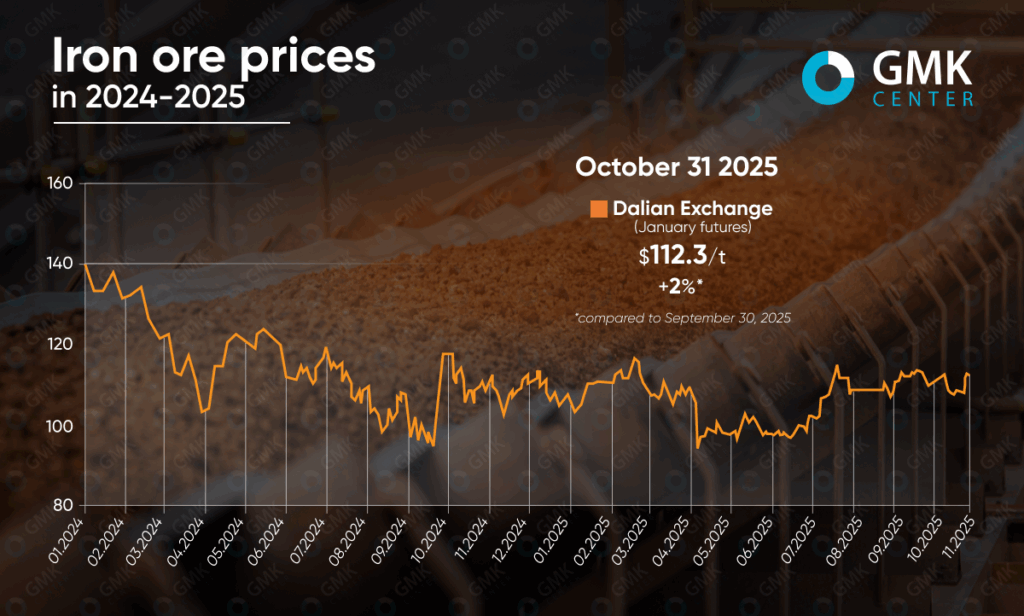
The first weeks of October passed relatively calmly due to the holiday break in China. Trading was limited and speculative activity declined as most steel mills and traders were idle. After the Golden Week holiday ended, market participants returned to purchasing, which led to a short-term increase in prices. The growth was supported by expectations of replenishment of raw material stocks amid stable blast furnace utilization rates.
In the middle of the month, prices stabilized and the market entered a correction phase. This was due to the weak financial results of Chinese steelmakers, which forced them to reduce production due to declining profitability. The decline in margins triggered maintenance shutdowns, which limited demand for ore. At the same time, new environmental restrictions came into force in Hebei and Tangshan, leading to a reduction in pig iron production.
The second half of October was under pressure from news from Guinea, where the Simandou iron ore project reached the stage of readiness for its first ore shipments. This created expectations of an increase in global supply in the coming months, which partially dampened traders’ optimism. At the same time, news of potential cooperation between Rio Tinto and China’s Chinalco within the same deposit added confidence to the market in the long-term development of supplies.
At the end of the month, market sentiment remained mixed. On the one hand, easing trade tensions between the US and China, a meeting between the leaders of the two countries, and new cooperation agreements within ASEAN helped restore investor confidence. On the other hand, high raw material costs continued to weigh on the profitability of steelmakers, with some plants operating at a loss. This led to expectations of a decline in production, which limited the potential for price growth.
Market participants expect the dynamics to remain within a narrow range in November, as the market looks for new drivers of demand ahead of the winter slowdown.
-

15 June 2026
21 June 2026

21 June 2026

20 June 2026