




News Industry decarbonization 1124 17 March 2026
Domestic businesses, in particular, are already facing challenges related to the CBAM
Currently, the European Union expects Ukraine to implement European legislation; however, this could pose serious challenges for certain industries, particularly the steel industry, which may be at risk due to stringent regulatory requirements.
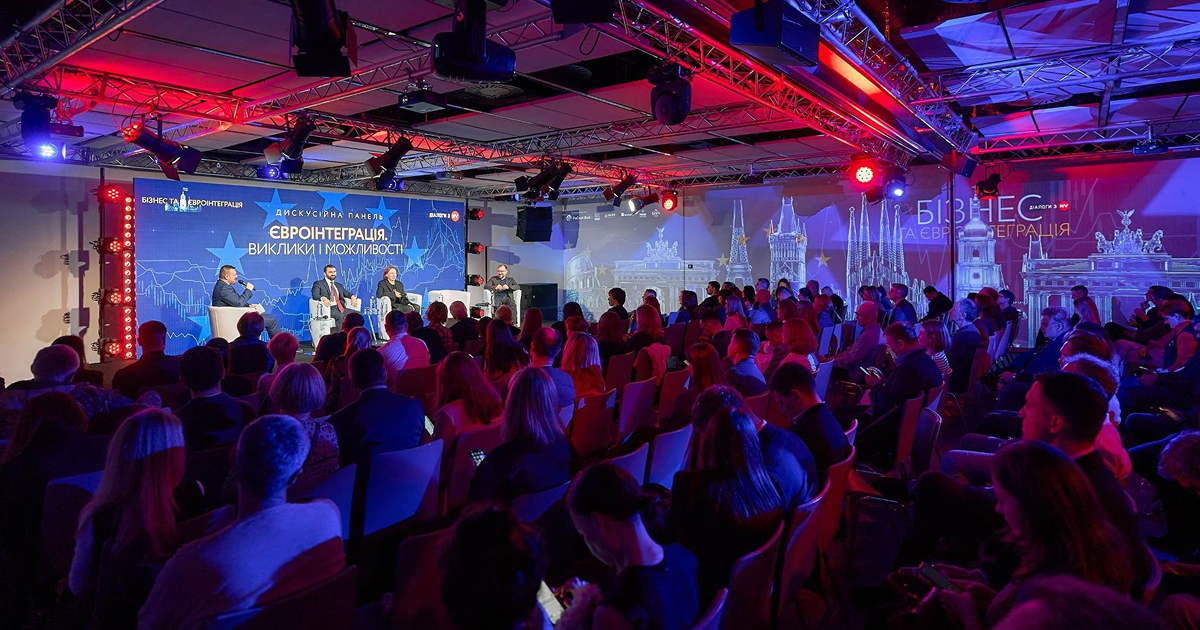
This was stated by Olexander Vodoviz, Head of the CEO’s Office at Metinvest, during the event “Dialogues on the Future: Business and European Integration” organized by NV.
“We would like this process to follow the model applied in Poland. For example, if the EU expects us to adopt environmental legislation, it would be logical to also provide financial support. With sufficient resources, we are ready to invest in modernisation, bring our production in line with European environmental standards and to move towards full integration,” he noted.
The EU operates a carbon emissions trading system, while steel enterprises receive a portion of their allowances for free. Ukraine has already implemented emissions monitoring and reporting and is preparing to launch its own emissions trading system.
However, Oleksandr Vodoviz notes that the idea of creating a fund into which companies would pay money, which would then be distributed by someone for decarbonization, does not stand up to scrutiny.
“We support integration with the European emissions trading system, where there is a clear and transparent mechanism: the funds paid for emissions are returned to companies in the form of support for decarbonisation,” he added.
Ukrainian businesses are already facing challenges related to the Carbon Border Adjustment Mechanism (CBAM). The first consequences of its implementation are complications in importing products to the EU due to additional administrative and financial barriers. Uncertainty regarding CBAM affects not only the steel industry sector but also other industries.
According to Oleksandr Vodoviz, one possible solution for Ukraine is to change the approach to financing the decarbonization of heavy industry. A model could be introduced whereby CBAM payments for Ukrainian products would be accumulated in special accounts in the EU and directed toward decarbonization projects of domestic manufacturers operating under European standards. This approach would help mitigate the mechanism’s negative impact on Ukraine’s economy, preserve opportunities for industry modernization, while simultaneously stimulating demand for European technologies and equipment.
On average, a steel mill in Europe receives around €1 billion for decarbonization, but Ukrainian enterprises lack such resources.
“We face a choice: either to shut down part of our business or to secure a postponement for Ukraine when it comes to decarbonisation. We are operating in wartime conditions — under shelling, with energy supply disruptions, workforce losses and constant regulatory uncertainty. European steel plants simply would not be able to operate under these circumstances. That is why we tell our European partners: we are ready to move forward under your rules, but we need certain preferences to prepare for these requirements,” explained Oleksandr Vodoviz.
Russian products, which are still present on the EU market, also create unequal competitive conditions for Ukrainian steelmakers. The head of Metinvest’s CEO office believes that definitive restrictions are needed on iron ore and slabs from Russia. Tightening sanctions could increase Ukrainian iron and steel exports to the EU by more than €1 billion over four years.
It is worth noting that despite the war, Metinvest continues to invest in the development of green steel industry in Kryvyi Rih. The company is launching a second project to modernize the Northern Mining for the production of DR pellets
-

02 July 2026
10 July 2026
09 July 2026
09 July 2026