




News Global Market Czech Republic 1579 23 July 2025
The union points out that the ambition to reduce emissions by 90% by 2040 is unrealistic and dangerous
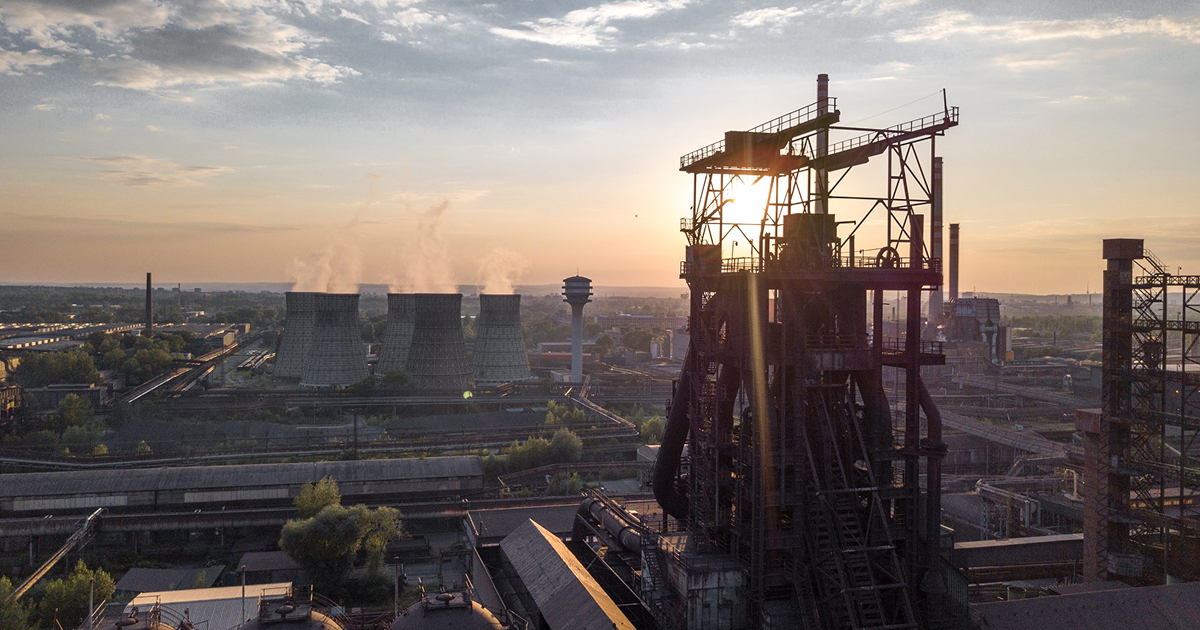
The Czech Steelworkers’ Union has sharply criticized the European Commission’s proposed climate target of reducing greenhouse gas emissions by 90% by 2040. According to the industry association, this target is unattainable even under ideal conditions and threatens the final decline of EU industry. This is stated in a statement by Ocelarska Unie.
Industry representatives emphasize that European metallurgy is already in its deepest crisis in decades. In 20 years, steel production in Europe has fallen by a third, while imports are constantly growing, displacing European exports. The reasons for this are considered to be the EU’s green policy and the lack of conditions for the implementation of decarbonization projects: a shortage of cheap energy, unreliable supplies, weak protection against unfair imports, and a lack of scrap metal and financing.
In particular, the introduction of the new target will lead to a reduction in the number of emission allowances under the EU ETS and an increase in their cost. Companies that are unable to decarbonize their processes will be forced to pay significantly more for emissions, which will be fatal for them. In addition, there are still no innovative technologies capable of radically reducing emissions without a sharp increase in the cost of products.
Czech steelmakers have called on member states and the European Parliament to reject the European Commission’s ideological initiative, which, in their opinion, was adopted without a proper assessment of its impact on various sectors and countries. They support the position of the Czech government, which also opposed the plan.
The association warns that without steel, it is impossible to ensure defense, energy, transport, and even the achievement of climate goals, as it is the basis for low-carbon technologies. Relying on imports is too risky, given the geopolitical instability. Europe will not survive the loss of its own industry, concludes Ocelarska Unie.
Earlier, the largest steel producer in the Czech Republic, Třinecké železárny, announced the postponement of key decarbonization plans — the construction of an electric arc furnace and infrastructure — to 2030 instead of the previously announced 2028.
The main reasons for the delay in the implementation of EAF in the company were the lack of public support, uncertainty about the future direction of Europe in the rules related to the “Green Course,” the current negative situation in the steel market, and unclear rules for protecting the market from imports.
-

Opinions Industry macroeconomics
28 May 2026
03 June 2026
03 June 2026
03 June 2026