




News State scrap export 1768 05 February 2026
At the same time, a ton of scrap metal processed into steel within the country can generate approximately 14-15 thousand hryvnia in taxes
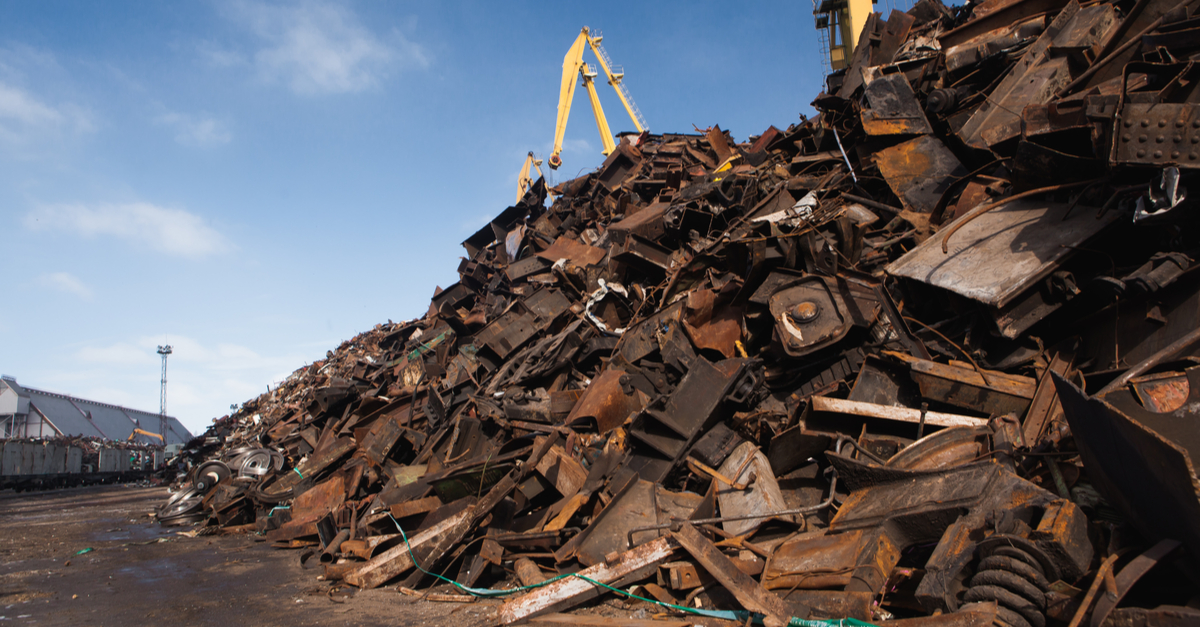
Attempts to abolish the “zero” quota on scrap exports in 2026 will not mean liberalization, but a return to old “schemes,” opacity, budget losses, and corruption. This opinion was expressed by economist and financial analyst Oleksiy Kushch.
At the end of 2025, the Ukrainian government decided to temporarily limit ferrous metal scrap exports for a year by introducing a “zero” quota.
“It was a state-oriented and economically sound decision. There were several reasons for it: a shortage of raw materials on the domestic market, the need to decarbonize industry, and the fulfillment of environmental obligations. But the key reasons were corruption, lack of transparency, and systemic budget losses,” Oleksiy Kushch notes.
Formally, scrap exports from Ukraine to countries outside the EU are subject to a duty of €180/ton, the expert noted. However, for years there was a loophole in the current rules: if scrap was exported to EU countries, no duty was levied on such shipments. This led to the mass export of this raw material to the European Union, from where the scrap was further re-exported to third countries, in particular through Polish and Bulgarian ports. As a result, the Ukrainian state budget lost several billion hryvnias every year.
«The actual revenues from such exports were absurd. For every ton of scrap metal exported, the state received about UAH 100. This is a paltry amount, especially considering that export volumes were constantly growing. By the end of 2025, they reached almost half a million tons, which was a four-year high,» the economist emphasized.
The expert considers talk of the harm caused by the “zero” quota to be cynical in this context, especially when you consider that one ton of scrap metal processed into steel within the country can generate approximately 14-15 thousand hryvnia in taxes for the budget. This is not only about the fiscal effect, but also about jobs, the workload of steel and foundry enterprises, and the production of products for defense and reconstruction.
The temporary export restriction has effectively eliminated corruption in this industry, notes Oleksiy Kushch, by closing the possibility of manipulation of supply routes, rendering re-export schemes meaningless, and retaining added value within the country.
“The government’s position on this issue is clear and publicly stated. Scrap metal is defined as a critically important raw material for the Ukrainian steel and foundry industries. Even with export duties in place, scrap metal exports continued to grow, often transiting to third countries without any benefit to the Ukrainian economy,” he explains.
In addition, the reduction in CO2 emissions through domestic scrap processing directly meets the requirements of the European Union.
It should be recalled that by the end of 2025, Ukrainian scrap metal exporters had increased exports of strategic raw materials by 53% compared to 2024, to 448,680 tons. This figure is a four-year peak, i.e., the maximum since 2021. This is evidenced by GMK Center calculations based on data from the State Customs Service. Poland remains the main export destination. Over 12 months, 343.6 thousand tons of raw materials were sent to the Polish market, which is 76.6% of the total export volume and 38.2% more than in 2024.
-
Opinions Industry steel consumption
13 July 2026
23 July 2026

20 July 2026
14 July 2026