
Posts Companies steel structures 863 24 September 2025
The company already exports 40% of its production and plans to produce 1000 tons per month by the end of this year
The full-scale war has dramatically changed the Ukrainian economy, forcing entrepreneurs to rethink their business strategies and look for new opportunities. The story of METSIS is a vivid example of how military challenges can become a catalyst for creating a successful production of metal structures for solar energy and construction. Unfortunately, such examples are few and far between in times of war, but it is very important to talk about them now.
Igor Khoroshilov, co-founder and chief engineer of METSYS, told CMK Center about the company’s history and current activities.
The history of the company
The beginning of 2022 gave us hope for the revitalization of the construction industry in our country after a long quarantine, which significantly depressed the real sector of the economy. So, I, a native Kharkiv resident, and my partner Maksym Kurinnyi, who was born in Dnipro, began meaningful negotiations on setting up a joint production enterprise. Maksym would take on the lion’s share of the investment, and my many years of experience in metalworking and flat steel processing gave us hope that our joint project would be established quickly and reach a profitable level within the first year of operation. However, it was the outbreak of full-scale military aggression by the Russian invaders that finally pushed us to act.
In the first months of the devastating war in the Kharkiv region, we still relied on the opportunity to start in my “home” region. However, after the occupants destroyed the equipment of the power substation that powered the workshop where we brought our first purchased equipment, we had no hope left, and we made the difficult decision to relocate to the city of Brovary, Kyiv region. At that time, Maxim owned an industrial land plot near Brovary, so we set out to build the buildings of our new enterprise in 2023. Unfortunately, only in 2025 did we complete the design and now we are moving on to land works. Therefore, for the first two years, METSYS LLC, our newly established company, was based at the premises of the Plastmas plant in Brovary.
METSYS is a registered trademark and an abbreviation for Metal Systems, which we create from aluminum and steel profiles, hardware and fittings of our own production. The selected target markets are steel construction and solar energy. It is on the rapid development of renewable energy in our country and the high demand from the nearest European countries that we have placed our life’s bet.
Production facilities
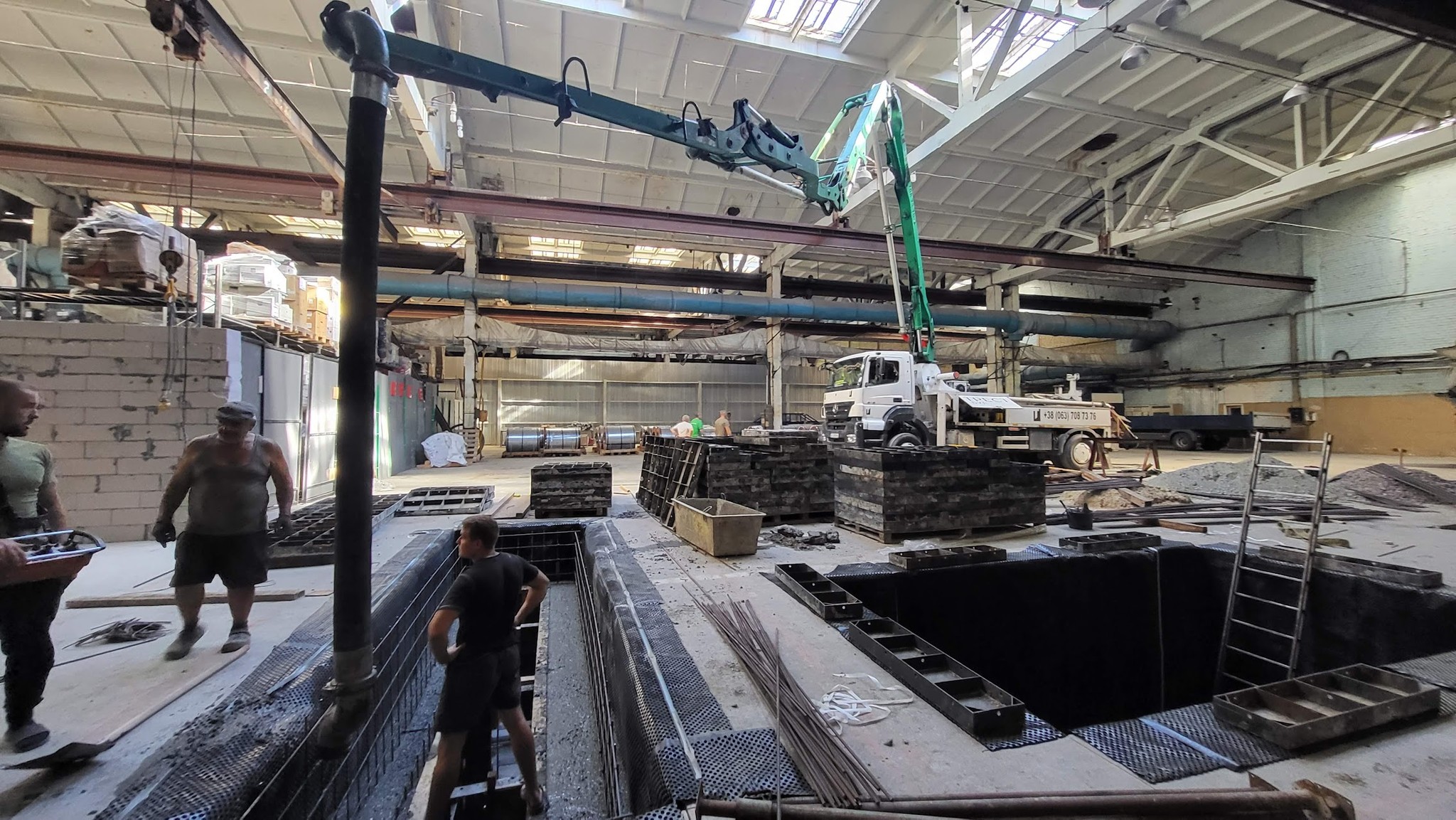
Today, having started the third year of its development, the company occupies more than 6000 square meters of production and office space, which houses a fleet of processing and metalworking equipment. The company employs more than 80 specialists, engineers and department heads.
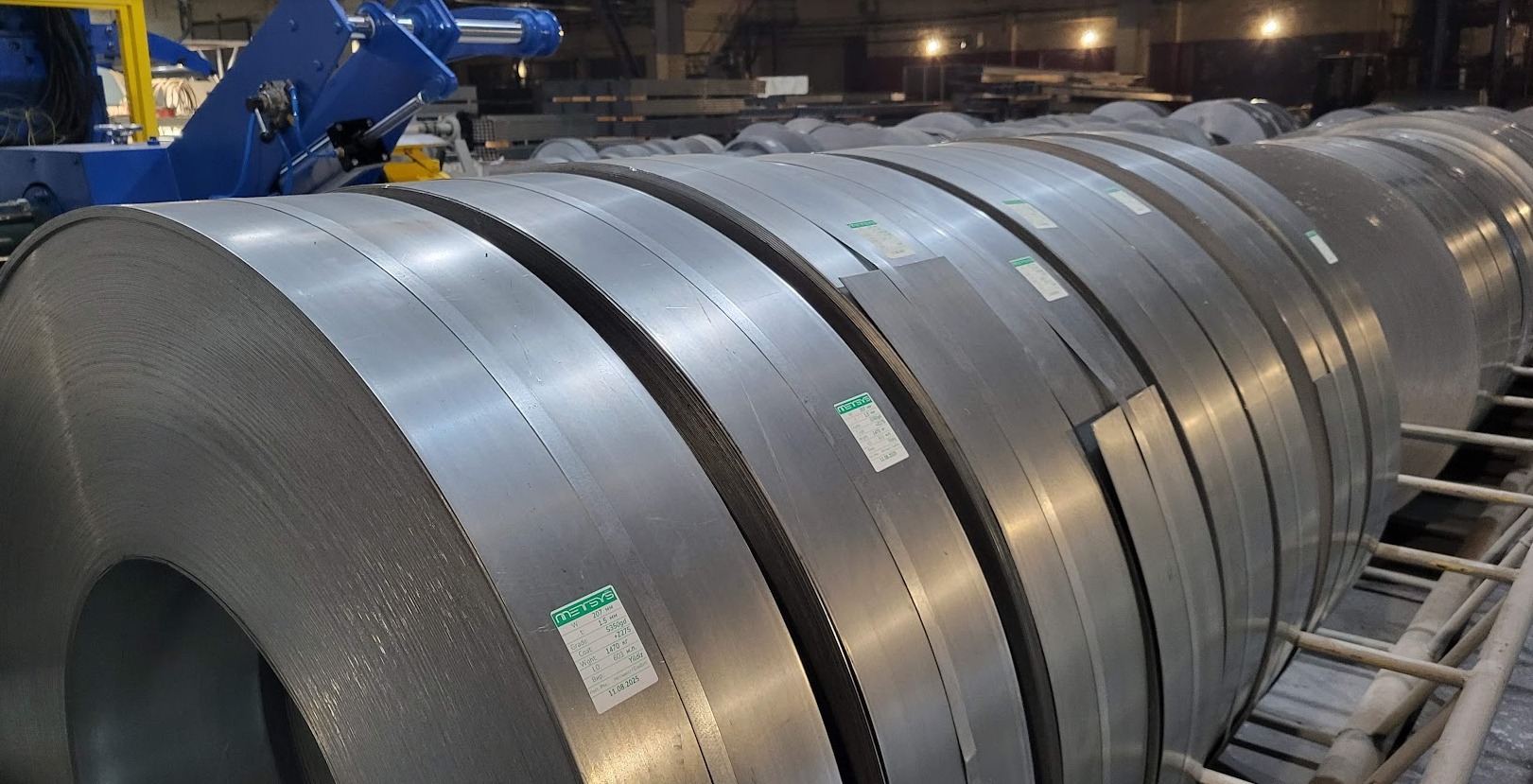
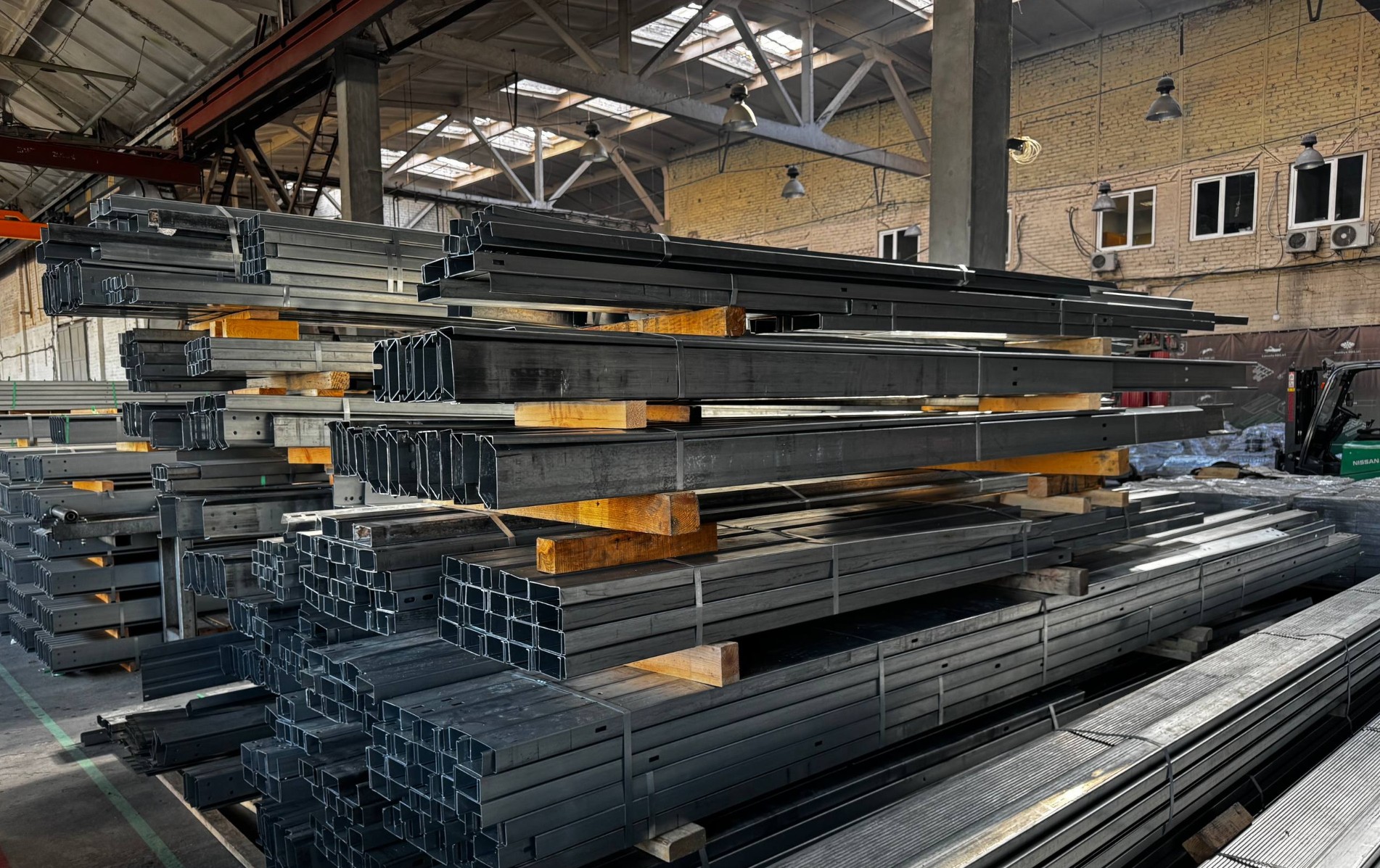
As planned, the company supplies complete steel structures to the markets it has developed, consisting mainly of cold-rolled sections with coordinate or periodic perforations for fastening holes. This work is performed by the Cold Rolling and Stamping Shop. Since the fall of 2025, four production lines have been continuously producing beams and girders, ties and connectors for lightweight thin-walled structures from galvanized steel of structural grades in two full shifts per day. They are used to complete large and small orders for domestic and industrial distributed generation facilities, such as solar power plants. Relatively small cross-sections with walls up to 50 mm and thickness up to 1.5 mm are used for roof-based facilities; medium cross-sections with walls up to 200 mm and thickness up to 3.0 mm are used for ground-based facilities; large cross-sections with walls up to 300 mm and thickness up to 4.0 mm are used for civil engineering facilities in the form of split and continuous girders.
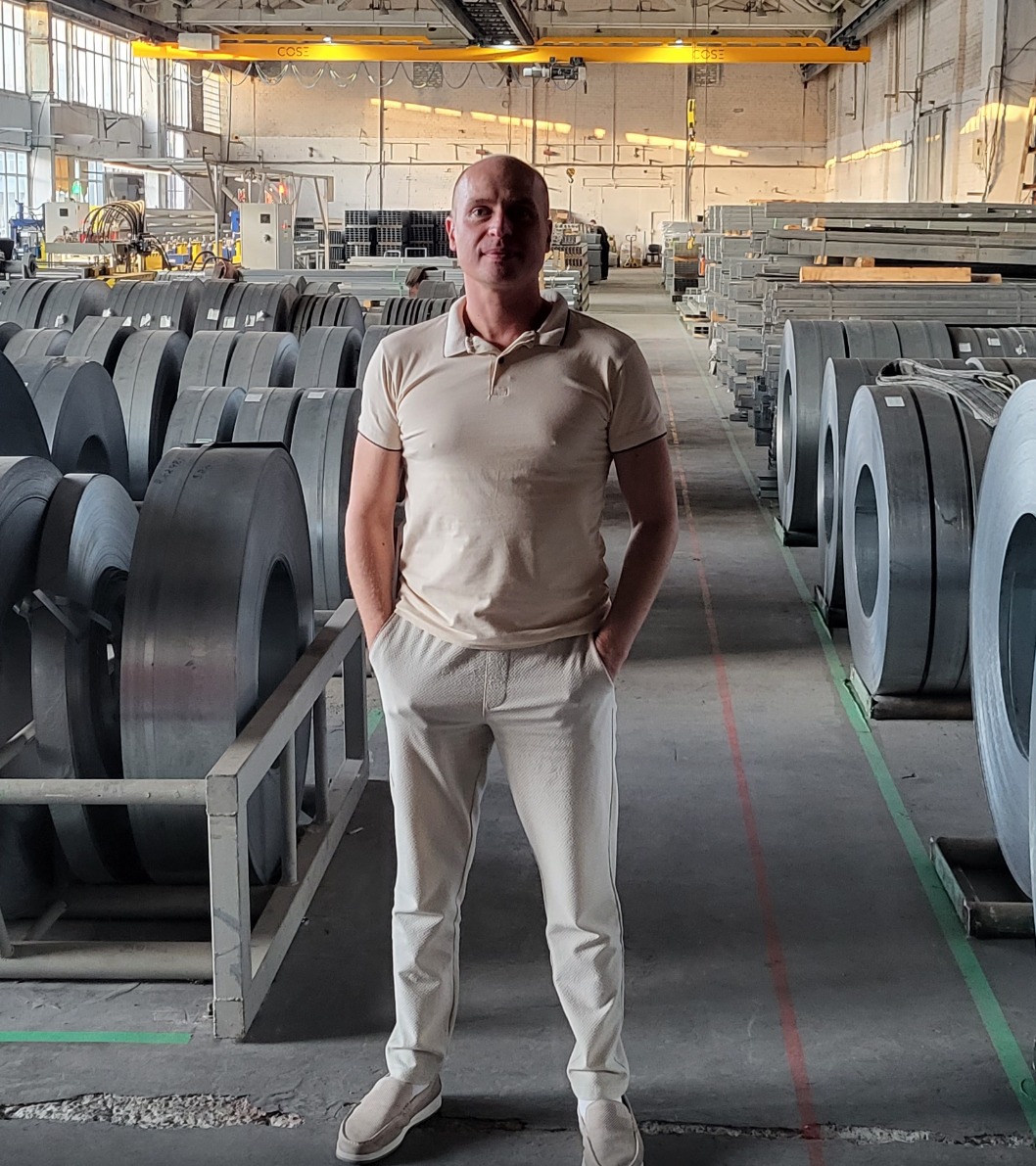
METSYS has its own raw material hub equipped with a longitudinal coil unit that is filled with coiled steel, mainly imported from Turkey. The unit processes coils weighing up to 12.5 tons and up to 1,600 mm wide into strips up to 5.0 mm thick. Unfortunately, after losing Mariupol, the idea of building a modern cold rolling and hot-dip galvanizing shop at Ilyich Steel was abandoned. Thus, Ukraine temporarily lost the ability to supply the domestic market with the required steel grades. This, however, did not prevent processing companies, including ours, from quickly switching to importing raw materials.
In addition to continuous processes, the company has mastered bending and perforation operations performed on manual feed presses to produce additional steel fittings. And aluminum alloy fittings are produced on specialized high-speed automatic lines with tick feeding.
By the end of 2025, the company plans to cross the psychological threshold of 1,000 tons per month of complete metal systems for solar energy and steel construction. About 85% of these will be made from imported pre-galvanized raw materials and 15% from hot-rolled billets, mainly produced by Zaporizhstal, which are hot-dip galvanized at Ukrainian smelters in Kyiv, Cherkasy or Zakarpattia. Such sales volumes are possible, among other things, thanks to a powerful design department based directly at the production site.
Despite the war and the young age of the company, we already export about 40% of our production. Our customers are located in Romania, Moldova, and Macedonia. We are actively exploring export opportunities, and this year we hope to establish exports to Bulgaria and possibly other countries.
Potential of the solar energy market
Even during the war, we have recorded systematic growth in the solar energy market. This was the result of significant losses of capacity due to shelling of Ukrainian power generation and the constant reduction in the cost of equipment and services for the construction of SPPs. In addition, a technological breakthrough is currently underway in the operation of industrial energy storage facilities that can offset daily peaks in consumption and generation. Namely, the lack of maneuverability has been the Achilles’ heel of renewable energy sources until now. Therefore, distributed generation and storage technologies are becoming a powerful tandem that helps to neutralize the losses of the Ukrainian energy sector from the aggressor’s actions.
Due to the change in the market structure and its technical and economic indicators, there is no longer a need for the state to stimulate distributed energy. The EROEI indicator, which is crucial in assessing the health of energy industries, for SPPs built in different regions of our planet is already estimated in the range of 1:10 to 1:30 as of the end of 2024, and will obviously continue to grow. This indicator is the ratio of the energy consumed to create a generation facility to the gross amount of energy received over the full life cycle of the plant, usually 30 years.
In general, the Ukrainian market of support systems for SPPs is about 50 thousand tons of metal (steel and aluminum) structures per year. However, starting from 2025, the installed capacity of SPPs is expected to increase by 1 GW annually.
Market challenges
We are engaged in the processing of rolled steel, but our industry is almost unable to exist without the machine-building segment, i.e. without metalworking. Our company has a machine shop that produces tools, equipment and machine parts. We could even build the equipment we use from scratch. But unfortunately, we don’t have that option now because this shop is almost completely empty. For more than two years, we have managed to fill only two jobs out of eight possible, because there are no ready-made specialists on the labor market, and we are going the way of “growing” specialists, i.e., we train them ourselves. Thus, we train one person every six months.
The shortage of specialists has affected not only the workshop, but also our production volumes are limited due to the lack of engineers. So, in fact, the company supplies the market with such volumes of metal structures that the design department has time to design.
Our still unattainable goal is to manufacture dies, molds, and complete machine assemblies that will improve our product and make our profiles and fittings more complex. But for now, we are completely dependent on imports of metal processing equipment from China and Turkey.
Company plans
From the very beginning, our plans were large-scale and ambitious. Even in the year the company was founded, we were already planning to expand beyond the Ukrainian market, not only in terms of sales of the finished product, but also in terms of the location of production facilities.
We plan to establish branches in at least two European countries in the coming years. But to expand the sales market to the most developed economies, METSYS LLC must obtain a TÜV certificate. This will allow us to apply the CE marking, which is mandatory for the supply of construction materials to the German market and many neighboring countries. This year, we have to bring our production processes and product quality in full compliance with EN 1090:2014 and thus confirm our ability to supply structures that meet the highest requirements of the EU markets.
After obtaining the certificate and reaching significant export volumes, we will be able to think about creating a production cluster in the Czech Republic, Germany or Italy. In the meantime, we are analyzing the market and waiting for the right opportunity to do so in a timely manner and without unnecessary losses.
At the same time, we are in no way planning to relocate the entire enterprise. The main production base will remain in Ukraine, but certain capacities may be located closer to the sources of raw materials and major consumers in the EU.
The plans for the coming years also include a significant increase in the supply of steel structures for civil engineering, both in terms of deepening technological capabilities and in the field of design. However, this will require improving external conditions, reducing risks, and starting a large-scale reconstruction of the country. In the future, we will be ready to fully address the issue of supplying a wide range of thin-walled cold-rolled steel structures for the construction of industrial buildings or complete buildings.