




Opinions Global Market business 767 14 November 2025

Among the issues are harmonization of regulatory requirements, border crossing regulations, and EU environmental requirements
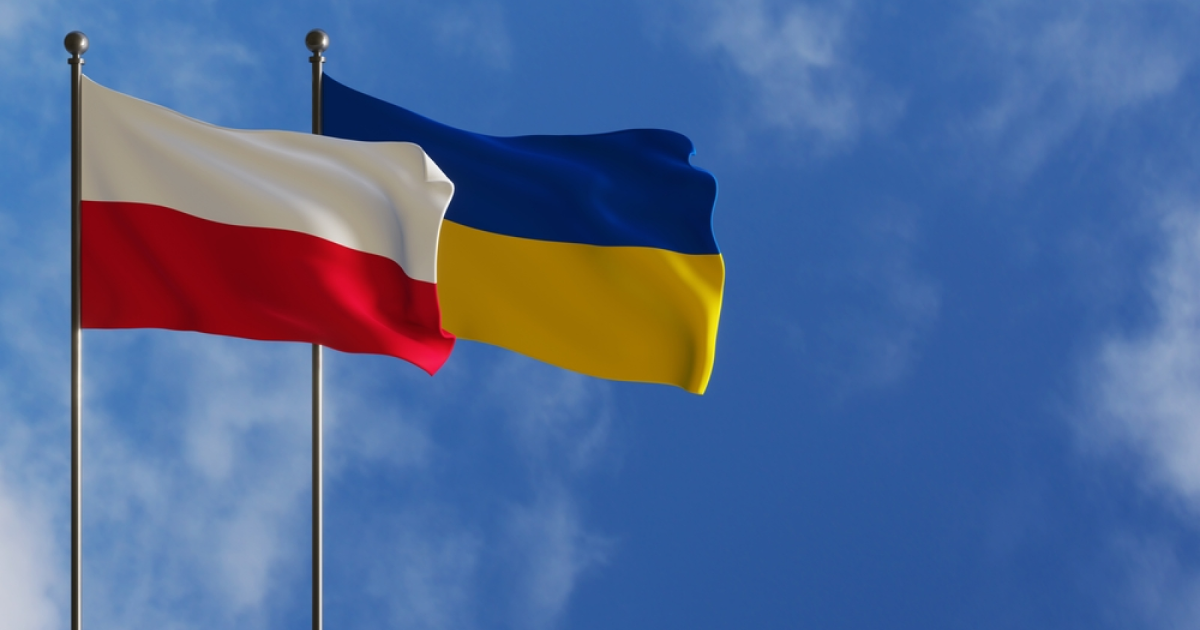
Ukraine’s integration into EU industrial policy faces a number of practical challenges that directly affect the work of Ukrainian businesses. The Center for Economic Strategy, together with the Stefan Batory Foundation (Poland), organized a discussion on Ukraine’s integration into EU industrial policy. Taras Pylypuk, CEO of Modern Expo S.A., a company that manufactures and exports retail equipment and other specialized equipment, spoke about the existing obstacles and his vision for further development. GMK Center summarizes the main points of his speech.
The company’s work in Poland
Our company operates in a special economic zone in Lublin. Thus, in some respects, we benefit from industrial support instruments in Poland. Modern Expo is currently seeking additional funding on the basis of its classification as a large company. However, the existing bureaucratic issues are holding us back to a certain extent, as it is a very labor-intensive process. This makes us think twice about whether it is worth attracting such additional funding.
Main barriers to doing business
- Harmonization of regulatory requirements
The European Union provides for four freedoms: the free movement of capital, services, people, and goods.
We are an industrial company that manufactures various equipment for retail. We face a major problem related to the synchronization and harmonization of requirements between Ukraine and Poland regarding regulatory standards for products.
- Problems crossing the border
This is one of our most pressing problems. Modern Expo transports around 100 trucks across the border every month, each worth approximately €150,000. It is not just a question of excessive bureaucracy. The main barrier is the lack of predictability when moving our goods across the border.
- EU environmental requirements
The European Union is implementing many initiatives related to the EUDR (European Union Deforestation Regulation), CBAM, etc. This is certainly important and has an impact on the environment, but on the other hand, it is an unfavorable factor for facilitating cooperation between Ukraine and the European Union, in particular with Poland. This is a really complex issue, which, unfortunately, has not been sufficiently addressed even by the European Union itself.
We have to invest a lot to find the right companies. Even in Poland, there are not many companies that could professionally provide information on the implementation of these requirements. At the same time, our partners, the companies we work with, actively remind us and demand that we implement this.
Vision for future cooperation
For our company, the key factors for further integration with the European Union are:
- Infrastructure and regulation. Expansion of border infrastructure and changes in regulations to facilitate the transport of physical products. I believe this would have a huge impact on the future and directly on Ukrainian and Polish industry.
- Support for human capital. Ukraine is currently facing an unprecedented demographic crisis, which is one of its biggest problems. Language support, experience exchange, and other programs could improve and accelerate the creation of cooperation chains.
- Increased Western funding. Ukraine cannot currently exist without external funding. Continued support through various financial instruments and facilitating the entry of Ukrainian entities into Poland and Polish entities into Ukraine over the next few years is critically important.

-
OpinionsGlobal Marketsteel consumption
13 July 2026
02 July 2026
15 June 2026

07 April 2026