




Opinions Infrastructure electricity 454 18 February 2026
A package of energy solutions for large enterprises is awaiting approval

It provides for long-term supply contracts and the introduction of special auctions from Energoatom
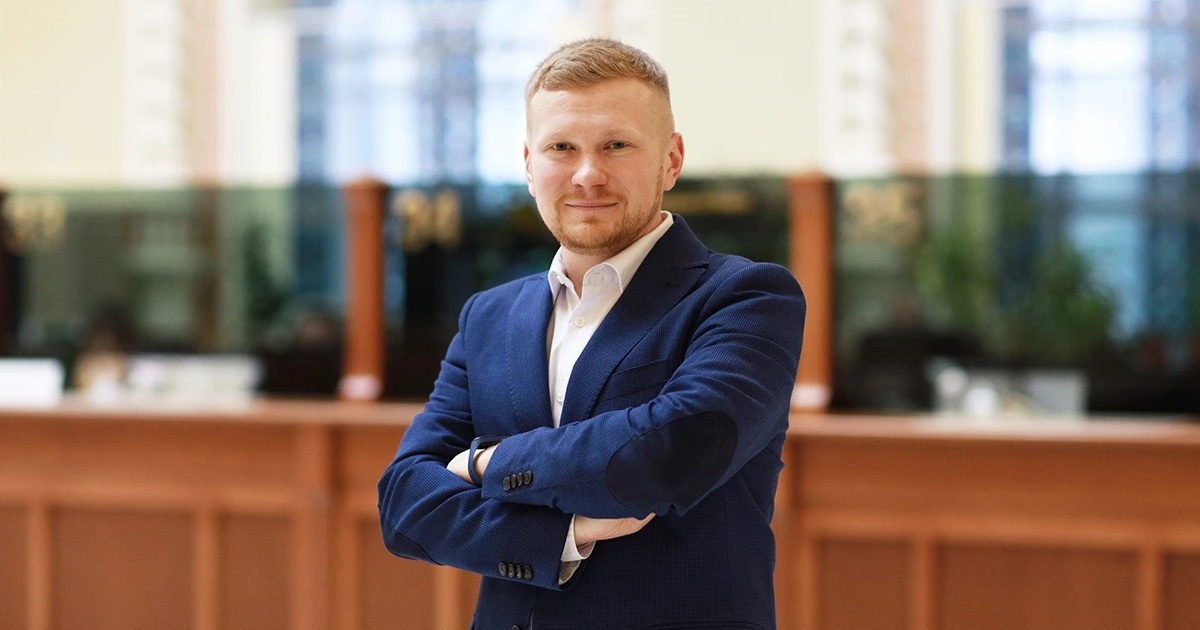
Russian shelling has exposed a critical vulnerability in the Ukrainian economy: an industry that is struggling to survive needs not only affordable electricity, but also its physical availability. Andriy Telyupa, advisor to the Minister of Economy of Ukraine, spoke about how the government is responding to this challenge through preferential financing and other measures during the online event «How do attacks on the power grid affect business operations?» held by the Center for Economic Strategy. GMK Center summarizes the main points of his speech.
General position
The Ministry of Economy and the government as a whole adhere to a conservative approach to forecasting the situation in the energy sector, as does the NBU. The principle is to hope for the best but prepare for the worst.
Accordingly, preparations for the winter season began early: numerous meetings were held with businesses and industry associations to discuss practical mechanisms for supporting enterprises in conditions of energy shortages.
While working on Ukraine’s industrial strategy (together with the World Bank, UNIDO, and the OECD), it was clearly defined that at least 50% of the industry’s success depends on the availability and price of electricity. While the initial focus was mainly on the cost of energy resources, the issue of the physical availability of electricity came to the fore before this winter season.
Strategic areas of government work
The government has focused on three key areas to address the energy problem.
- Preserving existing generation capacity. This involves the construction of protective structures and the expansion of the air defense system. The government recognizes that its ability to directly influence this area is limited, but it remains a priority.
- Expanding electricity imports. Measures are being taken to increase both the physical capacity of crossings and the volume of relevant permits. A separate task was to minimize import restrictions, which Ukrenergo introduced in the summer depending on market prices. In addition, at the end of 2024, a transition to long-term contracts for electricity imports was initiated, which gives businesses the opportunity to plan purchases not only for a day, but for a quarter, half-year, or year.
- Support for decentralized generation. Priority is given to the development of cogeneration, small and medium-sized generation, and electricity storage systems. The main barriers that had to be overcome were a lack of financial resources and a shortage of equipment.
Financial support instruments
In June 2024, the Ministry of Economy, together with the NBU, launched a memorandum on energy support. Fourteen banks joined it, including almost all of the largest financial institutions. The participating banks committed to lending to energy projects at an average rate of 13.5%, which is below the market average.
According to the NBU, as of January 2025, banks had provided approximately 3,000 loans totaling UAH 33 billion over the more than 18 months that the memorandum had been in effect.
According to the banks’ estimates, the funds raised were used to restore and develop generating capacities and electricity storage systems with a total capacity of about 2 GW. The program continues to operate, and the NBU is recording steady growth in the energy loan portfolio.
Within the framework of the state program “5-7-9%,” a separate line was allocated to finance the construction of generation and energy-saving systems. The initial limit per borrower was UAH 150 million. Given the growing demand from businesses and the need for more extensive reconstruction, the limit was increased to UAH 250 million so that medium and relatively large industrial businesses could obtain loans to install cogeneration facilities at their own sites.
Businesses have proposed raising the limit to UAH 1 billion, but this is currently impossible due to financial constraints: for the third year in a row, the volume of the “5-7-9%” program remains at UAH 18 billion per year to compensate for interest rates. These funds are provided with the support of the World Bank and are not direct budget expenditures.
At the beginning of 2025, new support programs were launched for sole proprietors, condominiums, management companies, and individuals—the so-called «Energy Credit» program.
A one-time payment of up to UAH 15,000 is provided for sole proprietors. Recognizing that this amount is relatively small, the program is combined with a preferential 0% loan for the purchase of energy equipment in the amount of up to UAH 10 million. This way, entrepreneurs can receive both non-repayable assistance and an almost interest-free loan, for example, to purchase a generator or energy storage system.
For large borrowers, the “5-7-9%” program offers a limit of up to UAH 250 million at an interest rate of about 1% per annum for a term of up to five years, which is essentially free financing.
At the same time, the Ministry of Economy, together with the NBU, is working on mechanisms to reduce collateral requirements for energy loans, using desking instruments and guarantees from international organizations, in particular the European Commission.
Support for large-scale generation
In the field of large-scale generation, a competition for the reconstruction and development of new capacities was completed at the end of 2024. The commission’s decision has been made, and the first facilities are expected to be commissioned in the near future. A second wave of the competition is being prepared with differentiated conditions for different regions – conditionally the left bank and the right bank – according to the level of deficit in each of them. This will allow investors to receive a differentiated price for the resource depending on the location.
The key idea is that large businesses will have the opportunity to build generation facilities on the terms of a predictable fixed price from Ukrenergo, which guarantees a return on investment.
Issues facing large energy-intensive enterprises
The situation with large energy-intensive industries remains a particular challenge, primarily metallurgical plants and the cement industry, for which the cost of electricity is a critical factor in competitiveness.
Based on the results of work in the fall of 2024, a package of decisions was formed, which is currently being approved by the relevant central executive authorities. The package provides for:
- long-term electricity supply contracts – the possibility of contracting not on the DAM market, but for a quarter, half-year, or year from Energoatom and other suppliers;
- the introduction of special auctions from Energoatom with a special tariff for energy-intensive enterprises.
The issue of special auctions remains controversial. From an economic point of view, such a mechanism actually means a redistribution of the financial burden between different groups of consumers, rather than a reduction in the overall costs of the system. The government is trying to find the most compromise and analytically sound solution that will be both transparent and market-oriented.
Overall assessment
Despite difficult conditions, the programs implemented are showing results. Over the past two years, more than 2 GW of new generating capacity has been commissioned in Ukraine. There is active demand for programs for sole proprietors. Construction of new generation facilities continues.
The government realizes that the development of decentralized generation is a necessary, rather than ideal, scenario: whenever possible, businesses prefer to obtain cheap centralized electricity. However, in conditions where a reliable centralized supply cannot be guaranteed, the maximum effort is being made to support enterprises’ own generation.

-
OpinionsInfrastructuresteel consumption
13 July 2026

16 June 2025
13 May 2025
07 May 2025