




News Global Market брухт 2159 22 November 2025
According to the study, this scrap could become an important resource for decarbonizing the EU steel industry.
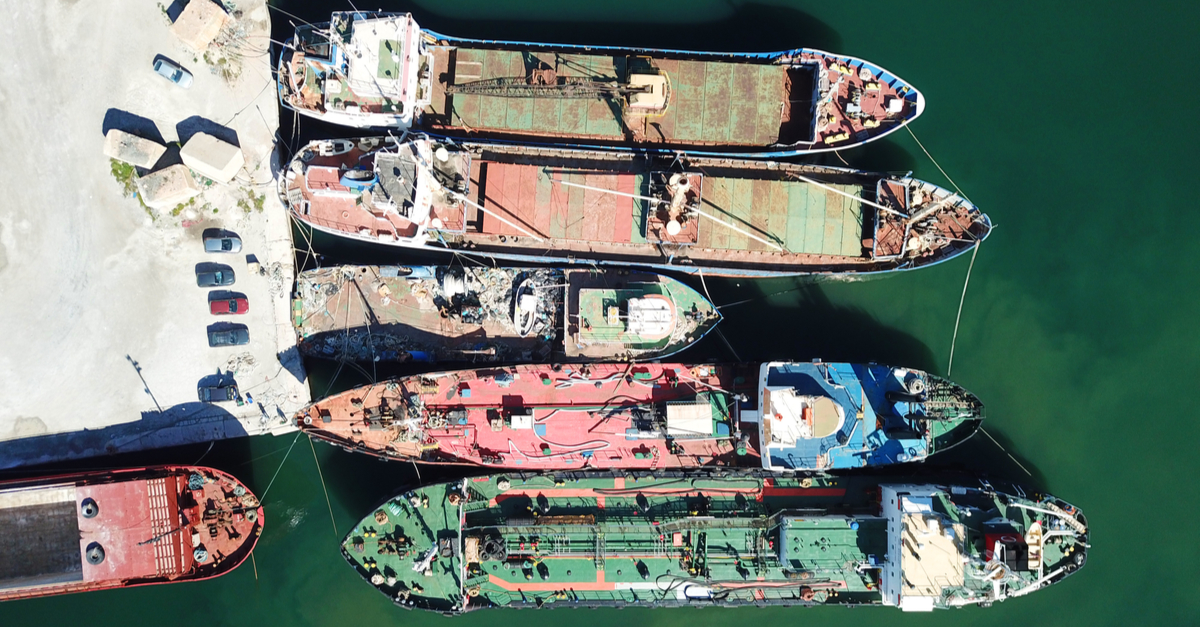
The recycling of decommissioned ships could be a significant and still underutilized source of high-quality scrap for the EU steel industry. This is according to a report prepared by the Belgian NGO Shipbreaking Platform, the Sandbag think tank, and researchers at the University of Tushia.
The transition to more environmentally friendly steel production is one of the EU’s strategic priorities on the path to carbon neutrality. Increasing the share of scrap in electric arc furnaces is one of the key ways to reduce emissions, as steel production from secondary raw materials requires much less energy and produces lower CO2 emissions.
According to the report, about 70-95% of the weight of a decommissioned ship can be recovered as high-quality scrap. At the same time, only about 1% of European ships are recycled within the EU, making it critically important to increase recycling capacity. Analysts predict a sharp increase in the number of ships to be dismantled in the 2030s – more than 700 units annually between 2032 and 2036.
The annual volume of scrap is expected to exceed 10 million tons and peak at 12 million tons in 2033. This is equivalent to about 15% of total scrap consumption in the EU in 2024, a share that will only grow in the future.
The organizations are calling on the European Union to increase transparency regarding decommissioned ships and to introduce policies that will ensure recycling in accordance with the highest environmental and safety standards. In their opinion, circular economy acts and industrial accelerators should directly encourage sustainable ship recycling.
The report also notes the need to close regulatory gaps, in particular the practice of flagging out before dismantling, which allows shipowners to avoid stricter EU regulations. Currently, most ships are recycled in South Asia, especially in India and Bangladesh, where purchase prices are higher. However, these regions are associated with dangerous and environmentally harmful practices. Since 2009, at least 470 workers have died there, and the coastlines have become toxic zones.
It should be noted that in the first half of 2025, global scrap consumption fell by 6.9% compared to the same period in 2024, to 235.96 million tons. This represents 76% of total global steel production.
-

15 June 2026

23 June 2026
23 June 2026

23 June 2026