




News Global Market Китай 1612 23 June 2026
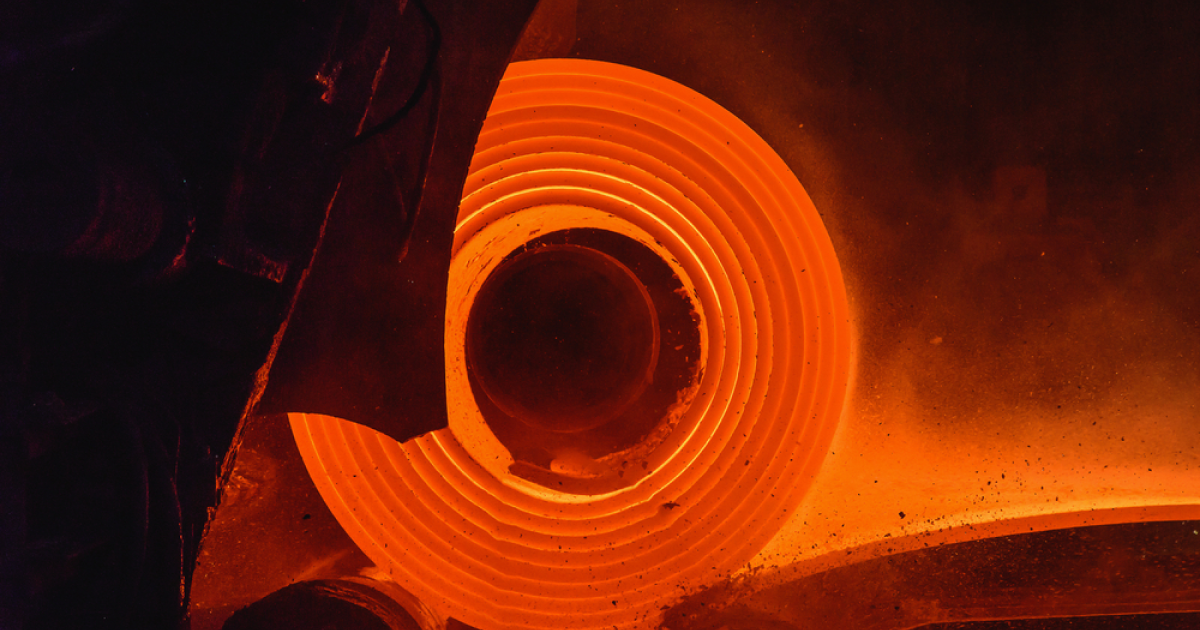
Exports have long been a mainstay of the country’s steel industry
The Chinese steel market is experiencing a prolonged slowdown in demand rather than a sharp decline, according to a report by Bloomberg following an industry event in Singapore.
Last year, steel production in the country stood at 961 million tonnes, which is almost 10 per cent below the peak of 1.065 billion tonnes in 2020.
During this period, China lost around 83 million tonnes of apparent demand for construction rebar due to the country’s property crisis, said Zhao Jinkui, deputy secretary-general of the China Iron and Steel Association (CISA).
However, in a broader sense, according to independent analyst Jiang Li, China’s demand for all types of steel last year was only 3.1 per cent lower than the 2020 level.
“Demand for steel in China is shifting from a model centred on property and construction towards a high-level rebalancing driven by manufacturing, infrastructure support and the energy transition,” she noted.
This means that sectors such as shipbuilding, new energy equipment and advanced manufacturing have absorbed a significant portion of the decline. Jiang explained that market expectations of a ‘sharp drop’ in demand are misplaced; consumption will decline gradually until 2050.
Yilin Wang, general manager of the research division at China Mineral Resources Group, forecasts that the government’s efforts to reduce excess capacity will lead to a fall in China’s steel production to 900 million tonnes by 2030. The expansion of markets in India and South-East Asia will further reduce the country’s share of the global market.
Exports have long served as a ‘safety net’ for Chinese steel producers, but the global trade landscape is changing. Traditional buyers are imposing tariffs to protect their industries, and Chinese mills are being forced to seek out other markets. The European CBAM has become a further complication for exporters.
At the same time, CISA advises the country’s steelmakers to organise maintenance and production control flexibly in the short term (during the off-season) based on actual order volumes, reports Kallanish. Industry profits are falling due to rising costs and weakening demand; the domestic market for steel products continued its downward trend in June, a trend that has been observed since the end of May.
It should be noted that, for the period January–May, China’s steelmakers reduced steel production by 3.9% year-on-year – to 415.5 million tonnes. Rolled steel output for the same period fell by 1.5% year-on-year to 593 million tonnes.
-

Opinions Industry steel consumption
13 July 2026
13 July 2026

13 July 2026

13 July 2026