




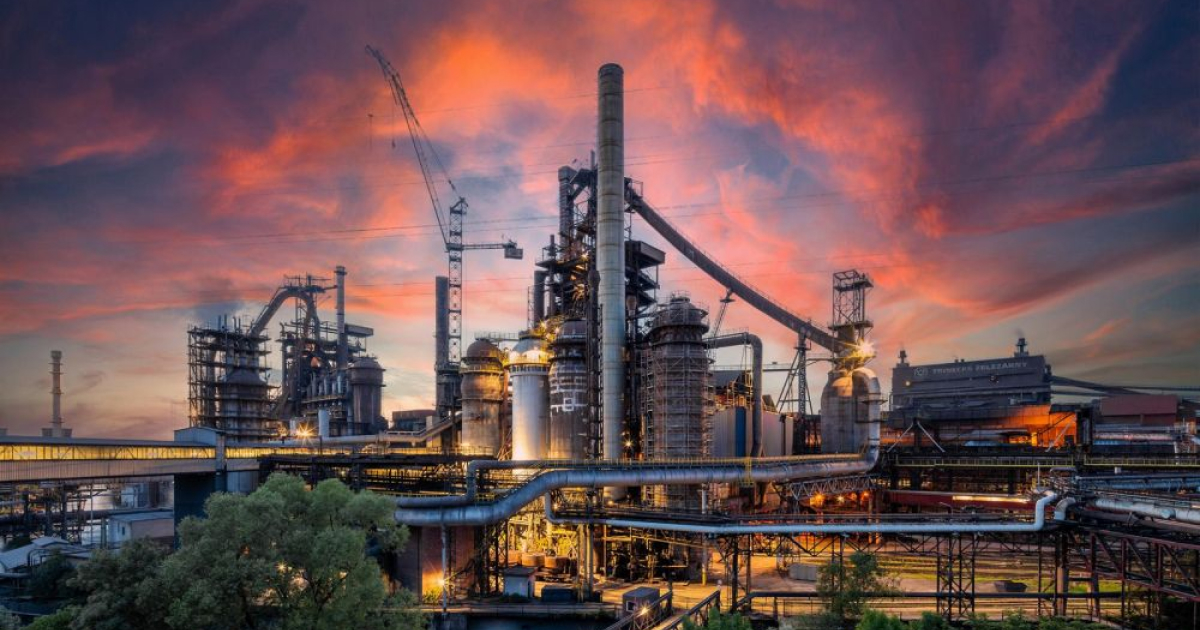
A total of 32 companies will receive more than CZK 2 billion in support to maintain competitiveness
On November 12, the Czech government decided to fully compensate industrial companies for indirect CO2 costs in 2024. Among the recipients of support is Třinecké železárny, the largest and only steel producer in the Czech Republic, which belongs to the category of energy-intensive companies and is heavily dependent on stable energy costs.
In October, there was still no certainty that the Ministry of Industry would find the resources in the budget to pay the compensation in full. The possibility of reducing funding was considered, although companies have a legal right to these funds under the EU Emissions Trading System (EU ETS) rules. Similar compensation has long been paid in all EU countries.
A total of 32 industrial companies in the Czech Republic are eligible for compensation, and the total amount of payments will exceed CZK 2 billion. These funds are intended to partially offset the increase in electricity tariffs caused by the high cost of carbon allowances in Europe. Companies emphasize that without this support, the risk of losing competitiveness in the global market would increase significantly.
«We appreciate that we have finally managed to secure funds to compensate for the financial losses caused by increased costs due to European regulations. The steel industry is going through an extremely difficult period, and any reduction in compensation will further worsen the economic situation of the entire industry and weaken its competitiveness,» said Roman Haide, CEO of Třinecké železárny.
Earlier, the Review Union, the Confederation of Industry, and the Czech Chamber of Commerce spoke out against the possible cuts in support. They warned the government that reducing compensation for industry would deal an additional blow at a time when competition from cheaper imports from outside the EU is only intensifying.
Earlier, the Czech Steelworkers’ Union sharply criticized the European Commission’s proposed climate target of reducing greenhouse gas emissions by 90% by 2040. The industry association believes that this target is unrealistic even under the most favorable conditions and threatens the final decline of EU industry.
-

Opinions Industry macroeconomics
28 May 2026
04 June 2026
03 June 2026
03 June 2026