




News Global Market Czech Republic 1764 18 March 2026
Steel production in the country continues to hover at historically low levels, according to the industry association
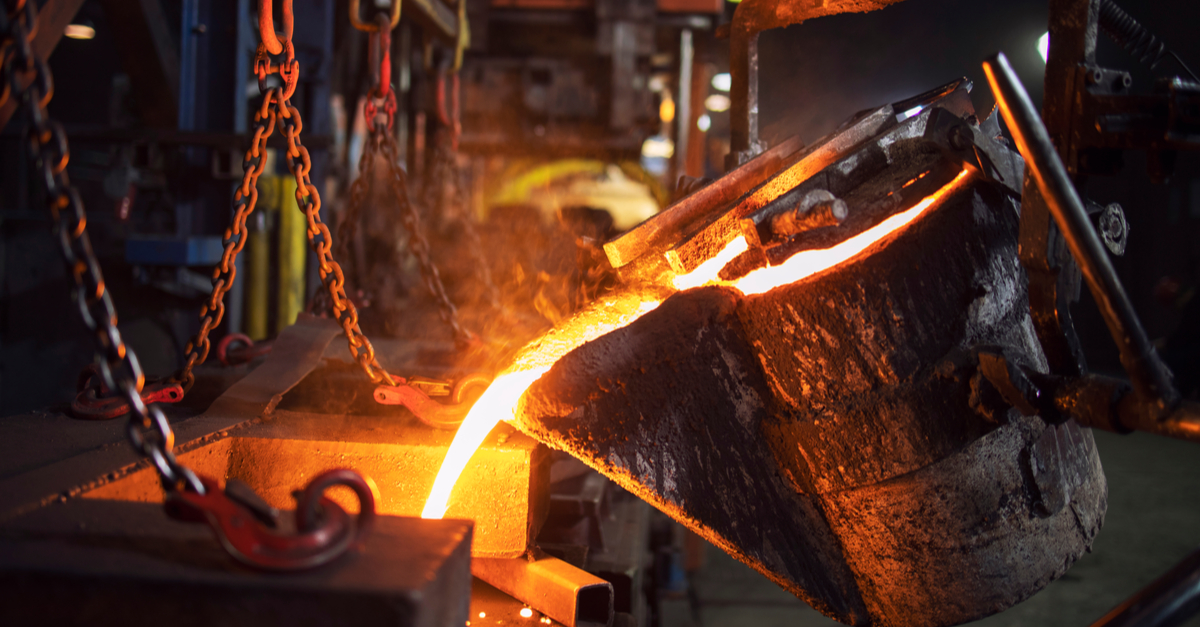
Steel production in the Czech Republic continues to hover at historically low levels, as the industry is still feeling the impact of the sharp decline observed between 2021 and 2024. This is according to a report by the Czech Steel Association (Ocelářská unie).
Last year, steel production in the country totaled 2.43 million tons—a figure that has remained virtually unchanged since 2024 and is one of the lowest levels in history.
In the last 10 years alone, steel production in the Czech Republic has fallen by more than 50% (in 2015, the figure was 5.3 million tons). The significant decline in recent years is mainly due to the cessation of primary production at Liberty Ostrava (now Nová Huť).
Steel consumption in the country totaled 5.5 million tons in 2025, but this figure remains the second-worst since the 2009 financial crisis.
According to the Ocelářská unie, long product production rose by 14.4% year-over-year last year to 2.07 million tons, while flat product production increased by 61% to 805,000 tons. However, as the industry association notes, this growth was in fact almost entirely driven by the restart of part of the production at Nová Huť (formerly Liberty Ostrava).
Last year, steel product imports into the country rose by 13.6% year-on-year – to 7.5 million tons. Steel product exports from the Czech Republic increased by 13.3% year-on-year during the period, totaling 3.4 million tons.
As Roman Heide, Chairman of the Supervisory Board of the Steel Union and CEO of Třinecké železárny, noted, steelmakers are facing one of the largest and longest-lasting crises caused by external factors that fundamentally disrupt economic stability on a European scale and weaken the EU’s competitiveness.
“European producers, in particular, are threatened by cheap imports from third countries or high energy costs, including expensive and volatile emissions quota prices. The emissions quota system is unpredictable and subject to market speculation that we cannot control. As a result, European manufacturers’ costs are constantly rising, and their competitiveness continues to deteriorate,” he explained.
According to Haide, this long-term trend is rooted in a disregard for economic reality and the actual functioning of the market in favor of ideologically motivated approaches. According to him, the outlook is also very uncertain, given the current tense geopolitical situation.
As a reminder, the Czech company Nová Huť, which has officially controlled the former Liberty Ostrava steelworks since last October, plans to invest up to 150 million Czech korunas in 2026.
-
Opinions Industry steel consumption
13 July 2026

13 July 2026
13 July 2026
13 July 2026