




News Global Market 1713 24 November 2025
With the launch of the announced projects, a shortage of this product is expected in the regional market
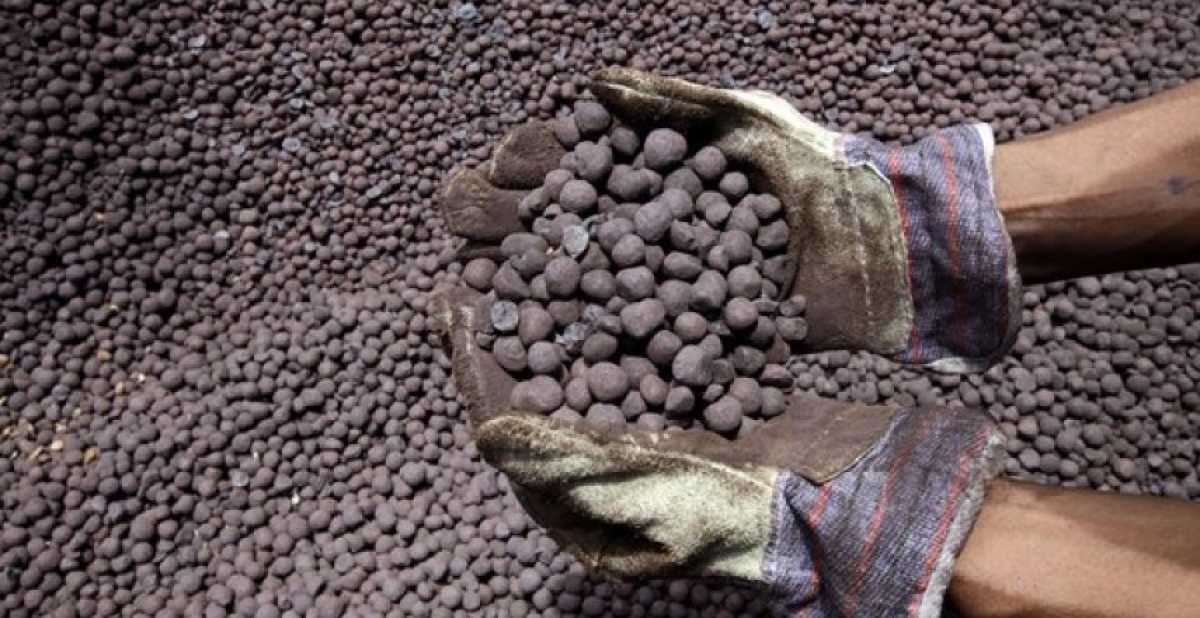
With the growth of direct reduced iron (DRI) production and planned projects, the MENA region will need more high-quality DR pellets in the near future. This was discussed at the Middle East Iron and Steel Conference (MEIS) held last week, according to SteelOrbis.
Direct reduction capacity in MENA (excluding Iran) is expected to grow by 21-23 million tons over the next 2-3 years, provided that all major projects are launched on time. This will bring their total capacity to 55 million tons of DRI/HBI per year, said Kaushalendra Prasad, director of Star Global. Current capacity is around 33 million tons.
As a result, demand for DR pellets in the region is likely to reach 85-90 million tons. This signals an expected supply shortage in the market for this product in the near term and the fact that both local production and imports will be needed.
To meet the additional demand of 30-40 million tons, global suppliers are working to increase capacity. For example, Brazilian mining company Samarco plans to reach a production volume of 26 million tons of pellets in 2028, compared to 15-16 million tons in 2025.
Despite the favorable environment, pellet producers face many challenges, the main one being the type and quality of iron ore. High-quality raw material resources are depleted, so enrichment is extremely important. Other problems include logistics, licensing, and water supply.
It is expected that part of the demand in the MENA region will be met by local producers. However, the DR-pellet market will remain in deficit until 2030, and most of the product is likely to come from existing producers such as Vale.
Steelmakers in the Middle East and North Africa (MENA) region have the opportunity to leverage their advantages and become leaders in global efforts to decarbonize steel production, according to last year’s study by the Institute for Energy Economics and Financial Analysis (IEEFA). A series of announcements about low-carbon projects in the MENA region shows that the transition to DRI, pig iron, and green steel is already gaining momentum here.
-

Opinions Industry macroeconomics
28 May 2026
03 June 2026
03 June 2026
03 June 2026