





News Global Market Індія 1313 15 May 2026
The global steel industry continues to rely on coal despite decarbonization efforts
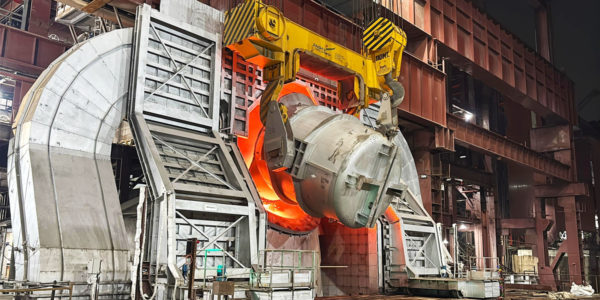
India accounts for over 60% of new blast furnace steel production capacity worldwide, despite global efforts to reduce emissions in the steel industry. This is according to the sixth annual report by Global Energy Monitor (GEM) on the development of the steel industry.
According to the organization, 319 million metric tons per year of new blast furnace capacity has been announced or is under construction worldwide, which is 5% more than last year. Additionally, another 80 million metric tons of capacity is planned to be modernized and have its service life extended through blast furnace repairs.
At the same time, only 141 million tons of existing blast furnace capacity has official closure plans. As a result, global blast furnace capacity could increase by a net 88 million tons by 2035.
GEM emphasizes that India remains the main driver of coal-intensive steel production. About 93% of the country’s new pig iron production capacity is based on blast furnace technology. Together with China, India accounts for 86% of all new blast furnace projects worldwide.
At the same time, analysts note that only 5% of the planned new blast furnace capacity in India has already moved to the actual construction phase, leaving room for adjusting investment decisions toward less carbon-intensive technologies.
According to GEM estimates, approximately 88% of CO2 emissions in the steel industry come from coal-based production, while the steel sector as a whole accounts for about 11% of global carbon dioxide emissions.
Despite active statements about decarbonization, the adoption of low-carbon technologies in the industry remains slow. The global share of electric arc furnace capacity increased by only 1% over the year, from 33% to 34%. In the direct reduced iron (DRI) segment, only 2% of operating capacity uses green hydrogen as the primary reducing agent.
GEM believes that more active use of electric arc furnaces and accelerating the transition to low-carbon technologies remain key conditions for reducing emissions in the global metallurgy sector.
As a reminder, India aims to expand its steel production capacity to 400 million tons by the 2035/2036 fiscal year. This is envisaged by the proposed National Steel Policy 2025. According to a draft government memo from March, the country will need capital investments of approximately 17 trillion rupees ($183.41 billion) to achieve this goal.
India also aims to more than double its exports to 20 million tons. Additionally, the new policy for the metallurgical sector calls for reducing dependence on coking coal imports to 80% by the 2035/2036 fiscal year, down from approximately 90% currently.
-

Opinions Industry steel consumption
13 July 2026
27 July 2026
27 July 2026

27 July 2026