




News Global Market scrap 148 04 June 2026
China was the largest consumer of raw materials last year, at 227 million tonnes
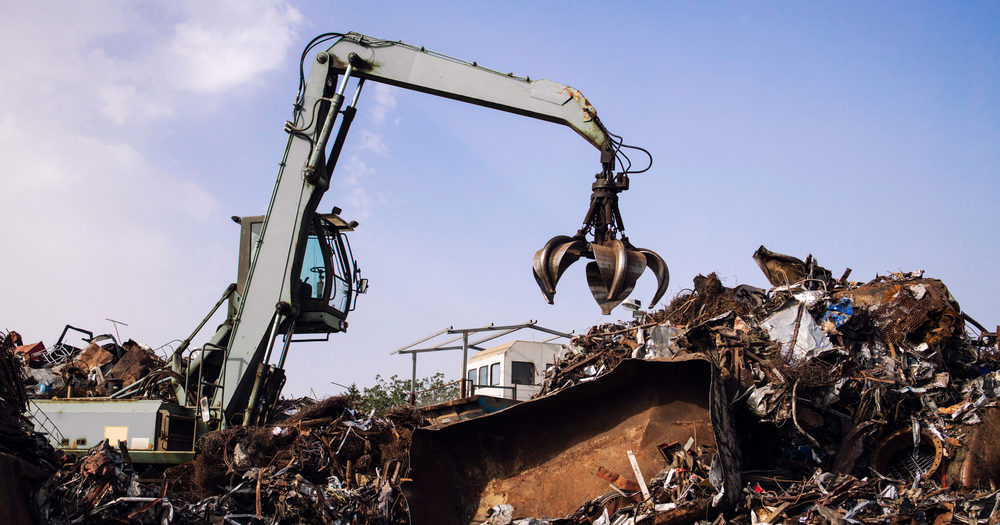
Global scrap consumption rose by 4.5% compared with the previous year, reaching 480 million tonnes, despite an overall 2.5% decline in global steel production. This is according to The Bureau of International Recycling (BIR).
China retained its status as the world’s largest consumer of this raw material, increasing its figures by 8.3% to 227 million tonnes, although the country’s steel production volumes fell by 4.4%. India also demonstrated positive growth, achieving significant simultaneous increases in both scrap consumption and steel production.
Overall, the key countries and regions featured in the report account for around 75% of the total global volume of scrap used in the steel industry.
“BIR’s own calculations and Worldsteel data indicate that around 630 million tonnes of scrap are used in global steel production each year, preventing emissions of nearly 950 million tonnes of CO2 whilst saving energy and natural resources,” the publication notes.
The proportion of scrap in steel production varies significantly depending on the technology used. For Turkey, this figure has traditionally been high at 86.8%, whilst for China it remained low at just 23.6%, due to the high proportion of converter production, which requires significantly less scrap compared to electric arc furnace production.
Turkey remained the world’s leading importer of scrap in 2025, despite a reduction in its foreign purchases to 18.8 million tonnes. The main suppliers were the US, with an annual decline of 20.4% to 3.6 million tonnes, and the Netherlands, with a slight decrease of 0.1% to 2.8 million tonnes.
India took second place among importers, having imported 8 million tonnes of scrap last year, a 5% year-on-year decrease. In particular, supplies from the US fell by 11.4% – to 1.3 million tonnes, and from the UK by 11% – to 0.9 million tonnes.
Meanwhile, scrap import volumes rose last year in the EU – by 28.8% year-on-year, to 5 million tonnes; in the US – by 5.1% year-on-year, to 4.7 million tonnes; and in Pakistan – by 39.8%, to 3 million tonnes.
Conversely, a decline in purchases was recorded in Taiwan, where imports fell by 38.1% year-on-year to 1.9 million tonnes, and in South Korea by 17.4% to 1.8 million tonnes.
The European Union retained its status as the world’s leading scrap exporter in 2025, despite a 2% year-on-year decline in total shipments to 16.7 million tonnes. The main destinations for European exports were Turkey, with a slight decline of 0.9% to 10.8 million tonnes, and Egypt, with an increase of 13.4% to 1.9 million tonnes. The Netherlands once again confirmed its status as the largest individual exporter within the EU, increasing shipments by 4.4% year-on-year – to 3.9 million tonnes.
The US retained its second place among global exporters, despite a significant year-on-year drop of 18.4% to 11.8 million tonnes. Turkey and Bangladesh were the key buyers of US raw materials.
In addition, last year saw an increase in scrap exports from Japan — up 18% year-on-year – to 7.7 million tonnes, the UK — up 4.4% to 6.5 million tonnes, Mexico — up 34.1% to 1.6 million tonnes, and Singapore — up 33.3% to 1.3 million tonnes.
At the same time, Canada saw a decline in exports, with figures falling by 5.4% year-on-year – to 4.3 million tonnes, and Hong Kong saw a drop of 8.7% to 1.1 million tonnes.
It should be noted that global scrap consumption in 2024 fell by 1% compared to 2023 — to 460.6 million tonnes. The largest decline in scrap consumption was recorded in South Korea — down 14% year-on-year – to 22.5 million tonnes, whilst steel production in the country fell by only 4.8% year-on-year. The US reduced its use of scrap by 3% y-o-y (55.3 million tonnes), Japan by 3.2% y-o-y (30.8 million tonnes), and China by 1.9% y-o-y (209.7 million tonnes), despite a slight decline in steel production volumes.
-

Opinions Industry macroeconomics
28 May 2026
04 June 2026

04 June 2026

04 June 2026