




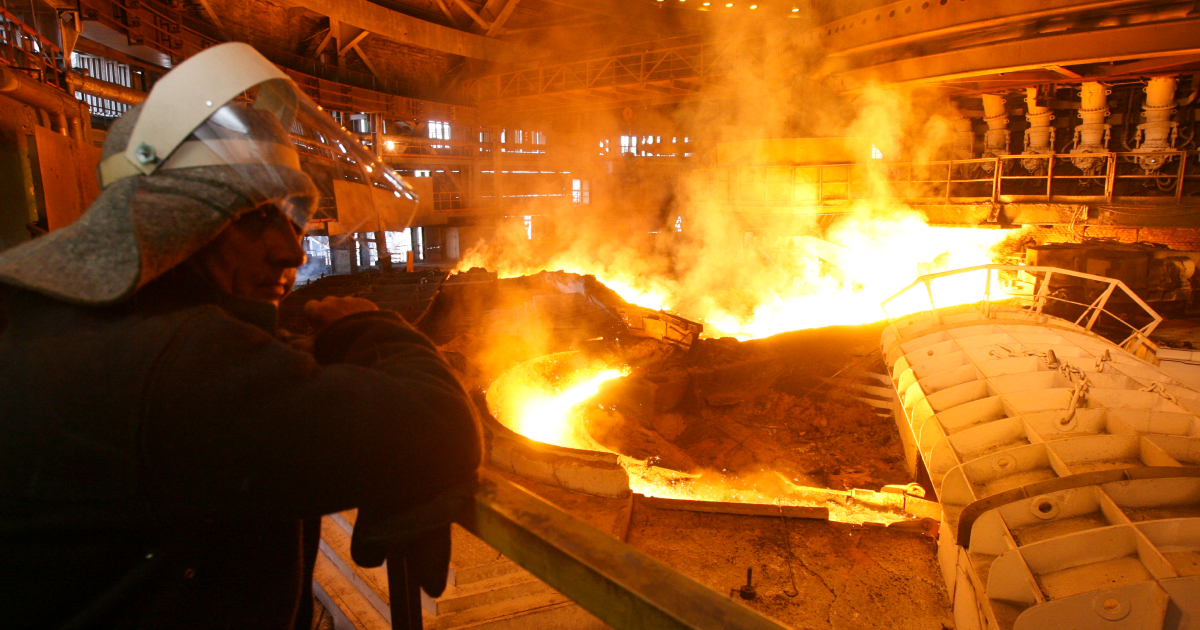
The German government wants to reduce energy costs for industry and give preference to European steel
German Chancellor Friedrich Merz supported the measures proposed by the European Union to protect European steelmakers. He also confirmed his cabinet’s commitment to securing steel production and jobs in the country. This is stated in a press release from the German government.
Representatives of the German steel industry, federal prime ministers, and government officials took part in the steel summit convened by Merz. Its purpose was to agree on specific steps to strengthen the industry and secure jobs.
In addition, the German government supports the European Commission’s efforts to quickly remove US tariffs on steel and aluminum, including derivative products, so that European goods can be exported to the US market as much as possible without paying duties through the corresponding tariff quota.
The German ruling coalition also called for an immediate halt to steel imports from Russia as part of EU sanctions. Exceptions to the latter currently allow Russians to export certain steel products (semi-finished products) to the bloc in significant quantities. The German government will therefore continue to work intensively to end this practice as soon as possible.
The German government and steelmakers have agreed that the EC should continue to improve the CBAM and that it is extremely urgent to submit relevant proposals. The aim is to simplify the system as a whole and prevent circumvention of the rules in the steel industry. As part of the further development of the mechanism, the German government advocates its extension to downstream steel products and calls on the European Commission to present a WTO-compliant export compensation model as soon as possible. If effective protection against carbon leakage through CBAM or compensation payments proves unsuccessful, the free allocation of quotas should be continued.
Friedrich Merz also said that his government would intensify efforts to reduce energy costs for industry, give domestic producers of green steel preferential treatment in procurement contracts, and pragmatically promote the expansion of the hydrogen economy.
Federal Finance Minister Lars Klingbeil noted that the government is fighting to ensure that Germany’s steel industry has a future.
«In addition, we must protect our industry and ensure a clear European response to global overcapacity and dumping prices. We want a clear focus on climate-friendly, high-quality steel from Germany and Europe. For our infrastructure and defense, in the automotive industry and other key sectors, we want domestic and European steel to be used as a priority,» he stressed.
Commenting on the summit, the German Steel Association (WVStahl) noted that during the dialogue, steelmakers issued a stern warning about further losses in industrial value creation in the country. Given the growth of global overcapacity, high energy prices, and unequal competitive conditions, companies in the industry called for clear decisions on industrial policy and joint efforts by the federal government, the states, and the EU.
It should be noted that Germany expects industrial electricity prices to be introduced in early 2026, with negotiations with the European Commission on this issue in their final stages.
-
Opinions Industry steel consumption
13 July 2026
23 July 2026
22 July 2026
21 July 2026