




News Global Market ЄС 1649 14 July 2025
Recommendations include developing practical criteria for recycled content, “melting and casting”
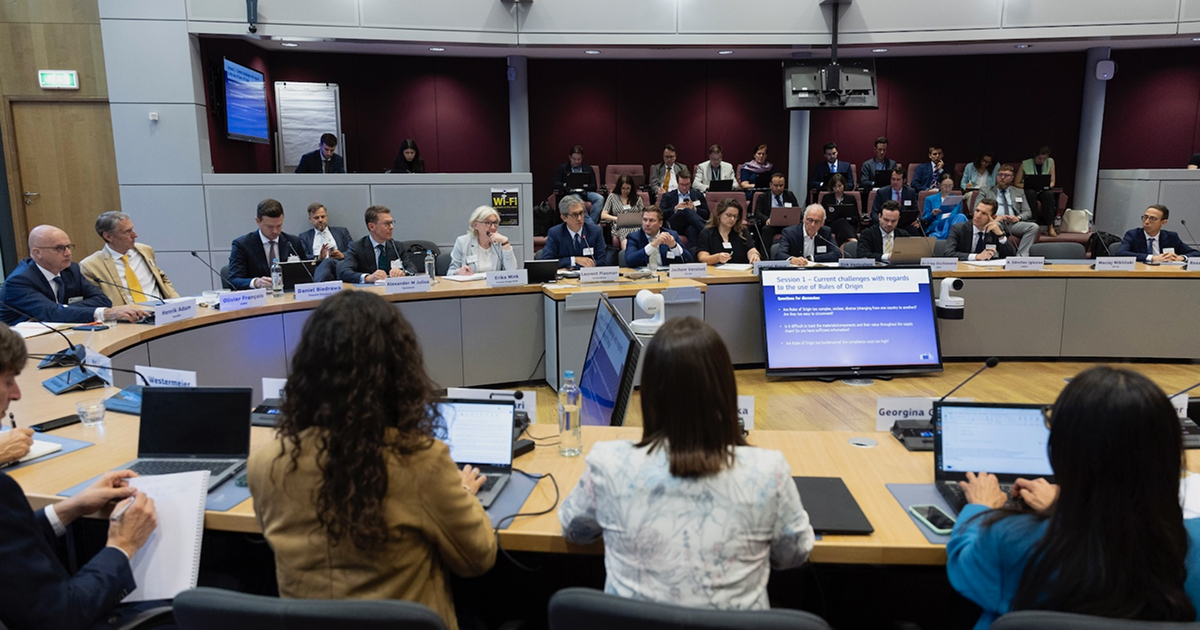
European rules of origin (EU Rules of Origin, RoO) should become more practical, consistent, and responsive to changing global trade conditions. This opinion was expressed by Eurometal President Alexander Julius during a thematic dialogue with the European Commission.
The dialogue was conducted by the Directorate-General for Taxation and Customs Union (DG TAXUD) under the chairmanship of European Commissioner Maroš Šefčovič, who is responsible for trade and economic security in the bloc. The discussion focused on aligning the rules with business realities, their compliance with climate and industrial policy objectives, and the elimination of national inconsistencies.
Eurometal highlighted the difficulties faced by steel distributors and service centers in complying with origin requirements, especially when products are processed or supplied from multiple jurisdictions.
Among the key recommendations of the association, which represents European distributors of steel, pipes, and metal products, are the following:
- align RoO with new climate and circular economy goals, including CBAM and the definition of “green” steel;
- develop practical rules on secondary raw material content, “melt and pour” criteria, and value-added processing;
- introduce specific restrictions on steel derivatives based on origin to prevent circumvention of EU safeguard and trade measures;
ensure compatibility with digitization efforts and accessibility for SMEs.
Eurometal also stressed the need for predictable, harmonized rules that can be easily implemented in all Member States, avoiding delays and conflicting customs decisions.
Maros Sefcovic, according to the association’s statement, expressed his commitment to reforming the rules of origin. In particular, he concluded that they should be simpler to apply and adapted to the specificities of each sector, and that their harmonization within the EU is important.
Šefčovič confirmed that rules of origin are increasingly linked to CBAM, safeguard measures, and the fight against circumvention, especially in critical sectors such as metallurgy.
The new EU safeguard system for steel is currently being developed and is expected to be updated at the end of this summer. The EU will also seek closer coordination with the US in addressing the issue of global overcapacity.
The EC has called on all participants to submit written, sector-specific proposals. The feedback will help in the development of future reforms to supply rules.
Earlier, Eurometal emphasized the need to harmonize European regulation and support industry on the path to decarbonization.
-

Opinions Industry macroeconomics
28 May 2026
04 June 2026
04 June 2026

04 June 2026