




News Companies Great Britain 4968 23 February 2026
Norwegian-British green steel producer may acquire assets from EDP with a capacity of 1.1 million tons per year
Norwegian-British company Blastr, which specializes in the production of low-carbon steel, is among the contenders for the acquisition of Speciality Steels UK (SSUK), formerly owned by Liberty Steel. This was reported by Sky News.
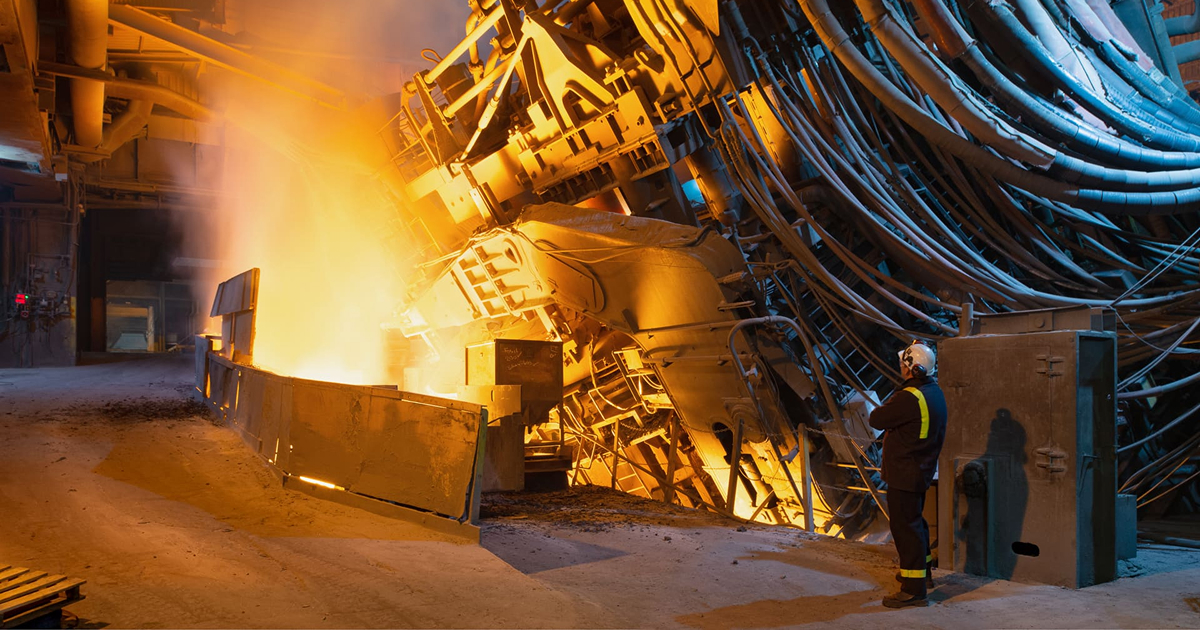
In August 2025, the High Court of the United Kingdom placed SS UK Limited into compulsory liquidation. The company has production sites in Rotherham and Stokesbridge. The Rotherham facility is equipped with two electric arc furnaces (EAF) with a total capacity of approximately 1.1 million tons of steel per year.
Blastr is also considering moving its holding company from Norway to the UK. The company currently has no production facilities. In 2023, it announced a greenfield project in Inkoo, Finland, to produce up to 2.5 million tons of flat steel with a reduced carbon footprint. In addition, there were plans to build a plant in the UK to produce pellets for DRI with a capacity of about 6 million tons per year.
Blastr claims that its steel will have CO2 emissions up to 90% lower than traditional production. According to the company’s estimates, the emission intensity of conventional steel is about 2.6 tons of CO2 per ton, while “green” products can have an indicator of about 0.26 tons of CO2/ton.
Other contenders for SSUK include Arabian Gulf Steel Industries (UAE) and 7 Steel UK. A Blastr representative declined to comment.
It should be noted that Speciality Steels UK was once part of the Liberty Steel group led by Sanjeev Gupta. In August 2025, the London High Court ruled to compulsorily liquidate SSUK due to insolvency, placing the company under the control of a government liquidator and special managers amid multimillion-dollar debts and ongoing financial problems following the collapse of its main creditor, Greensill Capital. Prior to this, the business had attempted to avoid bankruptcy through restructuring and sales, but these plans were unsuccessful, and production sites supplying steel to strategic sectors remained at risk of long-term downtime and the loss of thousands of jobs.
-

Opinions Industry steel consumption
13 July 2026
24 July 2026
23 July 2026
22 July 2026