
Opinions Companies ArcelorMittal Kryvyi Rih 613 19 February 2026
Exclusive How ArcelorMittal Kryvyi Rih operates in conditions of energy shortage

The shortage of electricity, its high price, and the shortcomings of the import mechanism have a significant impact on the operation of the steel plant
The war with Russia is hitting the Ukrainian economy hard, not only because of human losses and destroyed infrastructure — every day, it forces businesses to make a tough choice: survive or shut down. One of the country’s largest industrial players, ArcelorMittal Kryvyi Rih, found itself at the epicenter of several crises at once — energy, tariffs, and the impact of European regulations.
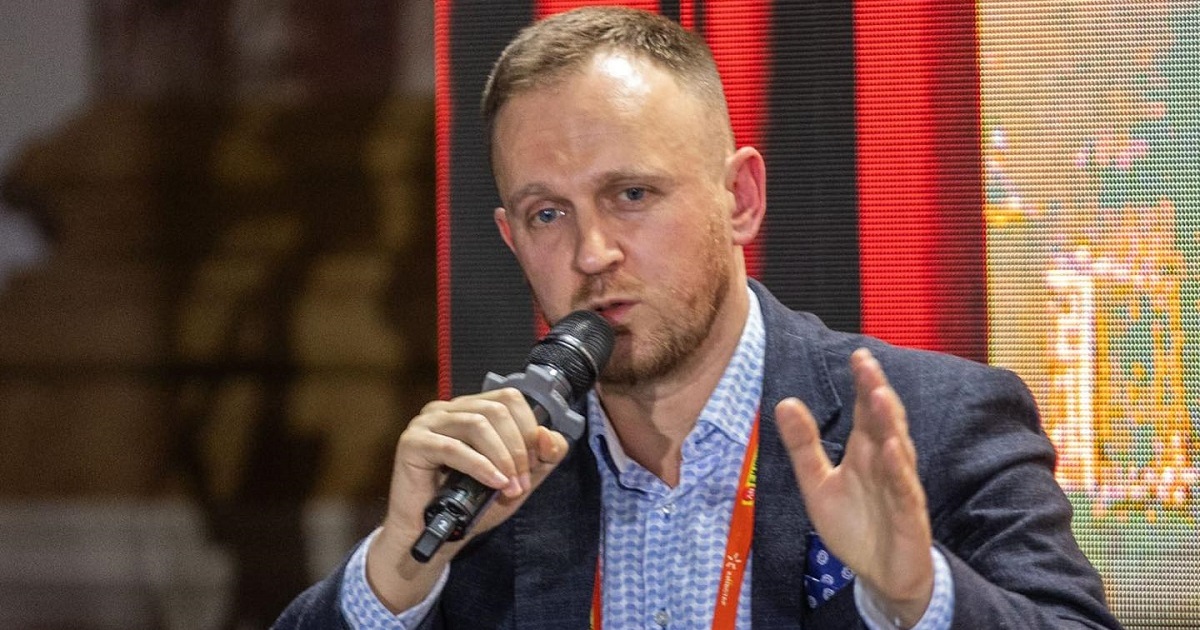
Oleg Krykavsky, Director of Government Relations at ArcelorMittal Kryvyi Rih, spoke about how the company operates in such conditions during an online event entitled «How does the shelling of the energy system affect business operations?» held by the Center for Economic Strategy. GMK Center summarizes the main points of his speech.
The overall situation at the company
ArcelorMittal Kryvyi Rih is part of a large multinational corporation, which largely determines its ability to continue operating in conditions of full-scale war. During this time, ArcelorMittal has allocated more than $1 billion to support the enterprise. Despite this, the plant is currently operating at only 50% of its design capacity.
The company has achieved significant results in the European market. This was facilitated by the extension of the duty-free trade regime for another three years in June 2025. Thanks to this, ArcelorMittal Kryvyi Rih was able to effectively position itself in the European market: 1.2 million tons of products were exported to EU countries last year.
The introduction of the CBAM mechanism on January 1, 2026, will have an extremely negative impact on the company’s operations. According to preliminary estimates, the levy will range from $63 to $90 per ton of product, depending on its type. This significantly worsens the company’s competitive position compared to European manufacturers.
Due to a combination of unfavorable tariff conditions and power supply disruptions, the company was forced to close its blooming shop, which focused on exports to EU countries, in February this year.
Energy issues
The cost of electricity, which is one of the highest in Europe, is an important factor that negatively affects the competitiveness of the enterprise. This, together with the introduction of the CBA, creates a structurally disadvantageous position compared to producers in EU countries.
According to a government decree, industrial enterprises are required to ensure a set share of consumption from imported electricity. This percentage is not fixed and has fluctuated depending on the situation: at various times it has been 60%, 80%, and now 90%.
The key operational problem is that import contracts are concluded only one day in advance. At the same time, the physical possibility of delivering the purchased electricity the next day is not guaranteed. The company has encountered situations where paid-for electricity could not be imported, and the trader was forced to sell it on the market at zero price. As a result, the company suffered direct losses: funds were spent, electricity was not received, and production had to be reduced.
The company is in constant dialogue with the government on this issue and hopes to find a joint solution. In particular, the question is being raised about moving away from the «day ahead» scheme in favor of longer contracts, which would allow cheaper base electricity to be obtained from Europe.
Impact of shelling on the production process
There are two types of problems with electricity supply. The first is planned limits: there are regional limits, which are then distributed to consumers through the supply company. Under normal conditions (without restrictions), the plant consumes about 400 MWh. Currently, consumption is 230–250 MWh, but during peak hours, the set limit is insufficient, and the company is forced to compensate for the rest of the volume through imports.
The situation is much more serious in the case of emergency shutdowns, when instead of the allocated limit, the enterprise unexpectedly receives a minimum or zero amount of electricity. For steel production, this is a disaster, as it interrupts the continuous chemical process.
In particular, at ArcelorMittal Kryvyi Rih, a coke battery was damaged as a result of a network accident. The company has industrial diesel generators, but they take time to start up. The plant is forced to stop production in order to then resume the production cycle.
Adaptation measures taken by the company
In the face of ongoing restrictions, the company is pursuing several parallel strategies.
- Through flexible redistribution of the load between existing capacities, some units continue to operate while others undergo scheduled maintenance with a view to their subsequent commissioning.
- Work is underway to develop the company’s own generation and cogeneration facilities based on existing CHPs. However, due to the scale of the enterprise, the implementation of such projects requires significant capital investments and a long time frame—for example, it is impossible to deploy 250 MW of own capacity in a short period of time.
- The company is continuing negotiations with the government on the transition to long-term electricity purchase contracts with producers.
Tariff regulation issues
Allegations that tariff regulation is “non-market-based” are debatable. In conditions of significant shortage, the price of electricity is not entirely market-based – it is artificially inflated. Furthermore, state intervention in tariff policy is common practice in Europe:
- Germany – the government subsidizes tariffs for industry.
- France – a mechanism of direct contracts between large consumers and EDF (nuclear energy) has been established.
- Poland – trade unions are actively pressuring the government to lower electricity prices.
Thus, the question is not whether the state should intervene, but what instrument should be used. Both the government and market participants are in favor of market mechanisms. The most likely solution is to introduce auctions for concluding direct long-term contracts between industrial consumers and electricity producers—a transparent and competitive mechanism that complies with market principles.