




News Companies voestalpine 1498 27 February 2026
Modernization of the cooling line will enable production of new steel grades for the automotive industry
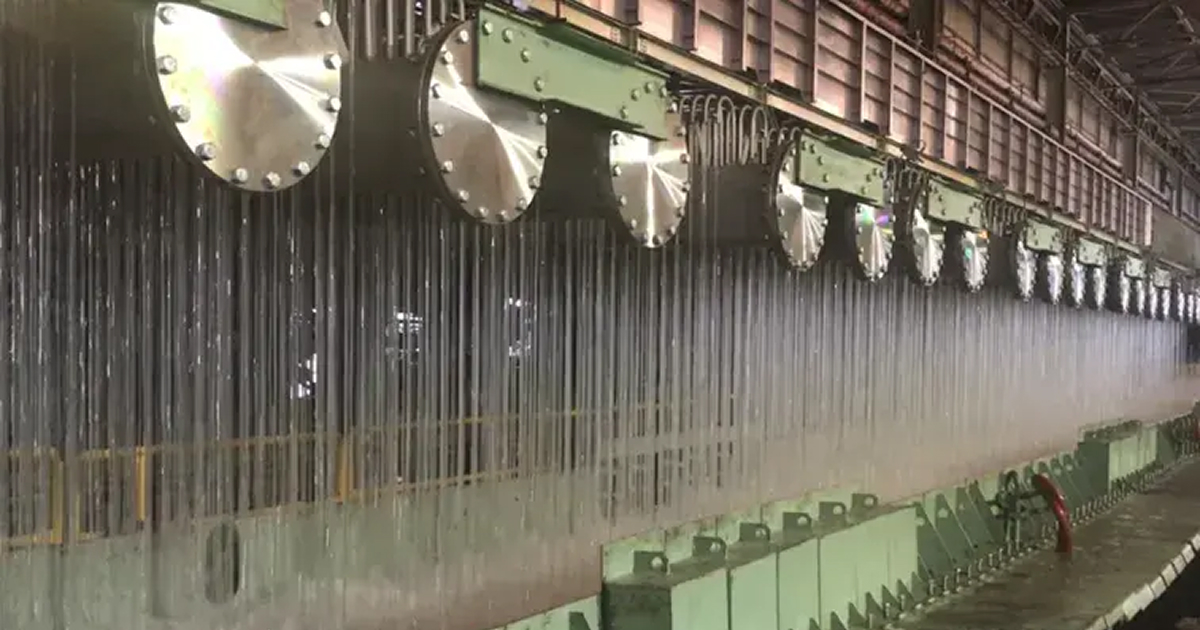
Voestalpine Stahl GmbH has selected Primetals Technologies to modernize the laminar cooling line at its 5 million ton per year hot rolling mill in Linz, Austria. The project is a continuation of the long-term cooperation between the companies and aims to maintain the manufacturer’s leading position in the European flat steel market, according to the announcement.
The main goal of the upgrade is to increase the capacity and flexibility of the cooling system to meet the requirements of the current product range, in particular high-quality and high-strength steels, as well as to support future developments.
The project involves the installation of new laminar cooling manifolds and valves with adjustable water flow, which will ensure precise process control along the entire length of the strip. There are also plans to modernize the side guides of the roller table, water knives, and the cross-spray system. The scope of supply includes fluid systems, electrical equipment, and basic automation.
The new manifolds will enable both gentle and intensive cooling modes to be implemented on the same equipment. The system will automatically record the individual flow characteristics for each valve.
The upgrade is expected to provide a uniform and controllable cooling profile across the width and length of the strip, as well as a balanced heat flow between the upper and lower surfaces. This will create conditions for the production of new high-performance steel grades, particularly for the automotive sector.
The work will be carried out during scheduled shutdowns lasting approximately 10 days in 2027-2028, minimizing the impact on the production process.
As a reminder, in early 2026, voestalpine AG agreed to sell voestalpine BÖHLER Profil, part of the High Performance Metals division, to Kadant Inc. The contract has already been signed. The deal still needs regulatory approval and should be completed by the end of the 2025/2026 fiscal year.
-

15 June 2026

22 June 2026

22 June 2026
22 June 2026