





News Global Market Italy 3351 30 March 2026
The country's public finances are capable of absorbing the impact of the crisis in the Middle East, the economy minister said
The Italian government expects the country’s economy to grow by 0.5% or 0.6% in 2026 and by 0.7% in 2027, assuming no policy changes. Reuters reported this, citing sources.
Both forecasts are slightly lower than the GDP growth targets set last September, which were 0.7% and 0.8%, respectively. The projections may still be revised before their release on April 10 and do not account for the impact of potential stimulus measures the government may implement in the coming months to help households and businesses cope with rising energy prices.
Italian Economy Minister Giancarlo Giorgetti, speaking at a conference as the government prepares to update its budget targets and growth forecasts for the coming years, stated that the country’s public finances are capable of absorbing the negative impact of the crisis in the Middle East.
“We are facing this crisis from a position of relative strength, as our economic indicators are not exceptional, but they are certainly positive,” he noted while speaking at a financial conference.
The minister still hopes for a revision of last year’s budget deficit from 3.1% to 3% of GDP by the national statistics agency ISTAT. This would allow Italy to exit the EU’s excessive deficit procedure ahead of schedule this year.
Giorgetti also called for a coordinated EU-wide approach to measures to overcome the crisis and noted that Italy is not currently experiencing an energy shortage. The government has allocated approximately €417.4 million to reduce fuel excise taxes through April 7, but prices have remained virtually unchanged, and industry lobbyists are insisting on more effective measures. The minister promised to listen to various groups to identify the most pressing issues.
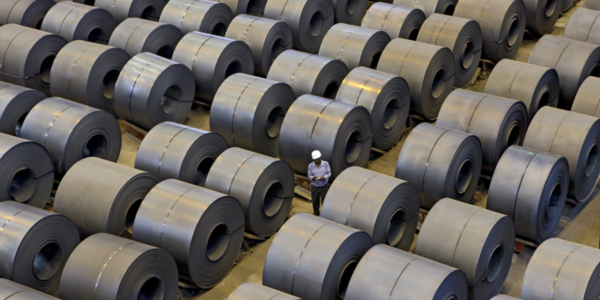
As a reminder, in January-February, Italian steelmakers produced 3.6 million tons of steel, exceeding the 2025 figure by 2.1%. In the flat-rolled segment, 1.5 million tons were produced (-4.4% year-on-year), and in the long-rolled segment, 2.1 million tons (+8.6% year-on-year).
-

02 July 2026
08 July 2026

08 July 2026

08 July 2026