




News Global Market coking coal prices 187 06 June 2026
Market trends were altered by a fatal accident at a mine in the Chinese province of Shanxi
Global coking coal prices rose at the end of May: market trends were altered by a fatal accident at a mine in China’s Shanxi province.
According to Kallanish, the price of high-quality coking coal FOB Australia stood at $239.4/t as of 29 May 2026, compared to $236.7/t a week earlier (22 May).
Spot prices for coking coal in China (EXW, Anze) on the same date stood at $250.7/t, up 6% on the previous week.
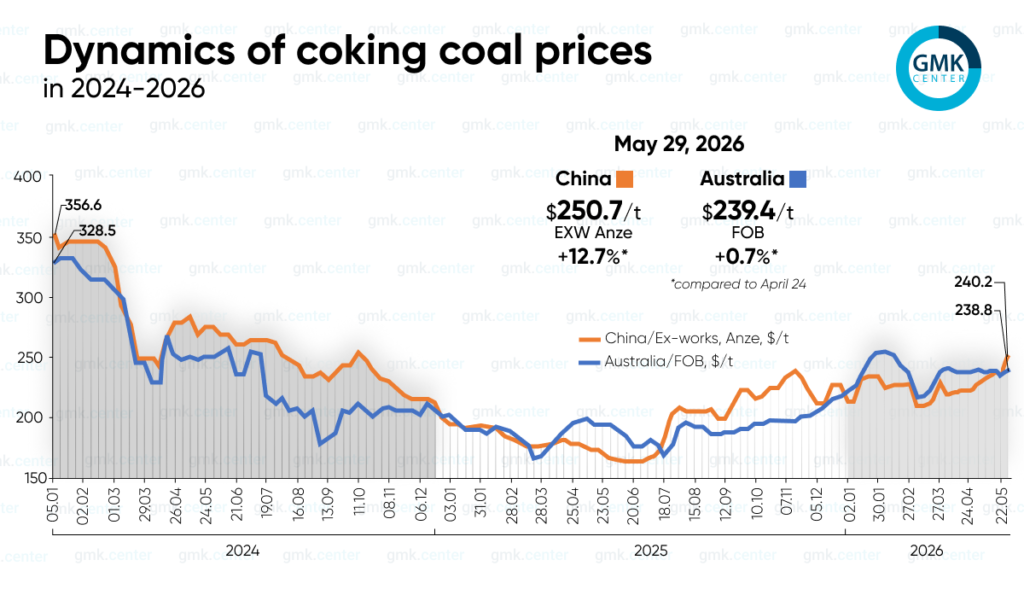
Overall, since 24 April, the price of coking coal FOB Australia has risen by 0.7%, whilst the EXW price at Anze has risen by 12.7%.
On 22 May, a gas explosion occurred at a coal mine in Changzhi (Shanxi Province), resulting in numerous casualties. It is believed that the safety measures implemented in the country have led to a rise in coking coal prices against the backdrop of reduced production.
Whilst coking coal prices in China fell between 15 and 21 May, as rains in many regions of the country led to a decline in domestic demand for metal products, the situation subsequently changed. Between 22 and 29 May, purchases of this raw material intensified due to fears of reduced domestic supplies.
The incident also affected the price of Australian coking coal following market concerns about future supplies, whereas previously prices for this raw material had been falling against a backdrop of weak sentiment in China and sufficient supply.
According to Mysteel’s forecast, coking coal prices in China are expected to rise in June due to disruptions in mine operations caused by safety inspections.
At the same time, as noted by BigMint, the global coking coal market is entering the summer period with stronger fundamentals than at the start of this year. More stable prices have been driven by production disruptions in China, rising coke prices, an increase in the share of Russian pulverised coal, and restraint on the part of Australian suppliers. However, the next phase of price adjustments will depend primarily on the state of the steel market and demand within it.
-

Opinions Industry macroeconomics
28 May 2026
05 June 2026
05 June 2026

05 June 2026