





News Global Market EU 8799 03 March 2026
Market prospects depend on the duration of the conflict
According to ICE, as of 11:20 a.m. on March 3, 2026, European gas prices had doubled since the close of trading the previous week (February 27), exceeding €65/MWh.
The market was shaken by the escalation of the conflict in the Middle East and the threat of a halt to tanker traffic through the Strait of Hormuz, through which about one-fifth of the world’s LNG exports pass.
On March 2, at the start of the new trading week, TTF futures for the coming month began to rise sharply in price, which continued until the end of trading. In the afternoon, due to news of the shutdown of LNG production at QatarEnergy’s Ras Laffan plant, the country’s largest export facility, following an attack by an Iranian drone, they reached approximately €46/MWh. However, trading closed at €44.5/MWh on that day.
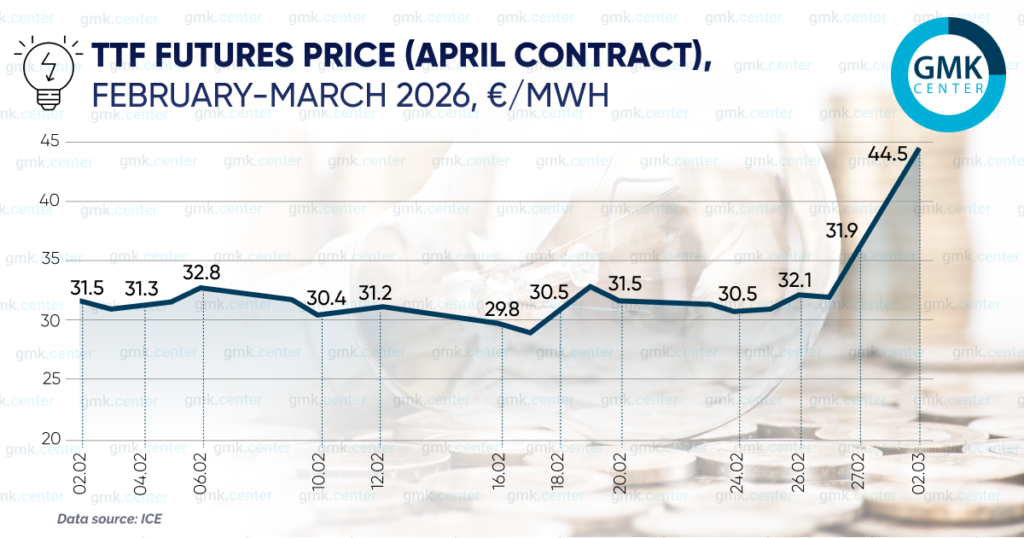
According to Goldman Sachs, a month-long halt in supplies through Ormuz could cause European gas prices to more than double, Bloomberg reports. This would be a significant shock to the market after futures fell in February due to relatively mild weather and sufficient supply.
This situation, analysts say, risks becoming the most serious shock to EU gas markets since Russia’s full-scale invasion in 2022. It could also complicate the replenishment of European reserves in the coming months as the heating season comes to an end, creating new pressure on industrial energy costs. According to the AGSI platform, as of March 3, European gas storage facilities were just over 30% full.
Although most of the LNG from the Middle East is purchased by Asian countries, any disruptions will intensify competition, leading to an overall increase in global prices.
According to industry experts, the scale of the consequences depends on the duration of the escalation. A long-term conflict, which could lead to a serious disruption of oil and gas flows through the Strait of Hormuz, will result in a restructuring of trade relations. If the situation is resolved in a few weeks, the changes will be much less significant.
It should be recalled that in February, the European gas market was influenced by geopolitical and weather factors, as well as low levels of reserves in European gas storage facilities. In particular, at the beginning of last month, price volatility was driven by concerns about threats to LNG supplies through the Strait of Hormuz, and TTF futures also rose sharply in the first week of February due to worsening weather forecasts. On February 17, however, the latter showed the lowest monthly settlement price of €29.82/MWh.
-

02 July 2026

10 July 2026
10 July 2026

10 July 2026