




News Global Market Carbon prices 4313 12 July 2025
In the middle of the month, the price reached its highest level since February
Carbon emission prices in the EU exceeded €70/t in June. During this period, the market reacted to fluctuations in energy prices, traders’ behavioral strategies, and expectations of new climate targets from the European Commission.
According to ICE, the average price of an EUA contract for December 2025 was €73/t in June. It fell by 2.8% over the month.
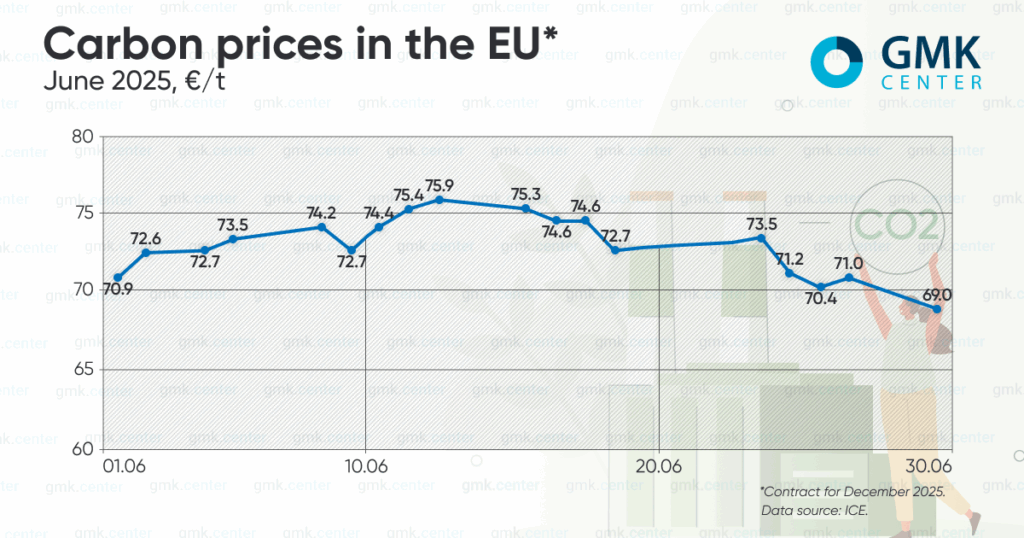
In mid-June, carbon emission allowance prices (contract for December 2025) reached €75.9/t, the highest level since February this year. This happened against the backdrop of military action between Iran and Israel, which led to a resumption of natural gas price growth. The panic reaction proved to be short-lived, and by the end of the month, carbon prices had fallen to €68.9/t.
Before the start of the third quarter, market participants expected the EC to announce a new climate target. The European Commission presented amendments to the EU climate law on July 2, proposing that the bloc reduce net greenhouse gas emissions by 90% by 2040 compared to 1990. At the same time, the EC has provided for measures to help industry meet the new target, in particular regarding the financing of decarbonization projects and the development of the energy system to ensure access to affordable electricity.
The EU is also continuing discussions on the second carbon emissions trading scheme (ETS2). At the end of June, more than a dozen member states sent a joint appeal to the EC calling for changes to prevent price spikes. In particular, they call for the early sale of emission allowances, which will give market participants a better idea of expected prices.
The launch of ETS2 for buildings and road transport is scheduled for 2027. In May, the ICE exchange already launched futures contracts for this future system. The first futures were traded in small quantities at a price of €73.57/t.
As a reminder, in early July, Turkey approved plans to launch a carbon market. On July 2, the country’s parliament passed its first-ever climate law, which, among other things, provides for the creation of a national ETS.
-

15 June 2026

21 June 2026

21 June 2026

20 June 2026