




News Global Market China 3137 02 April 2026
Increasing the share of EAFs to 20% by 2030 could also improve the sector’s profitability and sustainability
Analysts at the Centre for Research on Energy and Clean Air (CREA) believe that an accelerated transition of China’s steel industry toward greener production could reduce the sector’s emissions by nearly 37% from peak levels by 2035. This is stated in the company’s report.
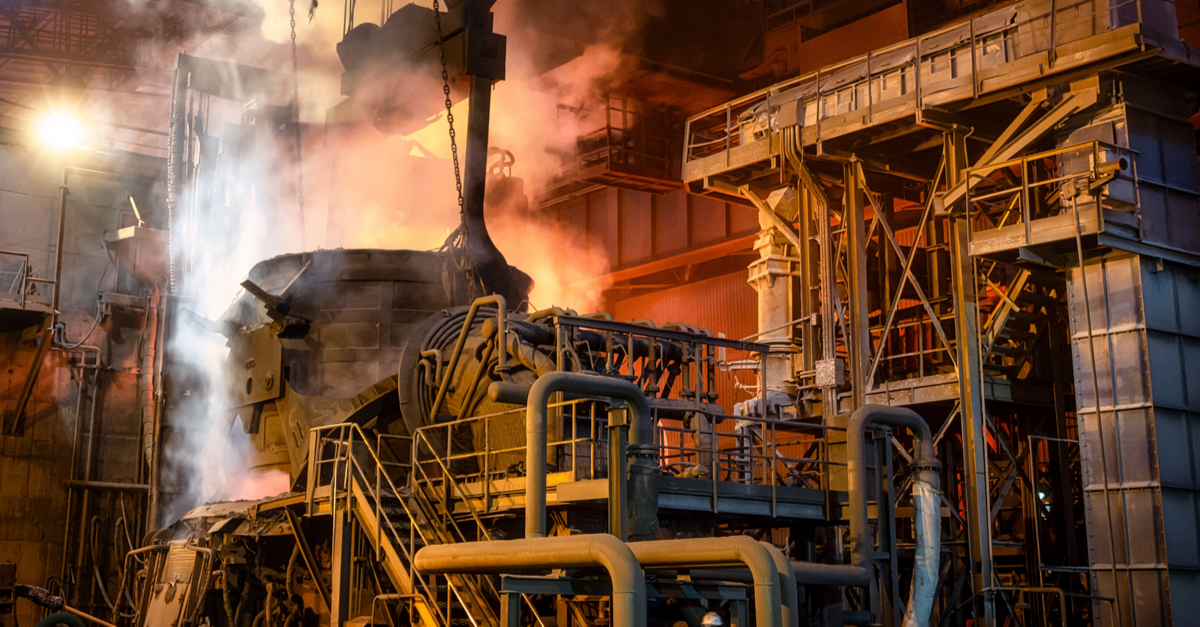
This scenario calls for prioritizing the development of electric arc furnace (EAF) capacity over blast furnace and converter production, which currently remains dominant in the country.
In recent years, the reduction in emissions in China’s steel industry has occurred primarily not due to structural decarbonization, but because of falling demand and a decline in steel production. In 2025, steel production in China fell below 1 billion tons for the first time since 2020, declining by 4.4% year-over-year following a 1.4% drop in 2024. According to CREA estimates, this collectively reduced CO2 emissions by approximately 150 million tons, significantly exceeding the effect of existing policy measures.
At the same time, the organization emphasizes that China has not met its 2025 green target, and current mechanisms have only reinforced the dominance of carbon-intensive BF-BOF production. According to CREA, increasing the share of EAF to 15–20% by 2030 would reduce blast furnace-converter steel production by 80–120 million tons. This is nearly equivalent to Japan’s annual steel production and approaches India’s figures.
In addition to the environmental benefits, such a transition could also improve the industry’s financial health. According to CREA estimates, if EAFs account for 20% of the market by 2030, the sector’s profits could increase by up to 220 billion yuan, and the debt-to-asset ratio would drop to 60–62%. This is significant given that from 2020 to 2025, the liabilities of China’s steel companies increased by more than 1 trillion yuan, or 20%.
CREA also highlights the foreign trade aspect. Due to weak domestic demand and excess supply, steel exports from China rose from 54 million tons in 2020 to 134 million tons in 2025, and the country’s share of global steel trade increased from 13.3% to 29.2%. Under these conditions, increasing the share of green steel could become a key factor in competitiveness, especially against the backdrop of strengthening carbon trade mechanisms, particularly the EU’s CBAM.
As a reminder, in January–February 2026, China reduced steel production by 3.6% year-on-year to 160.3 million tons. Pig iron production decreased by 2.7% year-on-year – to 137.7 million tons, while rolled steel production fell by 1.1% year-on-year – to 221.2 million tons.
-

02 July 2026
09 July 2026
09 July 2026
09 July 2026