




News Global Market Китай 1122 11 May 2026
In April, exports of rolled steel products fell by 9.2% y/y, while ore imports rose by 0.7% y/y
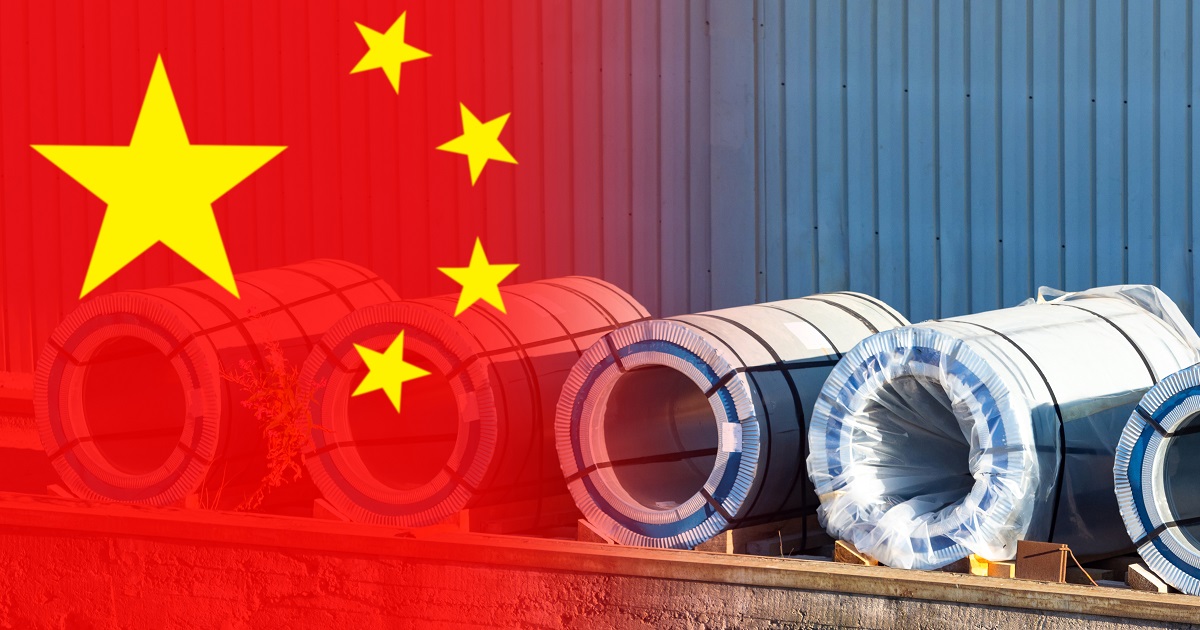
From January to April 2026, China reduced its exports of rolled metal products by 9.7% year-on-year – to 34.2 million tons. During the same period, iron ore imports increased by 8% year-on-year – to 418.6 million tons. This was reported by BigMint, citing the General Administration of Customs of the People’s Republic of China (GACC).
In April alone, rolled steel exports fell by 9.2% year-on-year – to 9.5 million tons. Despite a slight increase compared to March, the overall trend remains negative due to weak global demand.
Key influencing factors:
- Geopolitical tensions: The conflict in the Middle East has disrupted normal shipping routes, leading to higher logistics and insurance costs.
- Trade protectionism: A number of countries (Vietnam, India, Brazil, South Korea, and others) have imposed anti-dumping duties to protect their domestic producers from cheap Chinese imports. For example, following the introduction of duties in Vietnam, shipments from China to that country decreased by 1.29 million tons.
- Administrative restrictions: A new licensing system introduced in China in January 2026 has created additional bureaucratic hurdles for exporters of approximately 300 categories of steel products.
- Global recession in construction: According to Worldsteel’s forecast, global demand in 2026 will grow by only 0.3%, indicating stagnation in industrial activity.
Chinese steel exports are expected to remain under pressure in May. Although domestic production has stabilized, limited access to external markets and low global consumption will continue to hold back the industry’s growth in the short term.
In contrast to exports of finished products, imports of raw materials are on the rise. From January through April 2026, China imported 418.6 million tons of iron ore, an 8% increase from last year.
Key April indicators:
- Supply volumes: In April, imports totaled 103.9 million tons (+0.7% compared to April of last year). Stabilization was aided by improved weather conditions in Australia and Brazil, which allowed for the resumption of regular shipments.
- Production ramp-up: Chinese mills are increasing capacity. Average daily pig iron output in April rose by 5.2% compared to March—to 2.39 million tons per day. This was driven by a seasonal uptick in domestic consumption and the easing of environmental restrictions in industrial hubs, particularly in Tangshan.
- Price situation: prices for Australian ore (Fe 61%) remained stable at $107/t, although a slight decline was observed at the end of the month due to market saturation. Ore stocks in ports are currently at their lowest level since mid-January—about 160 million tons.
As reported by GMK Center, China is stepping up efforts to combat “involution”-style competition in its steel sector. These efforts include steel production, exploring new capacity management mechanisms, and coordinating the efforts of the government, industry, and enterprises.
-

Opinions Industry macroeconomics
28 May 2026
04 June 2026

04 June 2026

04 June 2026