




News Global Market Uzbekistan 325 15 July 2026
The cost of the project amounts to $839 million
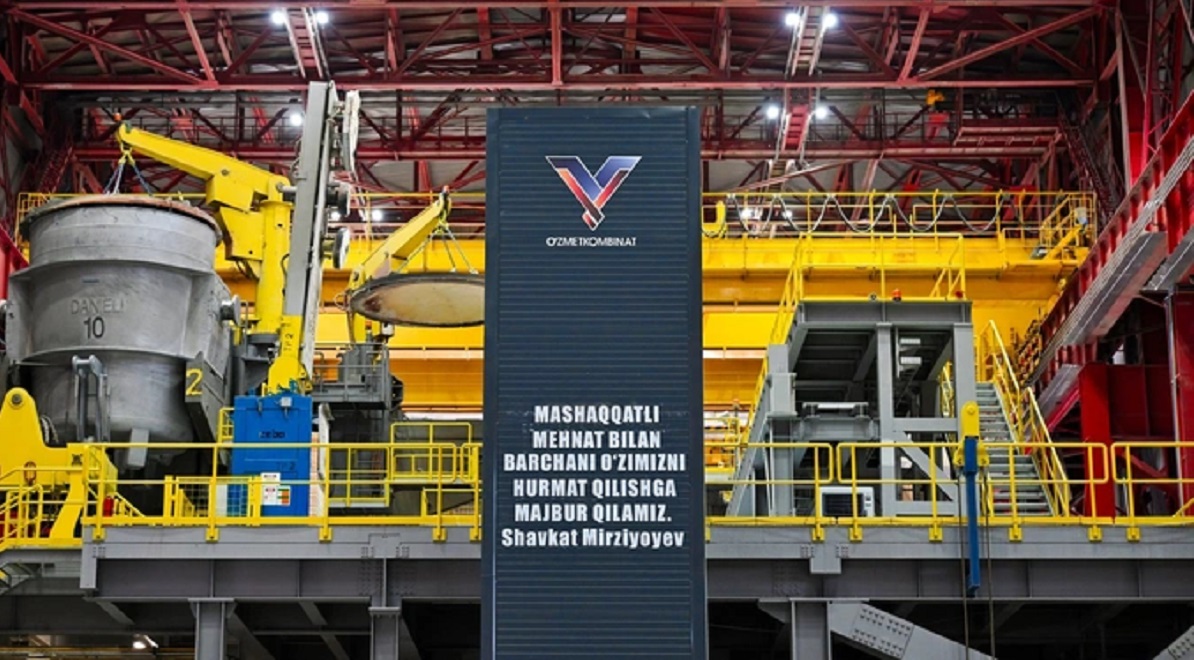
A new $839 million casting and rolling complex has come on stream at the Uzmetkombinat steelworks. This is the country’s first project that will enable the production of hot-rolled sheet steel, which is in high demand in the industrial sector. Uzbekistan’s President Shavkat Mirziyoyev took part in the launch of the new line, according to Gazeta.UZ.
The plant is expected to produce 1 million tonnes of products annually, with a total value of 8 trillion soums. The new capacity will fully meet the needs of the large steelworks in Tashkent and Samarkand, as well as helping to create 1,200 additional jobs.
The next stage in the development of ‘Uzmetkombinat’ will be a complete transition to its own raw material base. Uzbekistan possesses significant iron ore reserves, estimated at 1.5 billion tonnes. A series of measures is planned to ensure the effective use of these resources:
- Expansion of mining operations. The commissioning of the Tebinbulak deposit within the next 3–4 years will help increase steel production to 1 million tonnes per year. Thanks to the processing of ore from the ‘Surun-ota’ deposit, the plan is to produce 600,000 tonnes of raw material annually.
- Construction of a new plant to process the company’s own ore: a modern metallurgical plant costing $180 million will be built on the site of the steelworks.
- Modernisation of production lines. Investments totalling $30 million will enable the modernisation of steel ball production lines, doubling their capacity to 500,000 tonnes per year.
- Eco-industrial park. The ‘Uzbekistan Industrial Park for Environmental Technologies’ will be established on the site of the steelworks. This year, six projects worth $70 million (the production of large-diameter pipes, cranes and filters) will be launched there, creating a further 660 jobs.
As reported by GMK Center, Uzmetkombinat plans to build a blast furnace with a capacity of 600,000 tonnes of pig iron per year. The project is estimated to cost $180 million, with implementation scheduled for 2026–2028. It is expected that launching in-house production will enable the replacement of imports worth up to $210 million.
-

Opinions Industry steel consumption
13 July 2026
15 July 2026
15 July 2026
15 July 2026