




News Global Market брухт 3286 09 October 2025
Free trade in scrap metal threatens the availability of raw materials on the market and plans to decarbonize the steel industry
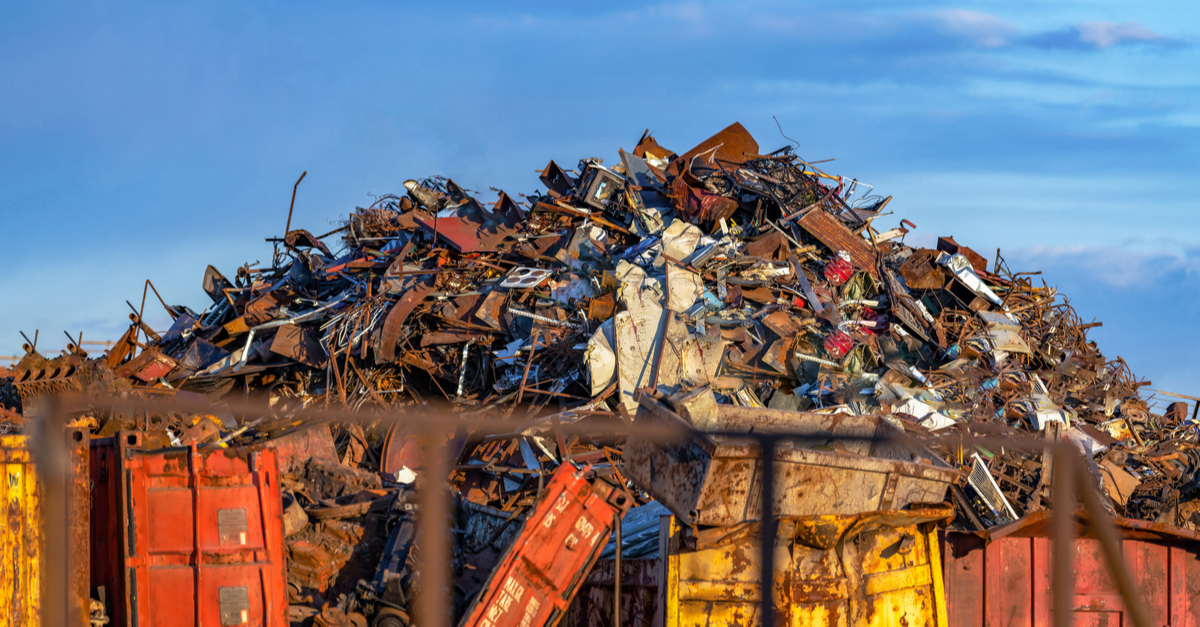
The European steel industry is moving towards a major transformation. Starting in 2030, the EU will abolish CO2 emission allowances, and steel production in blast furnaces will become economically unprofitable. Electric arc furnaces (EAFs), which run mainly on scrap metal, will be an alternative. This is a major risk, as the scrap market in Europe remains segmented and virtually uncontrolled, ilPost notes.
Demand for raw materials is growing faster than supply. In Italy, where 34 electric arc furnaces are currently operating, the annual demand for scrap reaches 19 million tons, of which one third is covered by imports. Federacciai estimates that the deficit will only grow in the coming years. The situation is complicated by the ambiguous position of the EU, which simultaneously promotes decarbonization and allows the export of significant amounts of scrap. In 2023, almost 19 million tons of raw materials were exported from the bloc, mainly to Turkey, India, and Egypt.
Against the backdrop of these processes, large-scale investment projects are being launched. One of the largest is Metinvest Adria, a joint venture between Metinvest Group and Italian Danieli. It is planned to build an EAF plant in Piombino, Italy, with an annual capacity of 2.7 million tons of steel and investments of €2.5 billion. The Italian government supports the initiative, viewing it as a strategic step towards green steelmaking.
The shortage of raw materials is already being reflected in prices. In particular, scrap prices on the London Metal Exchange have risen to $350 per tonne, and futures forecast a further rise to $380 per tonne in 2026.
Experts emphasize that without market regulation and export controls, the implementation of large green projects may face difficulties. This creates risks for the entire decarbonization strategy of the European steel industry.
As a reminder, in the first half of 2025, the European Union reduced exports of ferrous scrap to third countries by 0.9% compared to the same period in 2024, to 8.11 million tons. About 70% of total exports went to Turkey – 5.57 million tons (+15.3% y/y). Among the largest exporters of scrap: The Netherlands – 1.88 million tons (+43% y/y), Belgium – 1.23 million tons (-4.4% y/y), and Poland – 630.67 thousand tons (+8.6% y/y).
-

15 June 2026
19 June 2026

19 June 2026

19 June 2026